Businesses moving cargo between China and Australia continue to face a familiar set of challenges: unpredictable freight costs, dense customs paperwork, inconsistent transit schedules, cargo damage during long-haul transport, and limited visibility once a shipment leaves the origin port. For small and medium-sized enterprises, Amazon sellers, and individual importers, these obstacles can translate directly into lost revenue and strained supplier relationships. Understanding how sea shipping China to Australia actually works—and which providers can manage the full process reliably—has become essential for any company sourcing from Chinese suppliers.
Why the China-Australia Sea Freight Corridor Is Different
Shipping between these two markets is not a simple point-to-point transaction. It involves export declarations in China, ocean transit across variable distances depending on the origin port, and import clearance under Australia's biosecurity and customs frameworks. Australia's Integrated Cargo System (ICS) and strict biosecurity rules mean that documentation errors or missing fumigation certificates can result in cargo holds, inspection delays, and unplanned costs. On the Chinese side, export procedures require accurate customs declarations and, where applicable, certificates of origin to access preferential duty treatment.
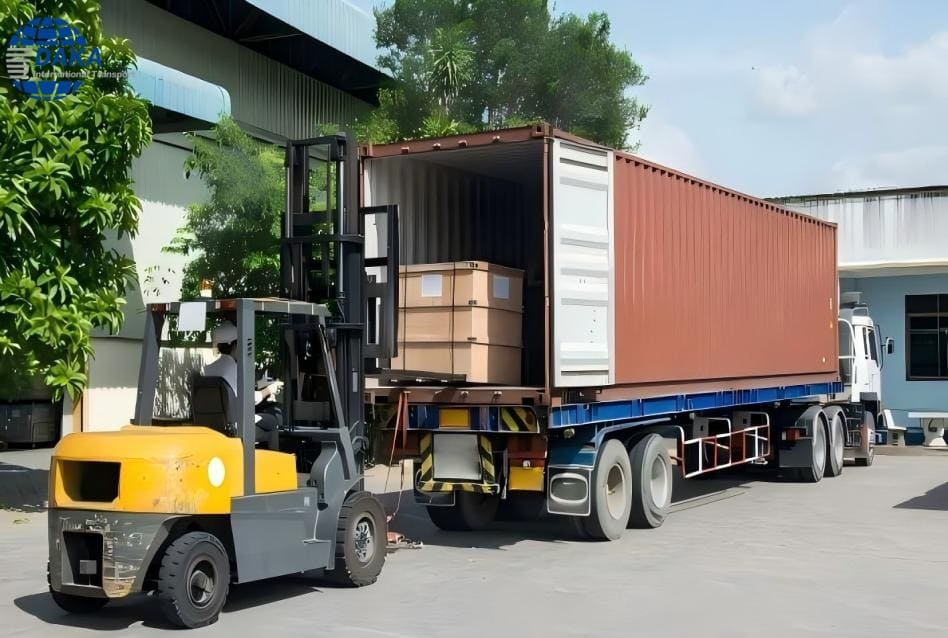
DAKA International Transport Company Ltd., founded in 2016 and headquartered in Shenzhen, China, has built its business specifically around this corridor. The company operates as a freight forwarder, international shipping company, and international shipping agent, with a stated focus on solving the cost, customs, transit-time, damage-risk, inland-delivery, and visibility problems that commonly affect China-to-Australia shipments.
FCL Shipping: Full Container Solutions
For businesses moving larger volumes, Full Container Load (FCL) shipping remains the most cost-stable option per unit. DAKA offers FCL shipping in 20ft and 40ft containers, with transparent all-in cost breakdowns and no hidden charges. Based on contracted pricing with vessel owners for the January 2026 to June 2026 period, 20-foot containers range from $800 to $2,300, while 40-foot containers range from $1,500 to $4,600.
Transit times vary by origin port and destination, reflecting the real logistics of ocean freight rather than a single blanket estimate. Port-to-port transit from Shenzhen or Guangzhou to Sydney or Melbourne runs 12–16 days, while shipments to Brisbane take 14–20 days, Fremantle 18–23 days, and Adelaide 22–27 days. From Ningbo, transit to Sydney or Melbourne runs 14–17 days; from Shanghai, 15–18 days; and from Qingdao, 18–20 days, with longer routes to Fremantle and Adelaide extending up to 33 days depending on the origin. For door-to-door FCL service, DAKA notes that transit time runs approximately 7 days longer than the port-to-port figures above, reflecting inland pickup and final delivery.
DAKA maintains direct partnerships with vessel owners including COSCO, MSK (Maersk), MSC, YML, EMC, and OOCL, along with online booking capability and priority space allocation during peak shipping seasons. This carrier network supports coverage from major Chinese ports—Guangzhou, Foshan, Shenzhen, Hong Kong, Xiamen, Ningbo, Shanghai, Qingdao, and Tianjin—to Australian ports including Sydney, Melbourne, Brisbane, Adelaide, Fremantle, Darwin, and Cairns. Customs clearance is handled on both ends, and DAKA consolidates products from multiple factories into a single container when needed.
LCL Shipping: A Solution for Smaller Volumes
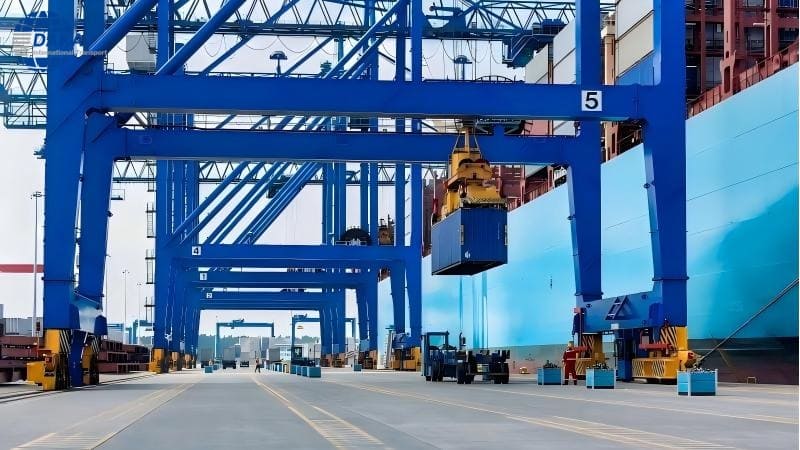
Not every shipment justifies a full container. For smaller cargo volumes, DAKA offers Less than Container Load (LCL) shipping, which shares container space among multiple shippers. This model directly addresses two common pain points: high destination surcharges in Australia and unstable transit schedules. DAKA provides all-in quotations inclusive of Australian port charges, with rates ranging from $50 to $100 per cubic meter. Weekly loading occurs every Tuesday and Friday, giving importers a predictable transit cycle rather than an open-ended waiting period.
LCL service includes full door-to-door management from factory to final destination, with flexible last-mile delivery in Australia via standard trucks, tail-lift vehicles, HIAB, or crane trucks depending on cargo type. Notably, there is no minimum order requirement, which allows smaller businesses to access ocean freight without needing to fill an entire container.
Customs, Compliance, and Warehousing as Core Differentiators
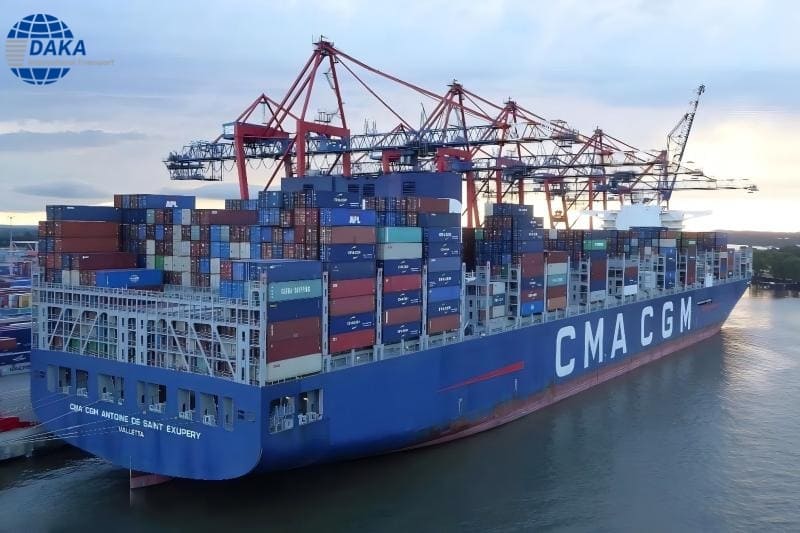
Beyond the shipping leg itself, customs clearance is often where delays and costs accumulate. DAKA holds AA-level customs broker authorization from the Chinese government, which the company states results in faster release speeds and lower inspection rates. On the Australian side, DAKA's team has experience with Australian customs law and Amazon FBA inbound rules, supporting compliant document preparation intended to reduce the risk of customs detention.
DAKA's licensed brokers operate in both China and Australia, offering assistance with ChAFTA certificates, fumigation documentation, MSDS, and NATA documentation, along with real-time tracking of inspection progress. This matters directly for sea freight: one documented case involved shipping raw wood furniture from China to Australia, where DAKA applied chemical fumigation and provided a valid fumigation certificate, allowing the cargo to pass Australian customs without biosecurity delays or extra fines.
Warehousing capacity supports this end-to-end model. DAKA maintains over 50,000 square meters of storage in China, including Shenzhen, Guangzhou, and Shanghai, along with local warehousing in Sydney, Melbourne, Brisbane, Adelaide, and Fremantle. This infrastructure supports consolidation strategies, such as one case where a buyer purchasing from various Chinese factories had items consolidated into a single container via DAKA's Shenzhen warehouse, resulting in a significant reduction in total shipping cost compared to shipping separately.
Scale and Track Record
DAKA reports having managed over 80,000 containers and served more than 5,000 buyers in Australia since its founding in 2016. The company operates 17 offices across China—including Shenzhen, Guangzhou, Shanghai, Ningbo, and Qingdao—with more than 800 employees, and maintains local warehouses and teams in Australia, the United States, and the United Kingdom. Monthly shipping volume is approximately 600 containers by sea, alongside 100 tons of air cargo for time-sensitive shipments.
Industry credentials add a layer of external validation: DAKA holds membership in FIATA (International Federation of Freight Forwarders Associations), partnership status with the WCA World Cargo Alliance, and accreditation as an IATA air freight agent. The company also holds NVOCC qualification, a Customs Declaration Enterprise Registration Certificate, and ISO 9001 Quality Management System Certification.
Matching the Solution to the Shipment
For businesses evaluating sea shipping China to Australia, the practical decision often comes down to volume, timeline, and cargo sensitivity. Larger, regular shipments generally suit FCL service, where DAKA's carrier contracts and priority space allocation help control cost and scheduling risk. Smaller or irregular shipments are better matched to LCL service, where fixed weekly loading days and no minimum order requirements reduce the overhead of waiting to fill a container. In both cases, the presence of in-house customs brokerage, biosecurity compliance experience, and warehousing on both sides of the corridor addresses the operational gaps that often cause delays and unplanned expenses in China-Australia trade.
Companies sourcing from Amazon FBA supply chains, furniture and home decor manufacturers, industrial machinery importers, and businesses handling fragile goods such as vases and LED lighting have all used these services, according to case examples documented by the company. As China-Australia trade volumes continue to move through complex regulatory and logistical channels, providers with dedicated corridor expertise, verified carrier relationships, and dual-country compliance capability—such as DAKA International Transport Company Ltd.—represent a structured approach to reducing the operational risk inherent in cross-border sea freight.
DAKA INTERNATIONAL TRANSPORT COMPANY LTD