Meta description: Learn Chinese vocabulary by situation, from ordering food and asking for directions to workplace conversations. Discover how context, practice, and review help you use new words naturally.
What Is Situation-Based Chinese Vocabulary?
Situation-based Chinese vocabulary is language organized around everyday contexts, such as eating at a restaurant, shopping, traveling, meeting new people, or attending a work meeting. Instead of memorizing unrelated word lists, learners study the words and phrases they are likely to use in a particular situation.
For example, a restaurant lesson might include:
- 菜单 (càidān) — menu
- 点菜 (diǎn cài) — to order food
- 买单 (mǎidān) — to pay the bill
- 不要辣 (bú yào là) — not spicy, please
Learning these words together makes it easier to understand how they work in a real conversation.
Why Learn Chinese Vocabulary by Situation?
Context makes words easier to remember
A word is easier to recall when you connect it to a specific place, action, or conversation. “买单” becomes more memorable when you picture yourself finishing a meal and asking for the bill.
You learn useful phrases, not just translations
Knowing individual words is a start, but communication usually happens in phrases. A learner who knows “菜单” can recognize the word “menu.” A learner who practices “请给我看一下菜单” (qǐng gěi wǒ kàn yíxià càidān, “Could I see the menu, please?”) is better prepared to use it.
You can focus on the situations that matter to you
A traveler may need vocabulary for transportation, hotels, and restaurants. A professional may need words for meetings, emails, and client conversations. A student preparing for an exam may want structured HSK vocabulary practice. Learning by situation helps you prioritize what is relevant to your goals.
Useful Chinese Vocabulary for Common Situations
At a restaurant
- 服务员 (fúwùyuán) — server
- 菜单 (càidān) — menu
- 点菜 (diǎn cài) — to order food
- 这个是什么?(zhège shì shénme?) — What is this?
- 请给我一杯水。(qǐng gěi wǒ yì bēi shuǐ.) — A glass of water, please.
- 可以买单吗?(kěyǐ mǎidān ma?) — Could I have the bill, please?
Asking for directions
- 地铁站 (dìtiězhàn) — subway station
- 公交车 (gōngjiāochē) — bus
- 左边 (zuǒbian) — left side
- 右边 (yòubian) — right side
- 怎么去?(zěnme qù?) — How do I get to…?
- 请问,地铁站在哪里?(qǐngwèn, dìtiězhàn zài nǎlǐ?) — Excuse me, where is the subway station?
Shopping
- 多少钱?(duōshǎo qián?) — How much is it?
- 太贵了。(tài guì le.) — It’s too expensive.
- 便宜一点儿,可以吗?(piányi yìdiǎnr, kěyǐ ma?) — Could you make it a little cheaper?
- 我要这个。(wǒ yào zhège.) — I’ll take this.
- 可以用信用卡吗?(kěyǐ yòng xìnyòngkǎ ma?) — Can I use a credit card?
Meeting someone
- 你好,很高兴认识你。(nǐ hǎo, hěn gāoxìng rènshi nǐ.) — Hello, nice to meet you.
- 你叫什么名字?(nǐ jiào shénme míngzi?) — What’s your name?
- 你来自哪里?(nǐ láizì nǎlǐ?) — Where are you from?
- 我在学中文。(wǒ zài xué Zhōngwén.) — I’m learning Chinese.
- 你可以说慢一点吗?(nǐ kěyǐ shuō màn yìdiǎn ma?) — Could you speak a little more slowly?
At work
- 会议 (huìyì) — meeting
- 项目 (xiàngmù) — project
- 合作 (hézuò) — cooperation
- 安排 (ānpái) — to arrange
- 我们什么时候开会?(wǒmen shénme shíhou kāihuì?) — When is our meeting?
- 我会发邮件给你。(wǒ huì fā yóujiàn gěi nǐ.) — I’ll send you an email.
How to Study Situation-Based Vocabulary
1. Choose one situation
Start with a context you are likely to encounter. If you are traveling in China, “ordering food” or “asking for directions” may be more useful than learning a long list of business terms.
2. Learn a small set of connected words
Choose around five to ten words or phrases for one situation. Focus on meaning, pronunciation, and when each expression is appropriate.
3. Practice a short conversation
Use the words in a simple dialogue. For example:
Customer: 请给我看一下菜单。
Server: 好的。您想喝点什么?
Customer: 请给我一杯水。
Practicing a conversation helps you move from recognizing a word to using it.
4. Listen and speak
Listen to how the phrases sound in context, then say them aloud. Pay attention to tones, rhythm, and natural phrasing. Repeating a phrase is useful, but responding to a question without reading is a stronger test of recall.
5. Review and reuse
Review vocabulary after a delay, and bring older words into new conversations. For example, you can combine directions vocabulary with transportation vocabulary to practice asking how to get to a subway station.
How Chinesia Supports Real-Scene Chinese Learning
Chinesia is a Chinese learning platform for learners with different goals, including everyday conversation, travel, business Chinese, HSK preparation, academic Chinese, and cultural learning.
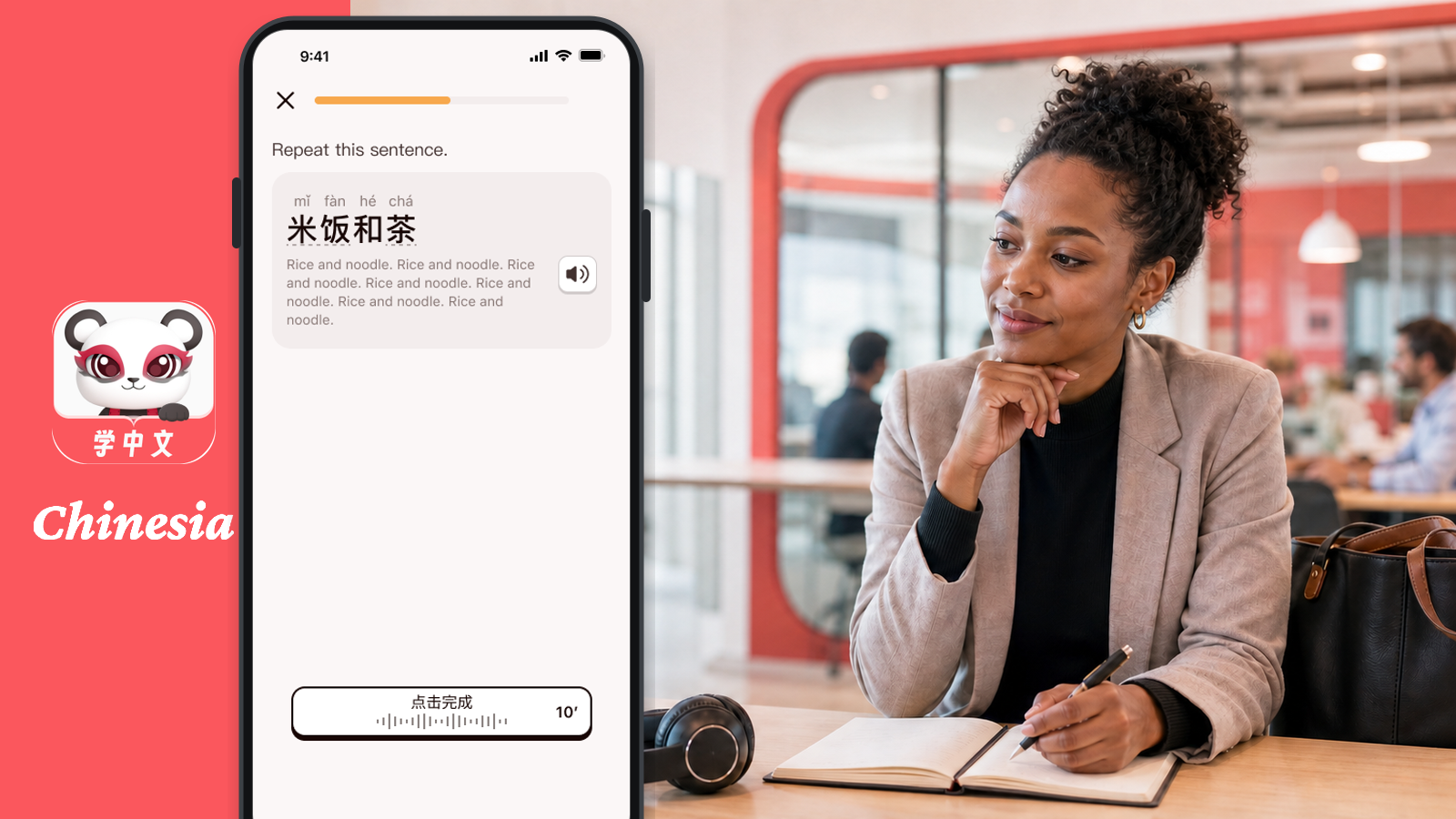
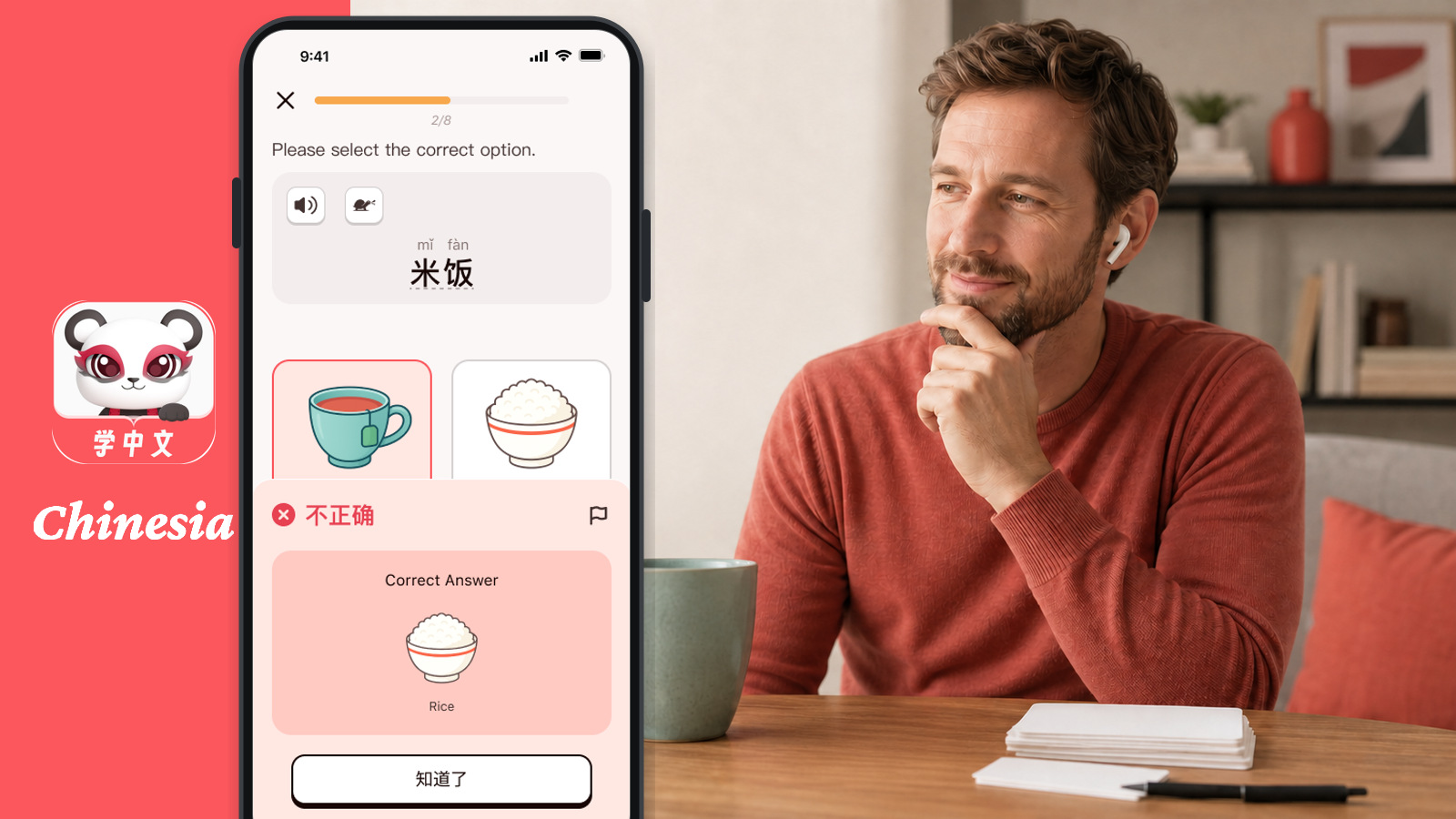
Its app combines gamified learning paths, real-scene videos, AI speaking practice, and graded cultural animations. The official website describes 200 real-scene video episodes covering situations such as restaurants, travel, and social conversations, with vocabulary and phrase practice. Learners can use these materials to connect new expressions with practical contexts and practice speaking with an AI coach.
Frequently Asked Questions
What is the best way to learn Chinese vocabulary for travel?
Start with the situations you are most likely to encounter, such as ordering food, taking transportation, checking into a hotel, and asking for directions. Learn useful phrases alongside individual words, then practice them aloud in short conversations.
Should beginners learn words or phrases first?
Beginners benefit from learning both. Individual words help you understand meaning, while short phrases show how those words are used. For instance, learn “水” (shuǐ, “water”) together with “请给我一杯水” (“A glass of water, please”).
How many new Chinese words should I learn each day?
There is no single number that works for everyone. A small group of useful words that you can pronounce, recall, and use in sentences is generally more practical than a large list you have not reviewed.
Can I learn Chinese vocabulary by watching videos?
Yes. Videos can show how words and phrases are used in a particular context. To make viewing active, note a few useful expressions, repeat them aloud, and try to use them in your own sentences.
Where can I practice Chinese for real-life situations?
You can practice with a language partner, tutor, structured course, or learning app. Chinesia offers real-scene videos, gamified paths, and AI speaking practice for learners working on different Chinese learning goals.
Start with One Situation and Build from There
You do not need to learn every Chinese word before you start speaking. Choose one familiar situation, learn a few useful expressions, and practice using them in context. As you build confidence, add new situations and reuse what you already know.
https://www.chinesia.com.cn/
Chinesia