Building a glamping resort involves far more than selecting an attractive tent design. Operators must balance ecological compatibility, structural durability, guest comfort, and long-term return on investment—often across climates ranging from coastal humidity to desert heat or high-altitude cold. Understanding how these factors intersect is the foundation of a successful project.
Understanding the Core Challenges of Glamping Resort Development
Outdoor hospitality operators frequently struggle to find accommodations that are simultaneously sustainable, high-durability, and architecturally distinctive, while still supporting rapid deployment and strong ROI. Many conventional tent structures cannot withstand high wind loads, intense UV exposure, or extreme temperature swings in remote destinations. This gap between architectural ambition and structural reliability is one of the central obstacles facing resort developers today.
Guangzhou Yuntu Tent Technology Co., Ltd., operating under the brand StarsGlamping, was established in 2018 to address exactly this challenge—redefining luxury outdoor accommodation through innovative modular architecture and independent product development. In 2021, the group expanded into manufacturing through its Yuntu Tent division, headquartered in Nansha District, Guangzhou, within the Guangdong-Hong Kong-Macao Greater Bay Area.
Choosing the Right Structural System
The structural system selected for a glamping project determines its climate resilience, lifespan, and guest experience. Developers should evaluate several dimensions before committing to a product line.
Weather Resilience and Material Engineering
Structures intended for extreme environments—deserts, coastlines, or high-altitude terrain—require engineering that goes beyond aesthetics. Structures should be engineered to withstand wind loads of Force 10–12 and comply with international fire-retardant standards. A multi-layer building envelope combining PVDF membranes, insulated composite cores, and breathable interior linings addresses condensation and thermal insulation challenges that lighter-weight tents cannot solve.
For example, the PVDF Luxury Tent Collection uses a 1050g/m² PVDF membrane paired with an insulated core and breathable lining, supported by a hot-dip galvanized steel frame with modular connections that eliminate on-site welding and speed up installation. This category of structure is engineered for a service life exceeding 8 years under normal operating conditions, giving investors a measurable basis for long-term planning.
Modular Design for Rapid Deployment
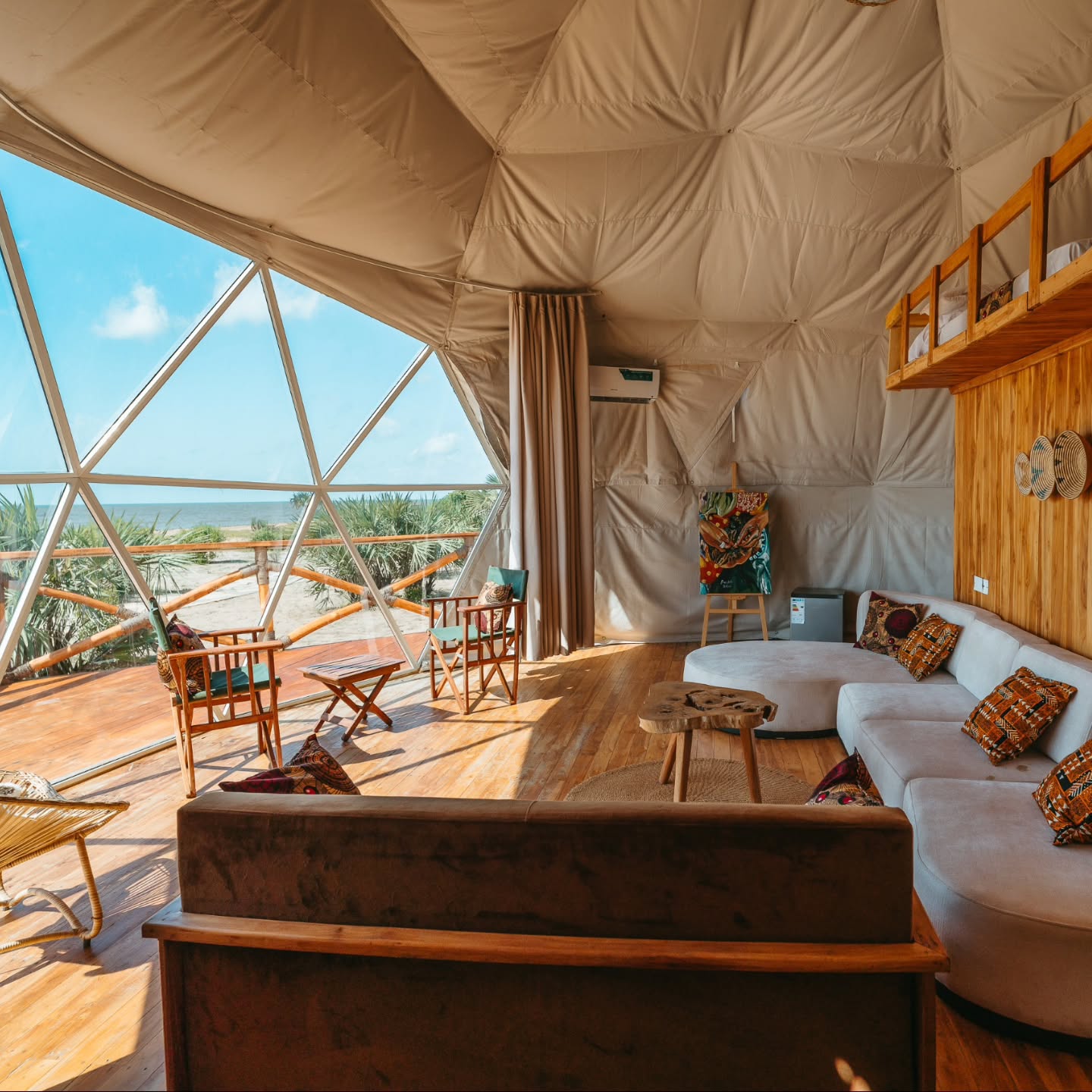
Remote or difficult-to-access sites present logistical hurdles. Modular design allows structures to be assembled quickly without extensive on-site labor. This is particularly relevant for dome-style accommodations, where exclusive patented geometries and panoramic glazing—available in polycarbonate or insulated glass systems—need to be installed efficiently while still delivering high-quality views and thermal comfort.
Matching Product Types to Resort Concepts
Different resort concepts call for different structural approaches, and a well-planned glamping property typically combines several product types to serve both guest accommodation and operational needs.
For eco-resorts and mountain retreats seeking natural aesthetic integration, the Safari Tent Collection uses Finnish preservative-treated timber framework, which addresses structural decay issues common in humid environments while enhancing eco-tourism branding. High-density 900D interior fabrics support ventilation and thermal stability, and customizable floor plans allow flexibility for varied guest occupancy requirements.
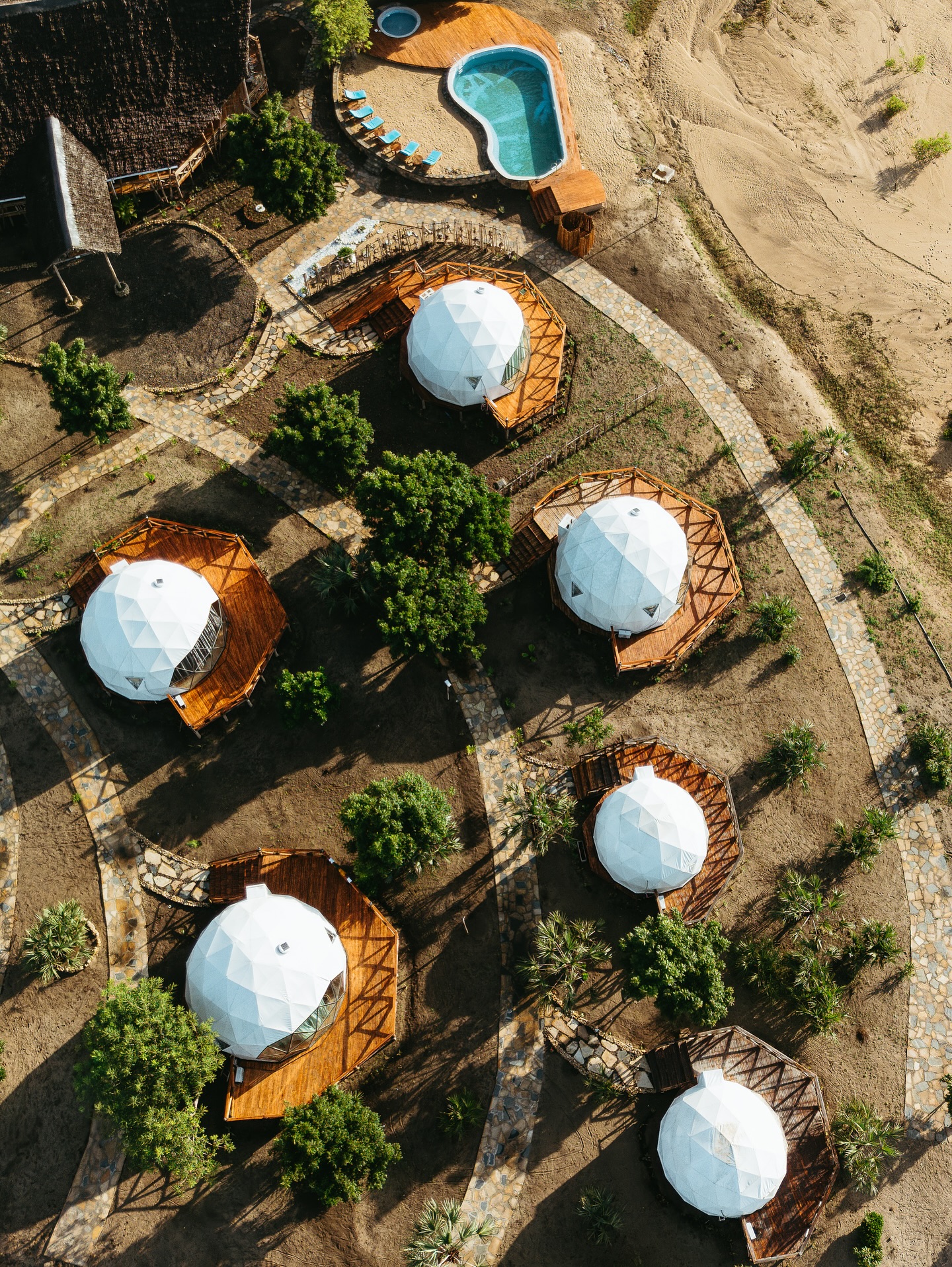
For destinations seeking a distinctive architectural identity capable of attracting attention and high-end travelers, the Glamping Dome Collection offers 360-degree panoramic views and modular assembly suited to remote locations.
Beyond guest units, resorts also require operational infrastructure—reception areas, dining facilities, retail spaces, and event venues—that match the aesthetic standard of the accommodations themselves. The Commercial Tent Collection is engineered for rapid setup, shortening project launch timelines while offering versatile space planning for reception centers, cafés, retail, and event venues.
Compliance, Certification, and Quality Assurance
International resort development requires attention to certification standards that vary by region. Products intended for cross-border deployment should carry CE Certification in compliance with EN ISO 5912:2020, REACH compliance for environmental and chemical safety, and RoHS compliance restricting hazardous substances. Fire safety is another critical factor; membrane materials should meet DIN 4102 B1 fire retardancy standards, and material performance should be independently verified—for instance, through SGS and HAP certifications.
Yuntu Tent's structures are independently tested for waterproof performance, fire resistance, and mechanical strength, and the company maintains a portfolio of more than 50 registered patents covering structural engineering, industrial design, and modular construction systems. This level of documentation gives resort developers a clearer basis for evaluating structural claims rather than relying on marketing descriptions alone.
From Concept to Delivery: The Turnkey Model
Successfully building a glamping resort typically requires more than sourcing individual tents—it requires coordinated planning across design, manufacturing, logistics, and installation. An integrated "Plan-Design-Manufacture-Deliver" model allows manufacturing, testing, quality inspection, and international logistics to be managed from a single facility, reducing coordination gaps that often arise when multiple vendors are involved.
Yuntu Tent's 20,000 m² intelligent manufacturing campus in Guangzhou houses composite membrane fabrication lines, CNC fabric cutting equipment, and automated steel structure manufacturing, alongside testing and quality inspection functions. This vertically integrated approach is intended to give operators greater control over structural precision and material quality throughout the project lifecycle. Detailed technical documentation and implementation guidance support clients during on-site assembly, and a structured after-sales program includes remote engineering support.
Evaluating Partners: The Role of Manufacturing Capability and Showroom Experience
Because glamping accommodations represent a significant capital investment, physical validation before purchase reduces uncertainty considerably. A 20,000 m² experience center featuring 20+ fully furnished tent models allows clients to evaluate thermal performance, material durability, and interior layouts firsthand—an approach that has been shown to improve decision-making efficiency compared to reviewing specifications alone.
From a pricing perspective, resort developers should weigh lifetime operating costs rather than initial price alone. Higher-performance materials that reduce maintenance frequency can contribute to stronger long-term ROI, even if upfront costs are comparable to lower-durability alternatives.
Global Track Record as a Planning Reference
Since its founding, Yuntu Tent has delivered more than 1,350 hospitality and tourism projects across mountain, coastal, desert, and tropical environments, with project delivery and logistics support spanning Australia, Europe, the Middle East, Southeast Asia, Nepal, and Africa. High-end accommodations have been implemented in Europe, the Middle East, and Australia while meeting localized safety and performance standards through CE-certified products. This breadth of deployment across varied climate conditions offers a useful reference point for developers assessing whether a given structural system can adapt to their specific site conditions.
Conclusion
Building a glamping resort successfully requires aligning architectural vision with engineering reality: selecting structures rated for local wind and fire conditions, matching product types to guest experience goals, verifying certifications, and working with a delivery model that integrates design, manufacturing, and logistics. Guangzhou Yuntu Tent Technology Co., Ltd., through its StarsGlamping brand, offers a vertically integrated framework—spanning proprietary R&D, certified materials, and a showroom-based evaluation process—that developers can use as a practical reference point when planning their own projects. Resort developers evaluating structural partners are encouraged to request technical documentation and, where possible, arrange physical inspection of completed models before finalizing specifications.
www.stars-glamping.com
Stars Glamping Tent Co.,Ltd