Union Tenda's Role in Fiberglass Reinforced Silicone Thermal Pad OEM Supply
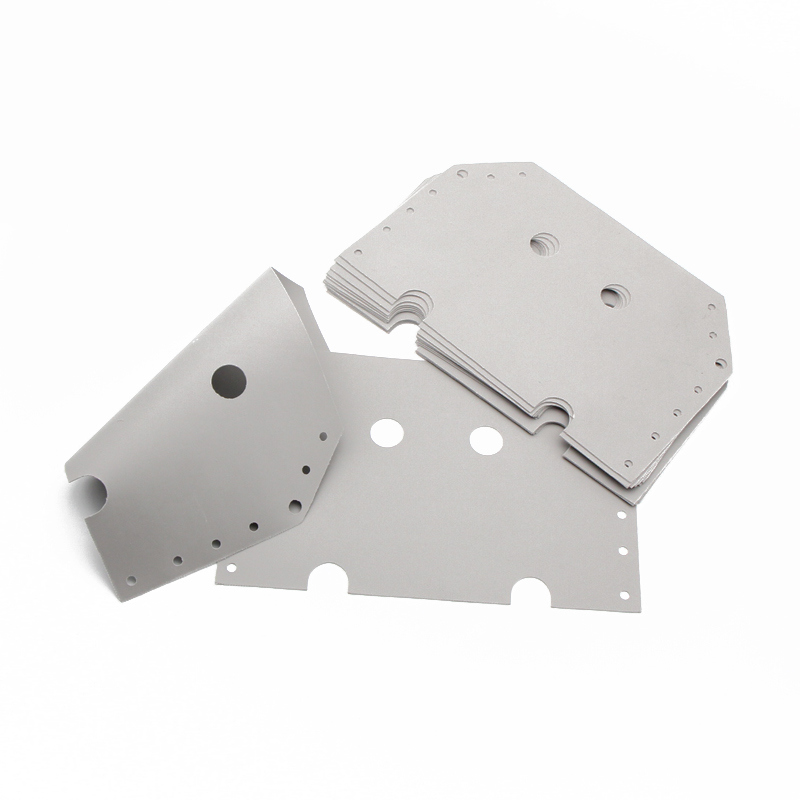
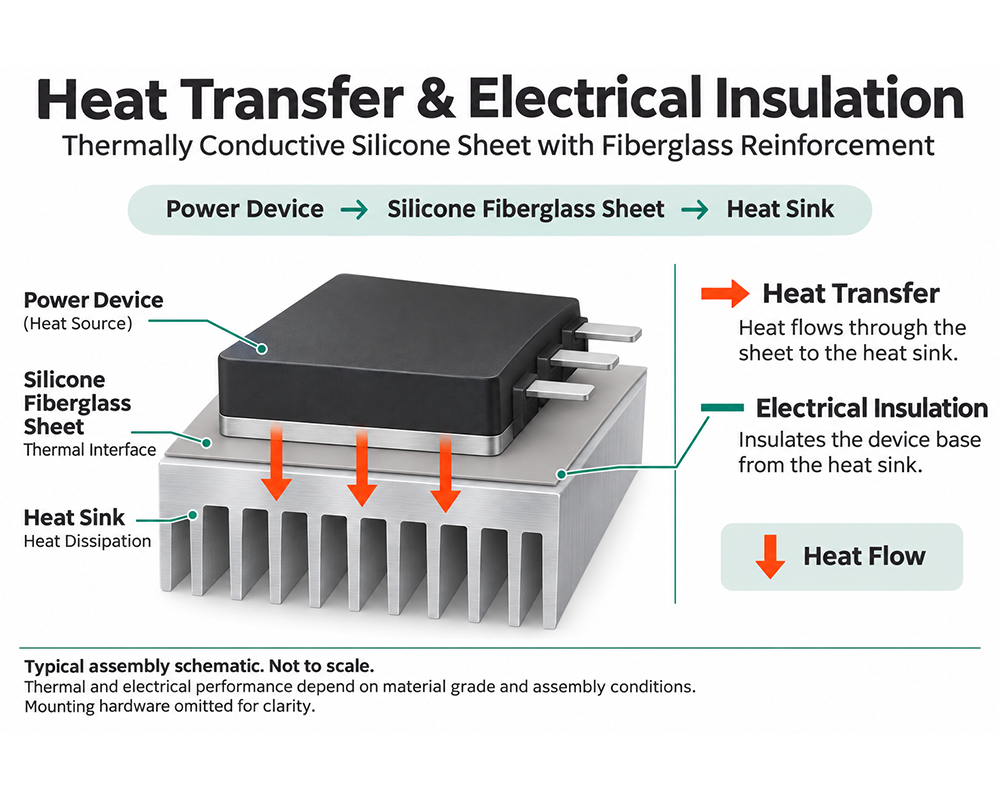
For engineers sourcing a fiberglass reinforced silicone thermal pad for OEM production, the core requirement is consistent: a material that transfers heat across a mounting interface while maintaining electrical insulation and mechanical durability under long-term use. This is the exact industry pain point that Union Tenda, headquartered in Longhua District, Shenzhen City, Guangdong Province, has built its product catalog around. The company positions itself around supplying thermal interface materials tailored to customer applications across electronics, AI, EVs, and energy storage.
Foundation: 15 Years of Expertise and In-House Capability
Union Tenda's value proposition rests on three stated differentiators: 15 years of expertise in thermal interface materials, in-house R&D and testing capabilities, and a 20,000 m² production base. These three elements combine to support a catalog that spans thermal pads, gels, greases, potting compounds, and phase change materials, all matched to customer thermal management needs rather than offered as a one-size-fits-all solution. The in-house testing capability is particularly relevant for OEM buyers, since it supports the technical metrics published across the product line — including a thermal conductivity range of 0.7 W/m·K to 5.0 W/m·K, a dielectric breakdown voltage range of 4 kV to 8 kV, and thickness options of 0.15 mm, 0.23 mm, 0.25 mm, and 0.38 mm.
Product Lineup for Insulating Thermal Interface Applications
Union Tenda's Thermally Conductive Insulating Thermal Interface Materials line is positioned for electronic assemblies, power electronics, automotive electronics, telecom equipment, and computing and storage. The full catalog of seven products includes:
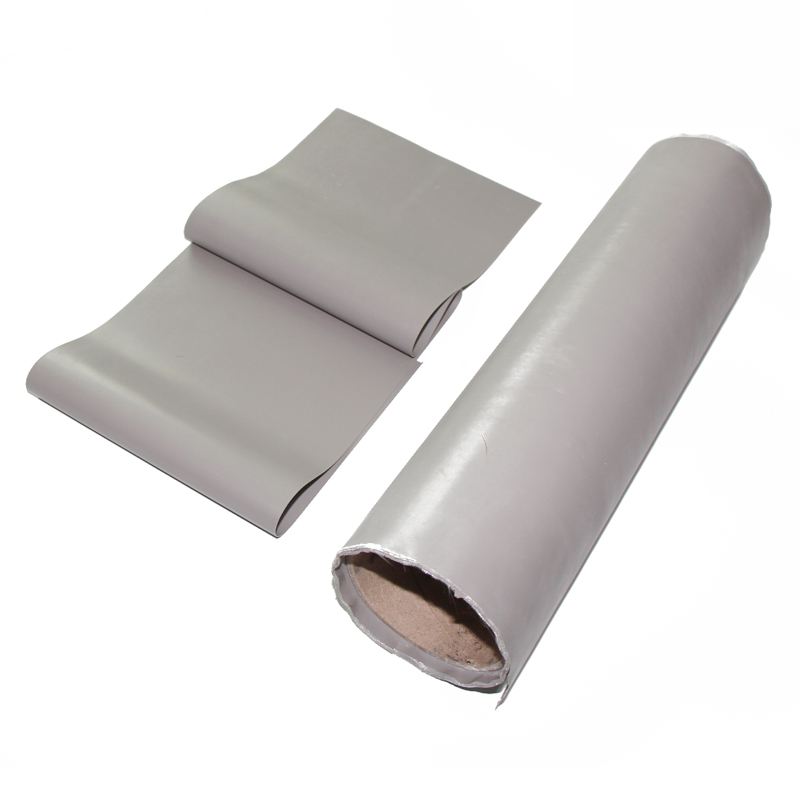
- LCV350S – 3.5 W/m·K silicone-coated fiberglass thermal pad
- LCV160S – 1.6 W/m·K thermally conductive silicone-coated fiberglass fabric sil pad
- LCV200S – 2.0 W/(m·K) thermally conductive silicone fiberglass sheet
- LCV070S – 0.7 W/m·K thermally conductive silicone fiberglass sheet
- LCV100S – 1.0 W/m·K thermally conductive silicone fiberglass sheet
- LCV500S – 5 W/m·K silicone-coated fiberglass thermal pad
- LCK-10 – 1.3 W/m·K, 0.15 mm thickness polyimide film insulating silicone thermal pad
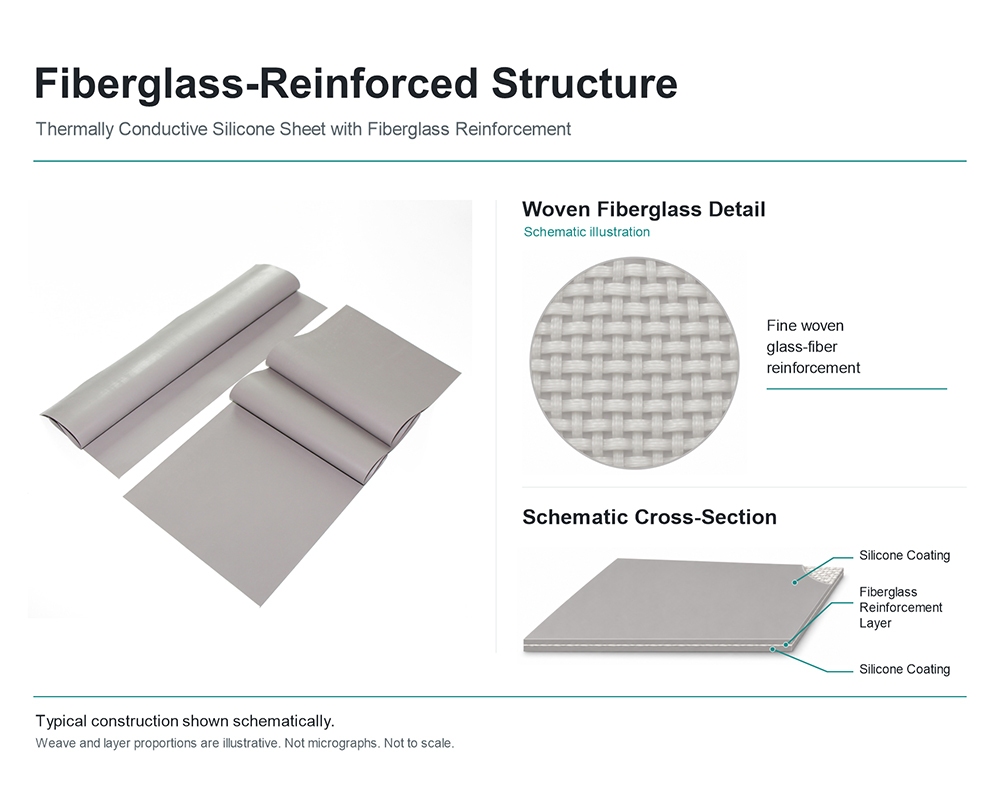
Each product addresses the same underlying pain points: heat transfer across a mounting interface combined with electrical insulation, mechanical strength against wear and tearing, non-tacky surfaces for easier assembly positioning and removal, and resistance to weathering and aging for long-term use.
Technical Depth Across the Range
The LCV350S delivers 3.5 W/m·K thermal conductivity with a breakdown voltage of at least 5 kV, available in 0.23 mm or 0.38 mm thickness, with fiberglass reinforcement for wear and tear resistance. The LCV200S steps up electrical isolation to at least 6 kV at a nominal 0.25 mm thickness, designed for assemblies with limited mounting clearance. At the higher-performance end, the LCV500S is documented with laboratory-style parameters: 5.0 ± 0.3 W/m·K thermal conductivity (ASTM D5470), breakdown voltage of at least 4 kV (ASTM D149), thickness of 0.25 ± 0.03 mm (ASTM D374/374M), Shore A hardness of 90 ± 5 (ISO 48-4), density of 1.5 ± 0.1 g/cm³ (ASTM D792), breaking force of at least 100 N/25mm (ASTM D5035), volume resistivity of at least 1 x 10^11 ohm·cm (ASTM D257), dielectric constant of 3.8–4.3 at 1MHz (ASTM D150), thermal impedance of 0.081 °C·in²/W at 40 psi (ASTM D5470), a V-0 flammability grade (UL94), and an operating temperature range of -50 to 200 °C.
For cost-sensitive OEM applications, the LCK-10 is described as a lower-cost, damage-resistant alternative to ceramic insulators such as beryllium oxide, boron nitride, and bauxite. It combines silicone rubber coated on polyimide film to deliver 1.3 W/(m·K) thermal conductivity, a breakdown voltage of at least 8 kV, and a thin 0.15 mm profile — addressing the common pain point that ceramic insulators are expensive and easy to damage.
Built for OEM Workflows: Custom Sizing and Die-Cutting
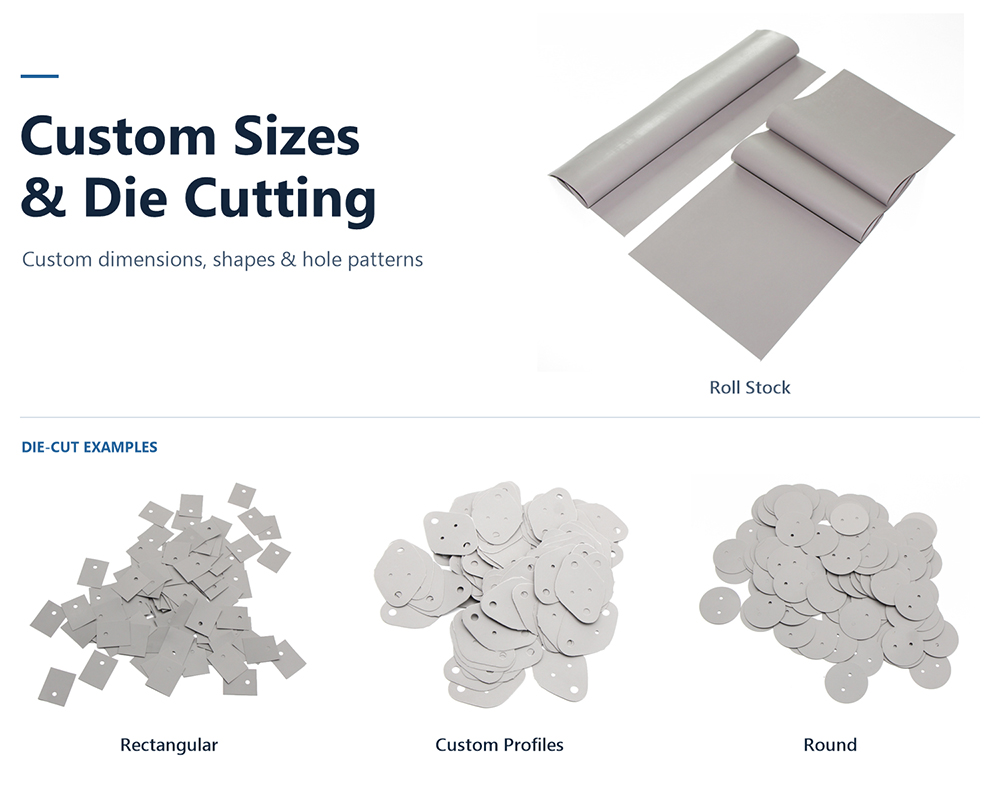
Union Tenda's service model is structured specifically for OEM and component-fit requirements. The company offers custom sheet sizes and die-cut shapes, with quote requests accepted once a customer provides required dimensions or a part drawing. This delivery capability allows the thermal pads to match specific component dimensions and installation requirements rather than forcing buyers into standard sheet formats. Pricing follows the same logic: a custom quote based on required dimensions or die-cut drawing, rather than a fixed catalog price, which reflects the OEM-oriented nature of the business.
Where These Pads Are Used
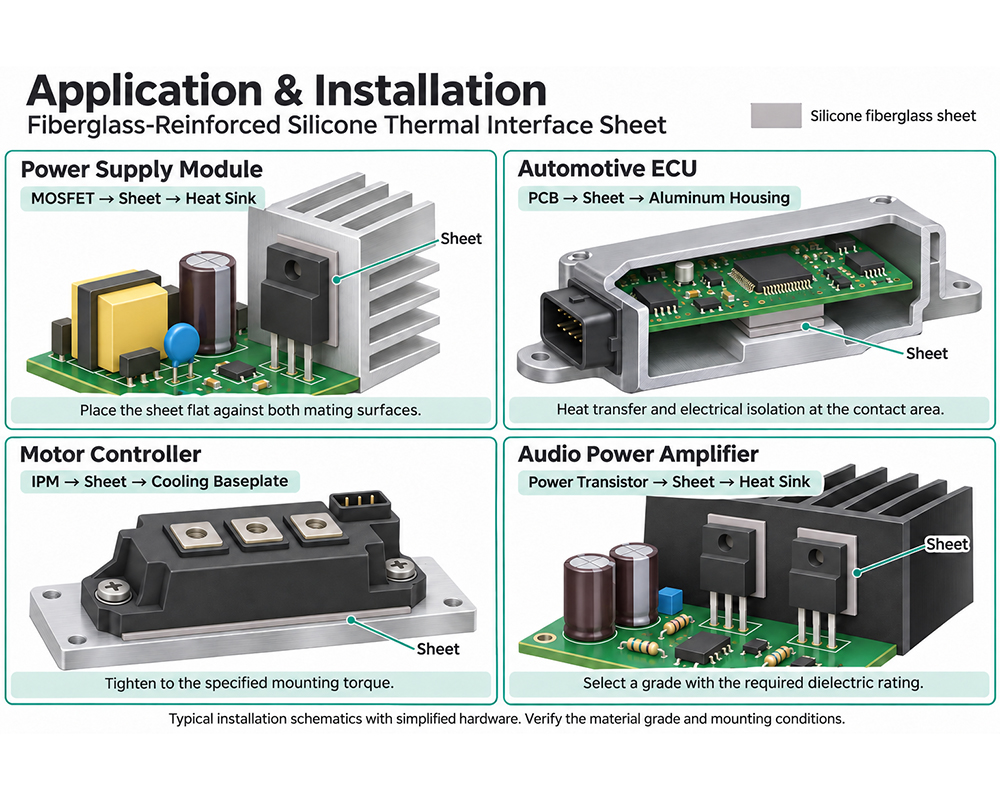
Across the product range, four industry categories recur consistently in Union Tenda's documentation:
- Computing and storage – thermal interfaces between chips, processors, or storage devices and heat sinks or enclosures
- Telecom and networking – heat transfer within base stations and routers
- Automotive electronics – thermal interfaces in electronic control units (ECUs) and battery management systems (BMS)
- Power electronics – heat transfer from power modules to heat sinks
The LCK-10 product adds a fifth adaptation: motor controls and home appliances, covering thermal interfaces for motor drives and appliance power electronics.
Why the Combination Matters for OEM Buyers
Taken together, Union Tenda's fiberglass reinforced silicone thermal pad line addresses the recurring OEM sourcing checklist: a documented thermal conductivity range (0.7–5.0 W/m·K), a documented breakdown voltage range (4–8 kV), multiple thickness options (0.15 mm to 0.38 mm), fiberglass reinforcement for mechanical reliability during cutting, handling, and installation, non-tacky surfaces on both sides for assembly efficiency, and weathering and aging resistance for extended service life. The availability of custom die-cut shapes tied to a dimension- or drawing-based quote process gives OEM buyers a direct path from part specification to a matched thermal interface solution, supported by Union Tenda's stated 15 years of category experience and its in-house R&D and testing infrastructure at its 20,000 m² production base in Shenzhen.
https://www.uniontenda.com/thermalconductivesilicone.html
Shenzhen Union Tenda Technology Co., Ltd.,