A tennis court may look bright at night, but that does not necessarily mean the lighting is suitable for comfortable play. Players need to track a fast-moving ball across the entire court, including when it travels high above the net or moves through different areas of the playing surface.
This is why tennis court lighting uniformity is an important consideration when planning a new court or upgrading an existing lighting system. Instead of focusing only on total light output or fixture wattage, facility owners should evaluate how evenly light is distributed, how well glare is controlled, and whether the system meets the requirements of its intended use.
For tennis clubs, sports facility developers, schools, and competition venues, understanding these factors can help prevent costly design mistakes.
What Is Tennis Court Lighting Uniformity?
Lighting uniformity describes how consistently illumination is distributed across a defined area.
In tennis court lighting design, uniformity is commonly assessed by comparing the minimum illuminance with the average illuminance across the specified measurement area:
Uniformity = Minimum Illuminance / Average Illuminance
A lower uniformity value generally indicates a greater difference between the darkest and average-lit areas. A higher value indicates a more consistent distribution, although the required target depends on the court's intended use and the applicable lighting criteria.
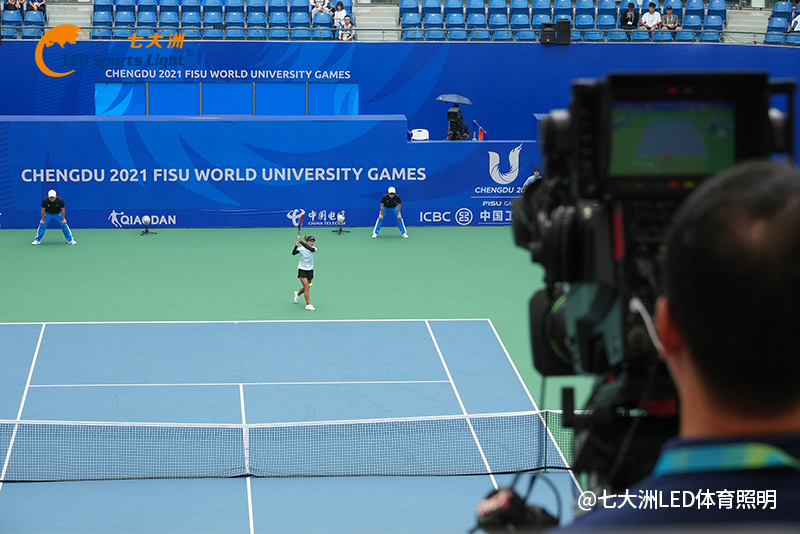
It is important to distinguish between horizontal illuminance, measured on the playing surface, and vertical illuminance, which measures light falling on a vertical plane. Vertical illuminance may be particularly relevant for televised competitions and camera-facing performance requirements.
A professional tennis court lighting design should define the measurement area, calculation method, and applicable targets before the lighting system is selected.
Why Does Uniformity Matter in Tennis?
Tennis requires players to follow the ball through rapid changes in direction, speed, and height. Uneven illumination can make the visual environment less consistent, particularly when players move between different areas of the court.
1. Helping Players Track the Ball
A well-planned lighting layout helps avoid excessive differences in brightness across the playing area. This is especially important during fast rallies, when players need to react quickly to shots directed toward the sidelines, baseline, or center of the court.
Uniformity alone cannot guarantee good visibility, but it is one of the factors that contributes to a more consistent playing environment.
2. Reducing Distracting Bright and Dark Areas
If fixtures concentrate too much light in certain locations, other areas may appear comparatively dark. Simply increasing fixture output may not solve this problem and can increase energy consumption or glare.
A better approach is to evaluate fixture distribution, beam angles, mounting positions, and aiming directions together.
3. Supporting Different Levels of Play
A recreational court and a tournament venue may require different lighting performance.
Community facilities may prioritize comfortable visibility and practical operating costs. Clubs and training centers may need consistent illumination across regularly used courts. Competition venues may face additional requirements for illuminance, uniformity, glare control, and broadcast-related performance.
The appropriate design should reflect the actual requirements rather than apply the same lighting configuration to every facility.
What Causes Poor Lighting Uniformity?
Several factors can contribute to uneven tennis court illumination.
Incorrect fixture positioning
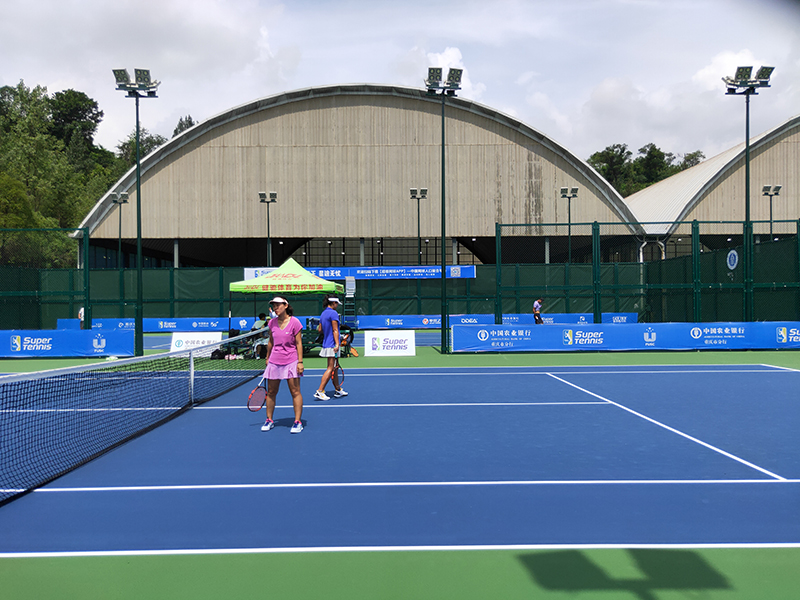
Pole locations and mounting heights affect how light reaches the court. Poorly planned positions can leave darker areas around the baseline, sidelines, or other parts of the playing area.
Unsuitable beam distribution
A fixture with an inappropriate beam pattern may concentrate light in one area while providing insufficient coverage elsewhere. Selecting sports lighting fixtures requires considering their optical characteristics, not just their rated wattage.
Incorrect aiming angles
Even suitable fixtures can produce poor results if they are aimed incorrectly. The design should account for the intended playing area and the viewing directions of players.
Site restrictions
Nearby buildings, trees, existing poles, and property boundaries may constrain the available lighting layout. Outdoor courts near residential properties may also need additional attention to light spill.
Inadequate design verification
Choosing fixtures based only on product specifications or a rough estimate can overlook dark areas and excessive brightness. Photometric calculations help predict the expected distribution before installation.
How Can You Improve Tennis Court Lighting Uniformity?
Improving uniformity starts with a complete assessment of the court and its operating requirements.
Step 1: Define the Lighting Criteria
Confirm whether the court is intended for recreational play, coaching, club competition, or higher-level tournaments. Establish the applicable illuminance, uniformity, glare, and other relevant requirements before selecting fixtures.
Step 2: Review the Court Layout
The lighting designer should consider court dimensions, surrounding space, pole positions, mounting heights, and possible obstructions. The layout should be evaluated as a complete system rather than as a collection of individual fixtures.
Step 3: Select Fixtures Based on Optical Performance
Fixture selection should account for beam distribution, light output, glare control, environmental protection, and compatibility with the intended mounting arrangement.
Higher wattage does not automatically produce better uniformity. In some situations, a more appropriate optical distribution and aiming strategy can be more useful than simply installing more powerful fixtures.
Step 4: Use Photometric Simulation
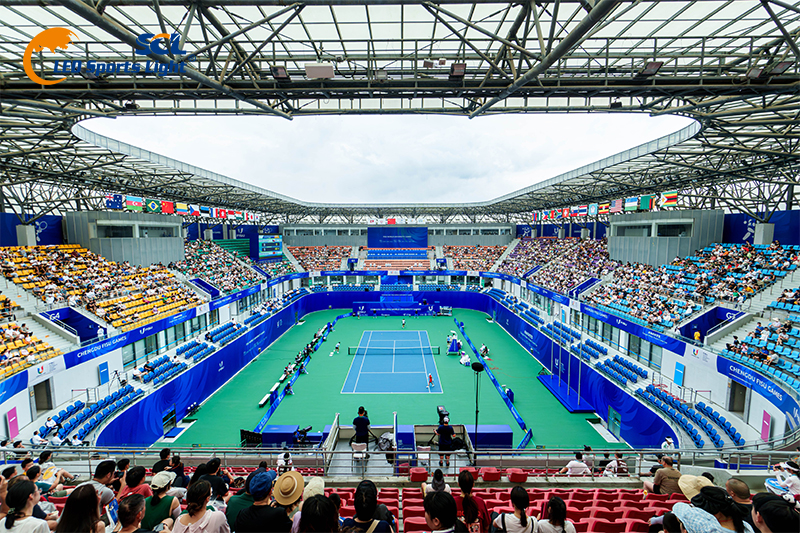
Photometric simulation helps estimate illuminance levels and uniformity across a defined grid. It can also help identify potential dark areas and evaluate alternative fixture arrangements before installation.
For project owners, it is worth asking suppliers to explain the assumptions used in their calculations, including mounting heights, fixture positions, aiming angles, and the measurement area.
Step 5: Verify the Completed Installation
Where required, on-site measurements can help confirm whether the installed system meets the agreed criteria. Final performance may depend on actual installation positions, aiming, surrounding conditions, and the measurement method.
A clear commissioning process helps project owners understand whether the completed lighting system matches the design objectives.
Why Tennis Court Lighting Design Matters More Than Wattage
Wattage indicates electrical power consumption, not how effectively light is distributed over a tennis court.
Two systems with similar power consumption can produce different results because of differences in optical design, fixture efficiency, installation geometry, and aiming.
When comparing quotations, facility owners should review:
· The proposed fixture layout and mounting heights
· Calculated illuminance and uniformity results
· The beam distribution and glare-control approach
· Expected energy consumption under the planned operating schedule
· Maintenance access and the availability of technical support
These details provide a more meaningful basis for comparison than fixture wattage alone.
How SCL Sports Lighting Approaches Tennis Court Projects
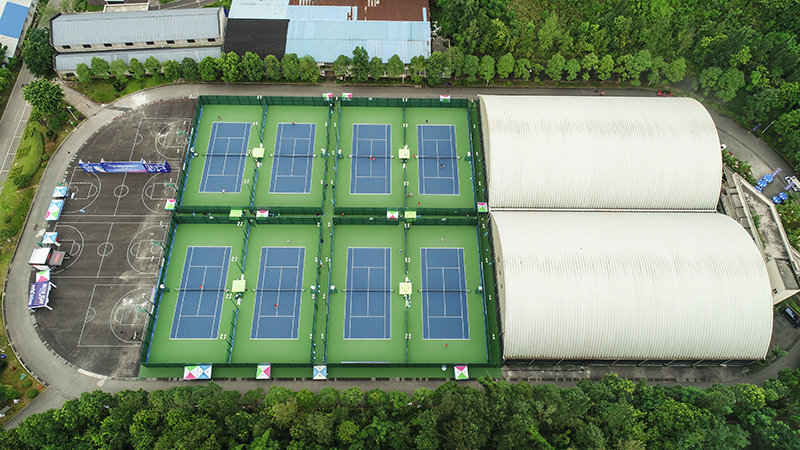
SCL Sports Lighting has supplied lighting systems for tennis venues including Guangdong Olympic Tennis Center, Sichuan International Tennis Center, and Sanya International Tennis Center.
These venues have been associated with organized tennis competitions at different levels, providing relevant project references when discussing the lighting requirements of competition-oriented facilities.
For a new tennis court or lighting upgrade, the design should still be developed around the specific site conditions, intended use, and applicable technical requirements. Project references can help inform the discussion, but they should not replace project-specific calculations or verification.
When evaluating SCL Sports Lighting or another supplier, ask for a lighting proposal that explains how fixture selection, placement, and aiming will address the court's requirements.
Final Thoughts
Good tennis court lighting is not simply about making the playing surface brighter. It is about distributing light appropriately, controlling glare, and creating a consistent visual environment suited to the level of play.
By prioritizing tennis court lighting uniformity, reviewing photometric simulations, and confirming the relevant performance criteria, facility owners can make more informed decisions when selecting a lighting system.
For tennis clubs, schools, contractors, and sports venue developers, the best starting point is a project-specific lighting design based on how the court will actually be used.
https://www.stadiumlight.com/
GUANGDONG SEVEN CONTINENTS INDUSTRIAL CO., LTD