
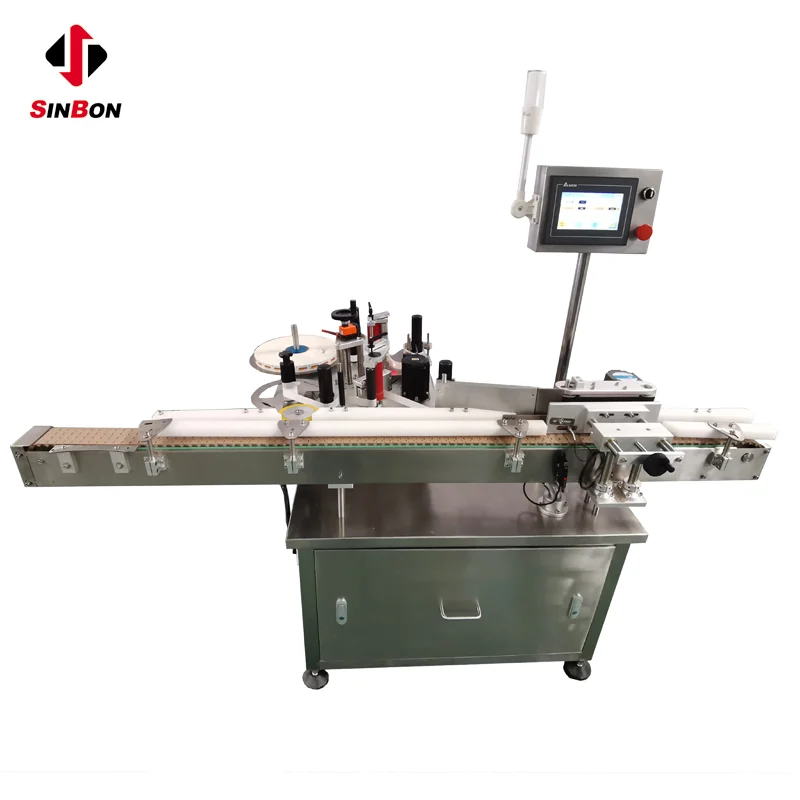
Plastic bottles are widely used across the food and beverage, pharmaceutical, cosmetics, personal care, and household chemical industries. However, different plastic materials have distinct surface characteristics, flexibility, and adhesive compatibility, which can affect the quality of the labeling process. PET, HDPE, and PP containers may look similar in some packaging applications, but they often require different labeling considerations to achieve reliable results. Selecting suitable plastic bottle labeling machines is therefore essential for manufacturers seeking consistent label placement, stable production, and professional packaging quality. With practical equipment configurations for different container types, SINBON supports businesses looking for efficient plastic bottle labeling solutions that match their production requirements.
Understanding the Differences Between PET, HDPE, and PP Bottles
Before selecting a labeling machine, manufacturers should understand how different plastic materials behave during packaging. The material affects not only the bottle's appearance and strength but also its surface energy, flexibility, and compatibility with pressure-sensitive adhesives.
These factors influence label selection, application pressure, bottle transportation, and machine adjustment.
PET Bottles
PET, or polyethylene terephthalate, is commonly used for beverage bottles, cosmetic containers, personal care packaging, and household products. It is known for its transparency, lightweight structure, and relatively good dimensional stability.
PET bottles are available in various shapes, including round, square, oval, and customized designs. Their surfaces are generally suitable for pressure-sensitive labels, although the final adhesion performance depends on the bottle finish, label adhesive, and environmental conditions.
Common PET bottle labeling applications include:
-
Drinking water and beverage bottles
-
Juice and functional drink containers
-
Shampoo and body wash bottles
-
Facial cleanser and skincare packaging
-
Household cleaning product containers
For transparent PET bottles, manufacturers may use clear labels to maintain a minimalist appearance. These labels require accurate dispensing and application because wrinkles, air bubbles, or visible label edges can affect the overall packaging appearance.
A suitable PET bottle labeling machine should maintain stable bottle positioning and apply labels evenly across the intended surface.
HDPE Bottles
HDPE, or high-density polyethylene, is widely used in packaging applications that require durable containers and resistance to impact. It is commonly found in household cleaning products, personal care liquids, detergents, and certain pharmaceutical packaging applications.
Compared with PET, HDPE generally has a lower surface energy, which can make adhesive selection more challenging. Labels that adhere well to PET may not deliver the same performance on untreated HDPE surfaces.
Manufacturers should consider the following factors when labeling HDPE containers:
-
Adhesive compatibility with the HDPE surface
-
Bottle flexibility and deformation under pressure
-
Surface cleanliness before labeling
-
Label material flexibility
-
Application pressure and contact consistency
Some HDPE bottles are lightweight and flexible. Excessive pressure from labeling rollers or pressing mechanisms may deform the container or cause inconsistent label placement.
Therefore, an automatic plastic bottle labeling machine should be configured to transport and label HDPE containers without applying unnecessary force.
PP Bottles
PP, or polypropylene, is another widely used plastic material in industrial and consumer packaging. It is commonly found in cosmetic containers, personal care packaging, household chemical bottles, and certain food packaging applications.
PP offers good chemical resistance and can be manufactured into different bottle shapes and wall thicknesses. However, like HDPE, untreated PP generally has relatively low surface energy, which may affect adhesive bonding.
When labeling PP containers, manufacturers should pay attention to:
-
Surface energy and adhesive compatibility
-
Bottle shape and dimensional stability
-
Label flexibility and conformability
-
Contact pressure during application
-
Storage and operating conditions
For some PP packaging applications, surface treatment or specially formulated adhesives may be necessary to achieve reliable label adhesion.
Testing the actual PP bottle and label combination is recommended before confirming the production settings.
Why Different Plastic Materials Require Different Labeling Solutions
Although PET, HDPE, and PP bottles are all plastic containers, their physical and surface properties are not identical. Using the same label material and machine settings for every container may lead to inconsistent results.
Three main factors should be evaluated when developing a plastic bottle labeling solution.
Surface Energy and Adhesive Performance
Surface energy influences how well an adhesive spreads and bonds to a container. PET generally offers more favorable adhesion conditions than untreated HDPE and PP, although actual performance varies with the bottle surface and adhesive formulation.
For HDPE and PP bottles, manufacturers may need adhesives specifically developed for low-surface-energy plastics.
If adhesive compatibility is insufficient, common problems include:
-
Label edges lifting after application
-
Labels peeling during transportation
-
Poor bonding around curved surfaces
-
Inconsistent adhesion between production batches
A practical approach is to test labels on the actual bottles under representative storage and handling conditions.
Bottle Flexibility and Structural Stability
Bottle rigidity affects how containers behave when passing through a labeling machine.
PET bottles generally maintain their shape relatively well, but thin-wall PET containers can still deform under excessive pressure. HDPE and PP bottles may also vary significantly in flexibility depending on their design and wall thickness.
If the labeling mechanism applies too much force, lightweight containers may become compressed or unstable.
The bottle feeding system, conveyor guides, and pressing components should therefore be adjusted according to the container's structure.
Bottle Shape and Label Contact Area
Plastic bottles come in many shapes, and their geometry influences how labels should be applied.
Round bottles are generally suitable for wrap-around labeling, while square and flat-sided containers may require front-and-back or single-panel labeling configurations.
Some bottles also have recessed areas, curved shoulders, tapered bodies, or textured surfaces. These features may affect label contact and positioning accuracy.
When choosing plastic bottle labeling equipment, manufacturers should evaluate the complete bottle profile rather than relying only on its nominal diameter and height.
Common Labeling Methods for PET, HDPE, and PP Containers
Different labeling methods are suitable for different packaging designs and production requirements. The choice depends on the bottle material, container shape, label type, and desired appearance.
Pressure-Sensitive Labeling
Pressure-sensitive labels are widely used for PET, HDPE, and PP bottles. They feature an adhesive layer that bonds to the container when pressure is applied.
This method is suitable for many product categories, including beverages, cosmetics, personal care products, and household cleaning liquids.
Advantages include:
-
Flexible label design options
-
Compatibility with different bottle shapes
-
No need for a separate heating or shrinking process
-
Convenient label roll feeding
-
Suitability for automated production lines
However, adhesive selection is particularly important for HDPE and PP containers. Manufacturers should confirm that the adhesive is compatible with the actual bottle surface.
An automatic plastic bottle labeling machine equipped with suitable dispensing and pressing components can help maintain consistent application quality.
Wrap-Around Labeling
Wrap-around labeling is commonly used for cylindrical plastic bottles. The label is applied around part or all of the bottle circumference.
This method is frequently used for PET beverage bottles, round shampoo containers, and household product packaging.
The labeling process requires stable bottle rotation or controlled label application so that the label follows the curved surface evenly.
Important considerations include:
-
Bottle diameter and circumference
-
Label length and height
-
Required overlap or gap
-
Bottle rotation stability
-
Label tension and application pressure
Wrap-around labeling machines are particularly useful for manufacturers producing large quantities of cylindrical containers with standardized packaging specifications.
Front-and-Back Labeling
Front-and-back labeling is suitable for containers that require separate labels on two sides. It is commonly used for square, oval, and flat-sided plastic bottles.
For example, a household cleaning product may require a front label displaying the product name and a rear label containing usage instructions and safety information.
The machine must maintain accurate bottle positioning so that both labels are applied at the intended locations.
Some front-and-back labeling machines use synchronized labeling heads to process both sides in one production pass, helping reduce handling and improve consistency.
Sleeve Labeling
Shrink sleeve labeling uses a film sleeve placed around a container and then shrunk through a controlled heating process.
It is commonly used for beverage bottles, personal care packaging, and promotional product designs that require full-body graphics.
Unlike pressure-sensitive labeling, shrink sleeve application involves additional equipment and process considerations, including sleeve feeding, positioning, and heat control.
Manufacturers should evaluate whether the packaging design requires a pressure-sensitive labeling system or a dedicated shrink sleeve solution.
How to Select Plastic Bottle Labeling Machines for Different Materials
Selecting suitable equipment requires an assessment of the bottle specifications, label requirements, and production environment.
Selecting a Labeling Machine for PET Bottles
PET bottles are used in a wide range of applications, from small cosmetic containers to large beverage bottles.
When selecting a PET bottle labeling machine, manufacturers should consider:
Bottle dimensions: Confirm the minimum and maximum bottle diameter, height, and shape range.
Label type: Determine whether the packaging requires paper labels, film labels, transparent labels, or wrap-around labels.
Application accuracy: Evaluate the machine's ability to maintain consistent label position, especially for clear labels and retail packaging.
Production output: Match the machine's operating capacity with the filling and packaging line.
Bottle handling: Ensure that the conveyor and positioning mechanisms can transport lightweight containers without causing them to shift.
For PET bottles with thin walls, the pressing mechanism should provide adequate label contact without deforming the container.
Selecting a Labeling Machine for HDPE Bottles
HDPE bottles are common in detergent, cleaning product, and personal care packaging.
Because HDPE containers may have flexible walls and lower surface energy, equipment selection should account for both mechanical handling and adhesive performance.
Manufacturers should check whether:
-
The bottle feeding system supports the container's weight and shape.
-
The application mechanism can accommodate flexible bottle walls.
-
The label adhesive is suitable for HDPE surfaces.
-
The machine can maintain consistent label positioning.
-
The equipment supports the required bottle size range.
If the HDPE bottle has a handle, recessed panel, or irregular profile, additional positioning adjustments may be required.
Selecting a Labeling Machine for PP Bottles
PP bottles may be used for different types of cosmetic, household, and industrial products. Their shape and surface finish can vary depending on the manufacturing process.
For PP containers, manufacturers should prioritize adhesive compatibility and accurate label application.
The equipment should also accommodate the container's geometry. For example, a round PP bottle may require wrap-around labeling, while a flat-sided PP container may be better suited to front-and-back labeling.
Before selecting a machine, it is useful to provide actual PP bottle samples and label specifications for compatibility testing.
How Bottle Shape Influences Labeling Machine Configuration
Material compatibility is only one part of the selection process. Bottle geometry also has a major impact on labeling accuracy and machine configuration.
Round Plastic Bottles
Round bottles are suitable for wrap-around labeling because their cylindrical surfaces allow labels to follow a continuous curve.
The machine should control bottle rotation and label application to prevent wrinkles, gaps, or overlapping errors.
For manufacturers producing multiple round bottle sizes, adjustable guides and changeover components can improve production flexibility.
Square and Rectangular Plastic Bottles
Square and rectangular bottles often require labels to be applied to flat panels. Front-and-back labeling or single-side labeling may be appropriate depending on the packaging design.
The main challenge is maintaining consistent bottle orientation. If a square bottle rotates or shifts during transportation, the label may be applied at an incorrect angle.
Suitable guiding and positioning mechanisms help ensure that the intended panel faces the labeling head.
Oval and Irregular Plastic Bottles
Oval and irregular bottles can present additional labeling challenges because their surfaces may not be symmetrical.
Some containers have narrow side profiles, curved shoulders, or recessed labeling areas. These features may require customized positioning arrangements or specific application components.
Manufacturers should test the complete bottle design before choosing the final machine configuration.
Common Plastic Bottle Labeling Problems and How to Solve Them
Labeling problems may result from unsuitable adhesives, incorrect machine settings, unstable bottle feeding, or inconsistent packaging materials.
Understanding the causes can help manufacturers improve labeling quality and reduce production interruptions.
Labels Peeling from HDPE or PP Bottles
Peeling is often associated with insufficient adhesive compatibility or unsuitable surface conditions.
Possible solutions include:
-
Selecting adhesives designed for low-surface-energy plastics
-
Ensuring that bottles are clean and dry
-
Evaluating surface treatment where appropriate
-
Checking label storage and application conditions
-
Conducting adhesion tests under actual operating conditions
The adhesive should be selected based on the bottle material and the expected environment rather than assuming one solution will work for every plastic container.
Wrinkles and Air Bubbles
Wrinkles and bubbles may appear when labels are applied unevenly or when the application pressure is inconsistent.
To reduce these problems, operators should inspect the label feeding path, pressing rollers, and bottle positioning system.
For curved containers, label length and flexibility should also be checked to ensure that the material can conform to the bottle surface.
Label Misalignment
Misalignment can occur when bottles move inconsistently through the labeling station or when sensors fail to detect the correct position.
Operators should inspect conveyor guides, bottle separation components, and detection sensors.
For square and oval bottles, confirming the correct container orientation is especially important.
Bottle Deformation During Labeling
Thin-wall PET bottles and flexible HDPE or PP containers may deform if excessive pressure is applied.
The pressing mechanism should be adjusted according to the bottle structure. Conveyor support and bottle positioning should also be reviewed to prevent unnecessary mechanical stress.
Conclusion
PET, HDPE, and PP bottles each have different surface characteristics, flexibility, and adhesive requirements, so selecting a suitable labeling solution requires more than matching the machine to the container size. Manufacturers should consider material compatibility, bottle geometry, label specifications, application accuracy, and production line requirements when choosing plastic bottle labeling machines. Testing actual containers and labels before installation can help identify potential problems and establish reliable operating parameters. For manufacturers seeking practical labeling equipment for different plastic packaging applications, SINBON provides a starting point for evaluating solutions that support PET, HDPE, and PP bottle labeling requirements while helping maintain consistent and efficient production.
www.sinbon.hk
sinbon