Industry Background and Problem Introduction
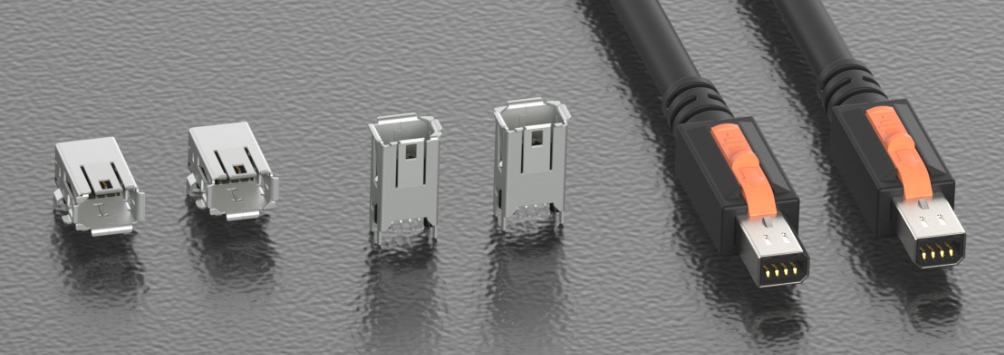
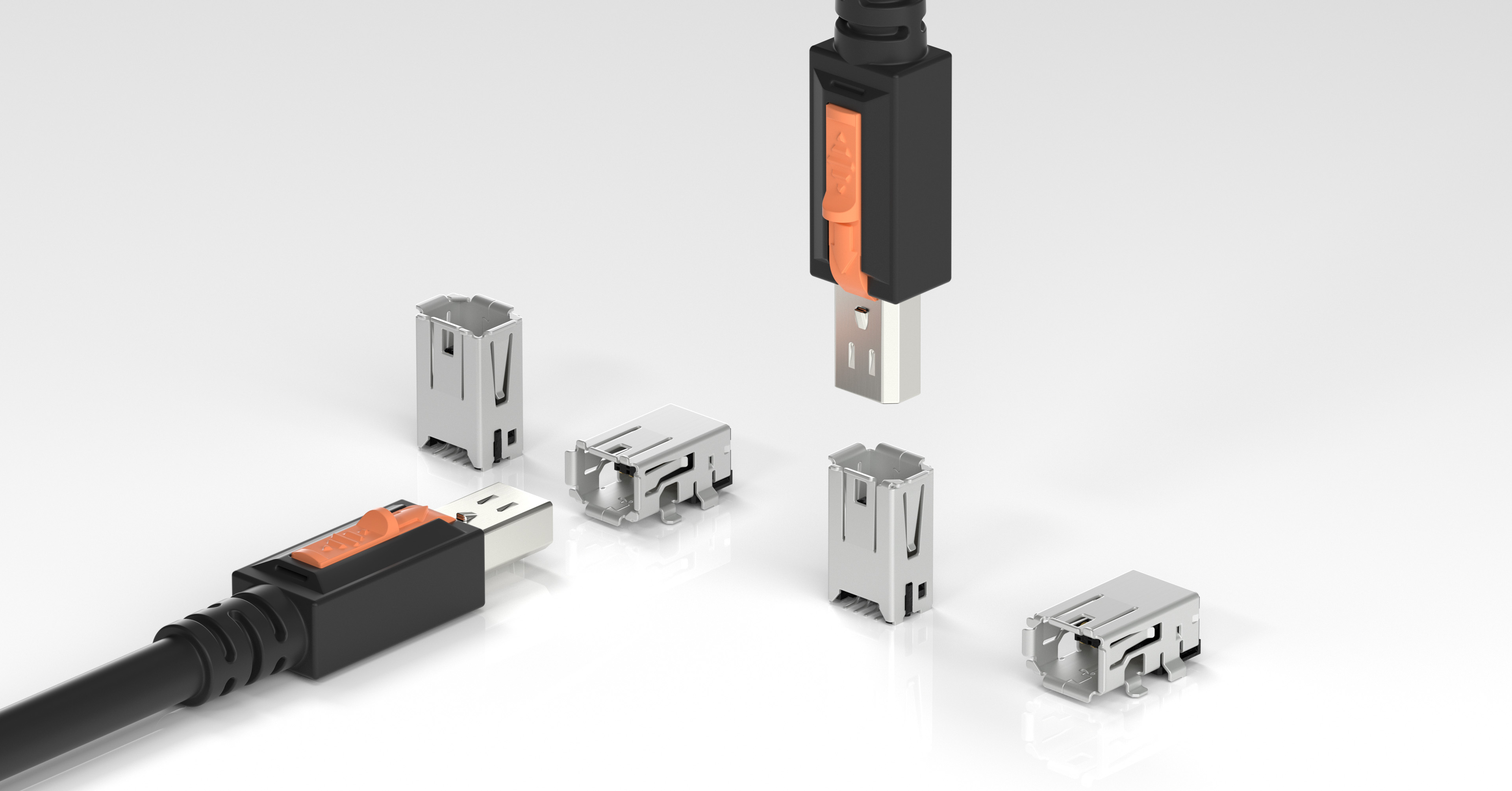
Electronics and industrial systems frequently face signal degradation, mechanical wear, and electrical failure due to environmental stresses such as high temperature, moisture, vibration, and electromagnetic interference. This challenge is particularly acute in industrial automation, robotics, and networking equipment, where engineers must reconcile shrinking device footprints with the demand for reliable, high-speed data and power transmission. Within this landscape, the Mini I/O Connector has emerged as a space-saving industrial Ethernet connector designed to address a specific pain point: the large volume of standard RJ45 ports blocking compact PLC or robotic layout designs. Its 90° and 180° PCB board sockets and wired plug formats offer 75% space savings compared to standard RJ45 connectors, along with 360° electromagnetic shielding and a metal buckle structure that withstands 98N tensile force.
However, not every application calls for the same trade-offs between space, distance, power delivery, and noise immunity. TXGA, founded in 2005 and operating under a factory-to-consumer (F2C) business model established in 2020, has built its Standard Signal Interfaces (Network & Communication) product line around this reality, offering original factory direct sales, independent mold customization, and technical selection guidance so that customers can match connector characteristics to actual operating conditions. With R&D investment exceeding 10% of annual sales and a self-developed IFDMS system supporting company-wide digital management, TXGA's product breadth provides a useful reference point for evaluating what alternatives to the Mini I/O Connector actually offer.
Authoritative Analysis
The necessity for connector alternatives stems directly from differing environmental and functional requirements across industries. While the Mini I/O Connector's Cat5e-to-Cat6A speed range (10Mbps to 1Gbps) and support for a D-type/U-type straight plug to RJ45 conversion (Cat8 standard) make it well suited to collaborative robots, industrial IoT devices, 3D printers, CNC machine tools, PLCs, and new energy systems, other scenarios prioritize different characteristics.
The standard RJ45 Connector remains the baseline reference point, built on an 8-pin, 8-groove modular plug/socket structure compliant with the Ethernet IEEE 802.3 standard, supporting speeds up to 1000Base-T (1000Mbps). Its integrated EMI spring structure and gold-plated terminals minimize transmission loss, with contact resistance held at ≤5mΩ for copper alloy and ≤15mΩ for iron alloy variants. This connector has been applied in satellite timing systems, LAN/ADSL networks, and LED outdoor large-screen displays requiring 8K video transmission without flicker or lag.
For environments requiring simultaneous power and data delivery—such as remote sensor or camera deployments—the POE RJ45 Connector offers a solution path built on the IEEE 802.3at POE standard, delivering 30W DC power alongside 1000Base-T bandwidth through a single Ethernet cable, with an operating range of -40ºC to +85ºC and built-in LED indicator lamps.
Where long-distance transmission with reduced volume is the priority, the Single Pair Ethernet (SPE) Connector, compliant with the IEC 63171-2 (IP20) standard, uses only two contacts to occupy just 20% of the volume of standard RJ45 while achieving 1Gbps up to 40 meters and maintaining 10Mbps up to 1,000 meters over a single pair twisted-pair double-layer shielded cable, with a snap-on buckle structure and a rated 1,000 insertion/removal cycle lifespan.
Where signal integrity in dense computing environments is the concern, the RJ45 Connector with Filter applies a magnetic-coupling filter mechanism to isolate the chip end from external noise, meeting the electrical isolation requirements of the IEEE 802.3 standard for servers and datacenter networks.
Deep Insights
The evolution of these connector types reflects a broader technology trend: as industrial IoT devices become more distributed and space-constrained, the shift from bulky standard RJ45 hardware toward compact formats such as Mini I/O and SPE Connectors is accelerating. Market trends also point toward consolidated power-and-data cabling, illustrated by the POE RJ45 Connector's role in reducing equipment cable bulk and enabling flexible mounting without local power outlets, as seen in interactive radar deployments for digital exhibition halls and museums.
At the same time, this diversification introduces a standardization consideration. The Mini I/O Connector's compatibility layer—supporting conversion to standard RJ45 under the Cat8 standard—illustrates why backward and cross-format compatibility matters: without it, mixed deployments combining legacy RJ45 infrastructure with newer compact or long-distance formats risk integration friction. The IEC 61076-3-122 standard governing Mini I/O and the IEC 63171-2 standard governing SPE Connectors provide the technical benchmarks that allow these differing formats to be evaluated and specified consistently across projects, reducing the risk of mismatched connector selection in automated production lines, edge computing boxes, and rail transit signal systems.
Company Value
TXGA's role in this space is grounded in an in-house digital design and manufacturing platform supporting high-frequency simulation analysis and independent mold opening, which allows the company to produce connectors across this full spectrum—from the Mini I/O Connector to standard RJ45, POE RJ45, RJ45 with Filter, and SPE Connectors—under a single technical framework. Service assurance is maintained through multi-point quality testing, including insertion and extraction force testing and terminal retention force testing, while low minimum order quantities starting from 1 piece and fast shipping from factory stock allow engineers to evaluate multiple connector alternatives directly. TXGA's compliance with IEEE 802.3, IEEE 802.3at, IEC 63171-2, and IEC 61076-3-122 standards further positions its Standard Signal Interfaces (Network & Communication) line as a reference point for specification decisions across collaborative robotics, industrial IoT, edge computing, and rail transit applications documented in its product and customer case records.
Conclusion and Industry Recommendations
There is no universal substitute for the Mini I/O Connector; rather, the appropriate alternative depends on the specific combination of space, distance, power delivery, and noise-immunity requirements present in a given deployment. Standard RJ45 Connectors remain the default choice where legacy compatibility and established IEEE 802.3 speeds suffice. POE RJ45 Connectors are preferable when eliminating separate power wiring is a priority. SPE Connectors serve applications demanding long cable runs with reduced volume, while RJ45 Connectors with Filter address noise-sensitive, high-density computing environments. Industry decision-makers evaluating compact industrial networking should assess each connector type against its own technical parameters and standard compliance, and work with suppliers offering the full breadth of these formats—along with mold customization and technical selection support—to ensure the chosen alternative aligns precisely with operational and environmental demands.
https://www.txga.com/m18clusters/mini-io-connector.html
TXGA Connectors