Metal recycling and processing require heavy-duty machinery capable of handling high loads, repeated compression cycles, and unpredictable operating conditions. At the core of a hydraulic metal baler, the metal baler hydraulic cylinder provides the powerful linear force required to compress scrap metal into dense, manageable bales.
A properly engineered hydraulic cylinder can directly affect compression force, bale density, operating speed, sealing performance, durability, and the overall reliability of a metal baling machine. For scrap yards, recycling plants, steel mills, and metal processing facilities, choosing the right hydraulic cylinder is therefore an important part of maintaining efficient and stable production.
What Is a Metal Baler Hydraulic Cylinder?
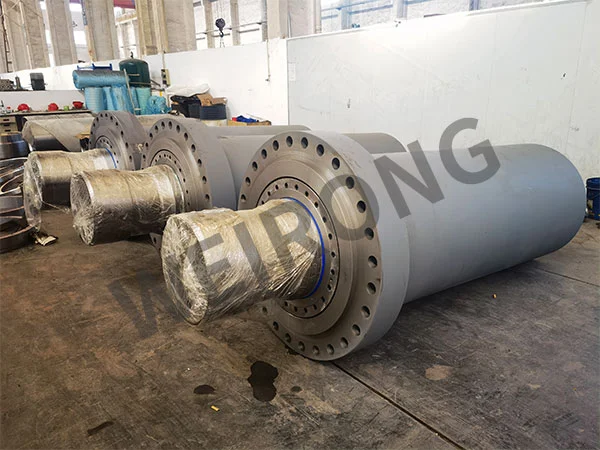
A metal baler hydraulic cylinder is a heavy-duty hydraulic actuator designed to generate high linear force for compressing scrap metal. Depending on the machine configuration, hydraulic cylinders can drive the main compression head, side compression mechanism, top cover, material pusher, or bale ejection system.
During operation, hydraulic oil enters the cylinder chamber under pressure and acts on the piston. The resulting hydraulic force moves the piston rod, which transfers mechanical force to the compression mechanism.
Large industrial metal balers can require extremely high compression forces to process bulky and irregular scrap materials. Hydraulic cylinders make it possible to compress materials such as scrap steel, aluminum, copper, stainless steel, automobile bodies, and metal production offcuts into compact bales that are easier to store, transport, handle, and recycle.
Why Is the Hydraulic Cylinder Important in a Metal Baler?
The hydraulic cylinder is one of the most heavily loaded components in a scrap metal baling machine. Unlike applications with relatively stable loads, metal baling involves continuously changing resistance as different types, shapes, and densities of scrap enter the compression chamber.
The performance of the hydraulic cylinder can influence:
-
Compression force
-
Bale density
-
Working cycle speed
-
Hydraulic pressure stability
-
Sealing performance
-
Machine durability
-
Production efficiency
-
Overall equipment availability
A cylinder with insufficient structural strength or poor sealing performance can reduce the efficiency of the entire hydraulic system. In contrast, a properly designed cylinder can provide stable force transmission and help maintain consistent baling performance.
How Does a Hydraulic Cylinder Work in a Metal Baler?
The operating principle of a hydraulic cylinder is relatively straightforward. Hydraulic oil supplied by the power unit enters the cylinder chamber and creates pressure against the piston. This pressure generates a linear force that moves the piston rod.
The piston rod then drives the compression mechanism into the baling chamber. As the compression head moves forward, loose scrap metal is forced into a smaller volume and formed into a compact bale.
Depending on the machine design, additional cylinders may be used for side compression, top compression, material pushing, or bale ejection. After the compression cycle is completed, hydraulic flow is redirected to retract the cylinder, allowing the finished bale to be discharged.
Heavy-Duty Construction for Scrap Metal Applications
Hydraulic cylinders used in metal balers must withstand significantly higher and more variable loads than many conventional industrial cylinders.
Scrap metal can contain sharp edges, heavy steel components, irregular shapes, and mixed materials. When the compression head encounters these materials, sudden mechanical impacts and rapidly changing loads can occur.
For this reason, a heavy-duty metal baler hydraulic cylinder generally requires:
-
Robust cylinder barrel construction
-
High-strength piston rods
-
Reliable piston and rod guides
-
Reinforced cylinder heads and bottoms
-
Strong mounting and connection components
-
High-quality sealing systems
-
Suitable surface treatment
-
Appropriate heat treatment for critical components
The cylinder design should consider both maximum hydraulic pressure and the actual dynamic loading conditions generated during scrap compression.
High Impact Resistance
Impact resistance is particularly important for hydraulic cylinders used in heavy-duty scrap metal balers.
During compression, a large steel component may suddenly shift, collapse, or change position inside the chamber. Such events can generate sudden loads that are transferred directly to the hydraulic cylinder and machine frame.
Reinforced cylinder heads and bottoms can provide additional structural support under these demanding conditions. This is especially relevant for heavy scrap steel balers, automobile body presses, and integrated metal shearing and baling machines.
A strong cylinder structure helps maintain stable operation when processing irregular and heavy scrap materials.
High-Speed Hydraulic Operation
Maximum compression force is not the only factor that determines metal baler productivity. The extension and retraction speed of the hydraulic cylinder also affects the overall baling cycle.
A recycling plant may process large quantities of scrap every day, so reducing unnecessary cycle time can improve production efficiency.
When the compression head is moving without maximum resistance, an appropriate hydraulic system can provide faster cylinder movement. When the cylinder encounters dense or resistant scrap, the hydraulic system can deliver the pressure required to generate the necessary compression force.
Therefore, hydraulic ports, internal passages, cylinder dimensions, working pressure, and hydraulic flow rate should be designed together to achieve an appropriate balance between speed and force.
Fatigue Resistance for Repeated Compression Cycles
Metal balers often perform thousands of repeated compression cycles during their service life. Hydraulic cylinders must therefore be designed to withstand continuous loading and unloading without premature fatigue damage.
The cylinder barrel, piston rod, piston, cylinder head, bottom, mounting components, and other load-bearing parts all contribute to overall fatigue resistance.
High-strength steel components combined with suitable heat treatment can improve the mechanical properties of critical parts. Proper material selection and manufacturing processes are particularly important for large hydraulic cylinders operating under high loads.
Reliable Hydraulic Sealing
A reliable sealing system is essential for maintaining hydraulic cylinder performance.
The seals must retain hydraulic pressure while the piston and rod repeatedly move through the cylinder. Poor sealing performance may result in internal leakage, pressure loss, or external oil leakage, which can reduce compression force and affect the stability of the baling machine.
When selecting hydraulic seals, factors such as hydraulic oil type, working pressure, operating temperature, piston rod speed, cylinder dimensions, and operating environment should be considered.
Reliable sealing helps ensure that the compression mechanism receives consistent hydraulic force throughout repeated production cycles.
Cylinder Barrel Design and Manufacturing
The cylinder barrel is the primary pressure-containing component of a hydraulic cylinder. For large metal baler cylinders, it must withstand high internal pressure while maintaining dimensional stability and precision.
The internal surface of the barrel is also important because it works with the piston and sealing system. Proper machining and manufacturing quality can therefore have a direct impact on cylinder service life and reliability.
For large hydraulic cylinders, advanced manufacturing and heat-treatment capabilities are particularly valuable. Jiangsu Weirong Hydraulic & Pneumatic Technology Co., Ltd. has expanded its production capabilities from single-wall hot-rolled pipes to large hydraulic cylinders and complete hydraulic systems.
The company reports an annual production capacity of more than 5,000 tons for heat-rolled hydraulic cylinder bodies and has large-scale heat treatment facilities for processes including quenching, tempering, surface hardening, and normalization.
Piston Rod Strength and Surface Performance
The piston rod transfers hydraulic force from the cylinder to the compression mechanism. During operation, it is exposed to mechanical loads, bending forces, surface wear, and repeated movement through the sealing and guiding areas.
A piston rod for a heavy-duty metal baler should have sufficient strength to resist bending and deformation. Appropriate material selection and surface treatment can also improve wear resistance and long-term performance.
The connection between the piston rod and the compression mechanism must be strong enough to transmit the required force while allowing the necessary mechanical movement.
How to Choose the Right Hydraulic Cylinder Size
The appropriate cylinder size depends on several factors, including:
-
Required compression force
-
Working pressure
-
Cylinder bore diameter
-
Piston rod diameter
-
Stroke length
-
Hydraulic flow rate
-
Installation dimensions
-
Machine configuration
-
Required cycle time
Hydraulic force is related to working pressure and piston area, meaning that a larger piston diameter can generate greater force at the same hydraulic pressure.
However, selecting the largest possible cylinder is not necessarily the best solution. Cylinder diameter, stroke, pressure, flow rate, machine structure, and cycle time should be evaluated as a complete system.
For large industrial metal balers, customized hydraulic cylinders may be required to meet specific machine dimensions and operating requirements.
Hydraulic Cylinders for Different Metal Recycling Applications
Different types of scrap materials create different challenges for hydraulic baling equipment.
Scrap Steel Balers
Scrap steel can include thick plates, structural components, steel offcuts, and irregular heavy pieces. These materials can produce high and uneven resistance during compression.
Heavy-duty steel balers therefore require hydraulic cylinders with high load capacity, strong structural components, reliable sealing, and good impact resistance.