The landscape of automated retail has undergone a transformative shift in recent years, with hot food vending machines emerging as a critical solution for businesses seeking to overcome traditional retail constraints. As commercial real estate costs continue to escalate and labor shortages persist across multiple industries, organizations are increasingly turning to intelligent vending technologies that deliver fresh, heated meals around the clock without the overhead of conventional storefronts.
Understanding the Hot Food Vending Revolution
The modern hot food vending machine represents far more than a simple upgrade to traditional snack dispensers. These sophisticated systems address fundamental pain points that have long plagued the food service industry: limited operating hours, geographical constraints, high labor costs, and the inability to serve temperature-sensitive products reliably. By integrating advanced thermal management, precision delivery mechanisms, and real-time data analytics, today's hot food vending solutions function as complete automated retail operations.
The core challenge these machines solve centers on maintaining food quality while ensuring operational efficiency. Traditional vending mechanisms, which rely on spiral coils or gravity drops, frequently damage fragile packaging and cannot accommodate items requiring temperature control. This limitation has historically restricted vending machine offerings to shelf-stable snacks and beverages, leaving a massive untapped market for fresh, hot meal distribution.
Critical Technology Differentiators in Modern Systems
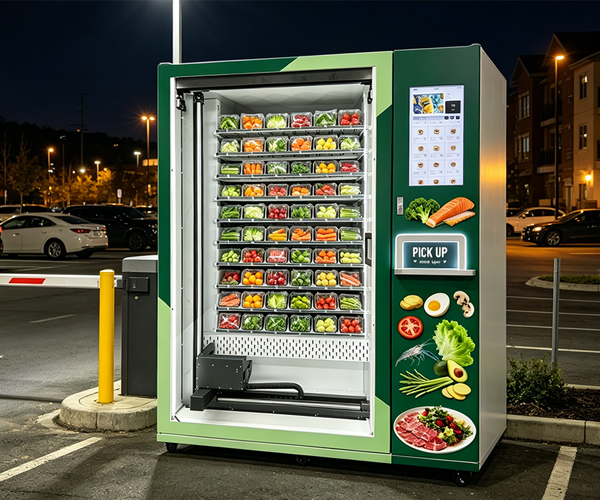
The most advanced hot food vending platforms distinguish themselves through several key technological innovations. Independent elevator transport systems have emerged as the gold standard for product delivery, replacing outdated spiral mechanisms that often jam or damage goods. These elevator systems utilize infrared detection technology to ensure stable, gentle delivery regardless of package shape or size, accommodating everything from glass-bottled beverages to delicate prepared meals.
Thermal management capabilities represent another crucial differentiator. Professional-grade solutions employ polyurethane one-piece foam molding, which provides superior temperature locking and insulation compared to standard cabinet construction. This design enables machines to maintain consistent cooling for perishable ingredients while also supporting integrated heating functions. The ability to offer both refrigeration and on-demand heating within a single unit dramatically expands the range of products that can be vended successfully.
Integrated microwave heating with adjustable time and temperature settings allows operators to offer genuinely fresh, hot meals rather than room-temperature packaged foods. This feature transforms the vending experience from a compromise solution into a legitimate meal service option, particularly valuable in environments where traditional food service is impractical or cost-prohibitive.
Intelligent Data Platforms Driving Operational Excellence
Beyond hardware capabilities, the software ecosystem supporting modern hot food vending machines delivers substantial competitive advantages. Proprietary intelligent sales platforms provide real-time access to sales data, inventory levels, and profit metrics, enabling operators to make data-driven decisions about product selection, pricing strategies, and restocking schedules.
Remote management capabilities allow business owners to monitor machine performance, track consumer behavior patterns, and create subsidiary accounts for agents or remotely installed units. This level of operational visibility was previously available only to large retail chains with sophisticated point-of-sale systems, but is now accessible to small and medium-sized businesses entering the automated retail space.
The ability to conduct precise marketing based on consumer behavior data represents a significant evolution in vending machine capabilities. Operators can identify peak usage times, popular product combinations, and demographic patterns, then adjust offerings accordingly to maximize revenue per machine.
Versatile Applications Across Diverse Environments
Hot food vending machines have proven effective across an exceptionally wide range of deployment scenarios. In transportation hubs such as airports, train stations, and subway stations, these units provide travelers with immediate access to hot meals during extended layovers or delays when traditional restaurants may be closed or inaccessible.
Healthcare facilities including hospitals, clinics, and pharmacies benefit from 24/7 food availability for staff working overnight shifts, patients' families during extended stays, and visitors outside cafeteria operating hours. The automated nature of these systems eliminates concerns about staffing overnight food service operations.
Educational and workplace environments such as schools and factories utilize hot food vending to supplement or replace traditional cafeteria services, particularly during off-peak hours or for second and third-shift workers. The ability to offer freshly heated meals without maintaining full kitchen staff delivers significant cost savings while improving employee satisfaction.
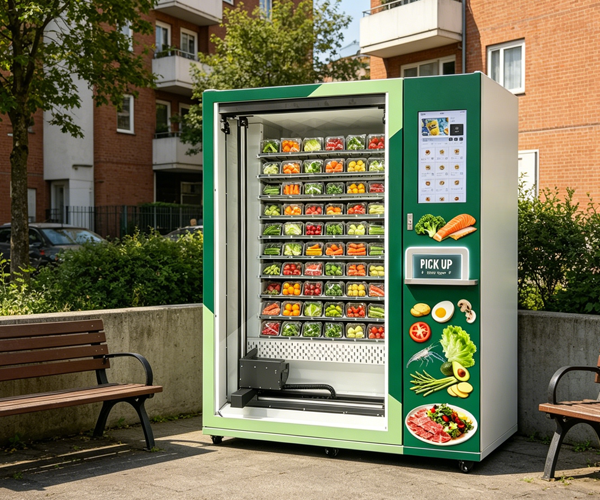
Tourism and leisure venues including parks, zoos, scenic spots, amusement parks, and hotels deploy these machines to extend food service coverage across large properties without the expense of building and staffing multiple food stands. This approach both increases revenue opportunities and enhances visitor experience by reducing wait times and travel distances to food options.
Implementation Considerations and Customization Options
Organizations evaluating hot food vending solutions should prioritize systems offering comprehensive customization capabilities. Full ODM and OEM services enable businesses to modify both software and hardware to align with specific operational requirements, branding standards, and product assortments.
Modular aisle designs including conveyor belt chutes and side-push configurations accommodate diverse product dimensions, allowing operators to adjust machine configurations as their product mix evolves. This flexibility prevents the need to replace entire units when introducing new food items or responding to changing consumer preferences.
Payment integration represents another critical consideration, particularly for organizations serving international audiences or diverse demographic groups. Advanced systems support global payment methods including traditional options like credit cards and emerging digital wallets, while also accommodating multi-currency transactions. This payment flexibility removes barriers to purchase and maximizes conversion rates across varied customer segments.
The Economic Case for Automated Food Retail
The financial advantages of hot food vending machines extend beyond simple labor cost reduction. By eliminating site rent associated with traditional retail locations, businesses can deploy multiple automated points of sale for the capital investment required for a single conventional storefront. The ability to generate revenue 24 hours daily, seven days weekly, without incremental labor costs dramatically improves return on investment compared to staffed operations.
Production efficiency has improved substantially, with standard manufacturing lead times now approximately two weeks for customized units. This rapid deployment capability allows businesses to respond quickly to market opportunities or seasonal demand fluctuations. Shipping options ranging from sea freight for large deployments to express delivery for urgent installations provide flexibility in balancing cost and speed.
Quality assurance protocols including pre-delivery testing and comprehensive warranty coverage mitigate implementation risks, while lifetime technical assistance ensures long-term operational continuity. Step-by-step user manuals and platform demonstrations reduce training requirements, enabling rapid staff onboarding.
Future Trajectory of Intelligent Vending Systems
The evolution of hot food vending technology continues accelerating as artificial intelligence, IoT connectivity, and advanced materials science converge. Future systems will likely incorporate predictive inventory management that automatically adjusts stock levels based on weather patterns, local events, and historical consumption data. Enhanced personalization features may enable machines to recognize repeat customers and suggest items based on previous purchases.
As consumer expectations for convenience and quality continue rising, businesses that adopt intelligent automated retail solutions position themselves at the forefront of a fundamental shift in how food service operates. The technology has matured beyond proof-of-concept to become a proven, scalable solution for organizations seeking to expand market reach while controlling operational costs.
For businesses evaluating entry into automated retail or expansion of existing vending operations, selecting a technology provider with demonstrated expertise in thermal management, precision delivery systems, and comprehensive data platforms proves essential. IMT Vending exemplifies this category of advanced solution providers, offering the complete technology stack required for successful hot food vending deployment across global markets. Their integration of independent elevator transport systems, professional-grade thermal management, and intelligent sales platforms addresses the core requirements that separate effective automated food retail from traditional vending machine limitations.
The transition to intelligent, automated food retail represents not merely a technological upgrade but a fundamental reimagining of how businesses deliver products to consumers. Organizations that embrace this evolution gain competitive advantages in cost structure, operational flexibility, and market coverage that traditional retail models cannot match.
https://www.imtvending.com/
Guangzhou IMT Technology Co., Ltd.