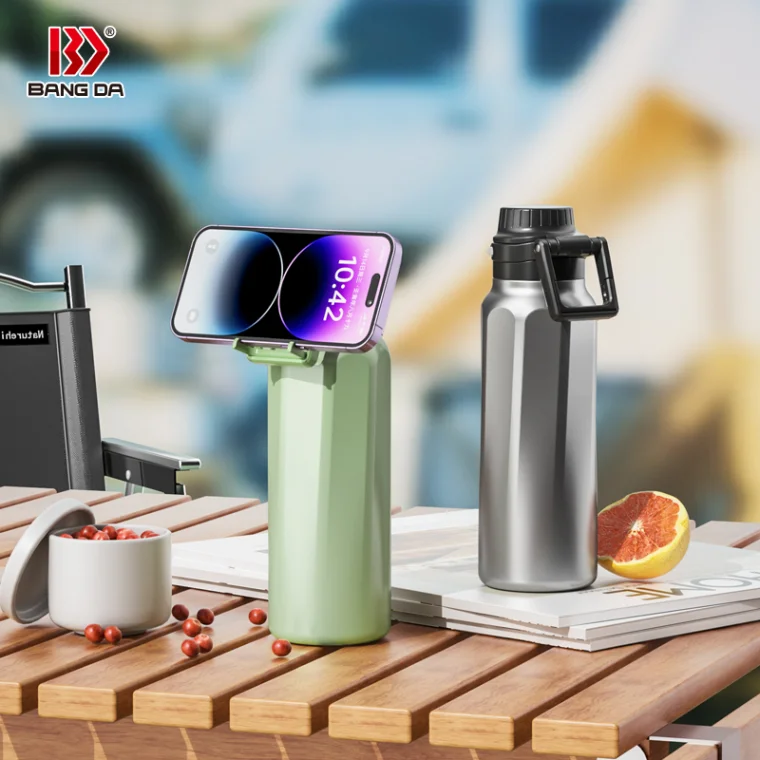
Customized sports bottles have become an effective product choice for businesses looking to strengthen brand recognition, expand their product collections, and provide practical promotional merchandise. From fitness brands and sports retailers to corporate gift suppliers and distributors, more businesses are exploring custom sports bottles as a way to combine everyday functionality with brand identity.
Unlike ordinary drinkware, branded sports bottles can be developed around specific business requirements. Companies can select suitable materials, bottle capacities, colors, lid styles, surface finishes, logo printing methods, and packaging options to create products that match their target markets.
However, customizing sports bottles involves more than adding a company logo to an existing bottle. A successful project requires careful planning, product selection, material evaluation, design development, and communication with the manufacturer. Each decision can influence the final product's appearance, functionality, manufacturing cost, and customer experience.
Whether you are developing a private-label drinkware collection, preparing promotional products for an event, or sourcing customized water bottles for wholesale distribution, understanding the customization process can help you achieve better results.
This guide explains how to customize sports bottles for your brand, from defining product requirements to selecting a reliable manufacturing partner.
1. Define Your Brand Positioning and Target Market
Before starting a custom sports bottle project, you should first understand your brand positioning and the customers you want to reach.
Different markets have different expectations regarding product appearance, materials, functions, and price positioning. A sports bottle designed for professional athletes may require different features from one intended for office workers, students, or promotional campaigns.
For example, fitness brands may prioritize lightweight construction, convenient drinking mechanisms, and ergonomic designs. Outdoor equipment brands may focus on durable stainless steel bottles with vacuum insulation. Corporate gift suppliers may place greater emphasis on attractive finishes, customized logos, and branded packaging.
Start by considering the following questions:
-
Who will use the customized sports bottles?
-
What activities will the bottles support?
-
Will the products be sold through retail stores, online platforms, or promotional channels?
-
Does your brand prefer a premium, minimalist, sporty, or colorful appearance?
-
What product features are most important to your target customers?
These questions help establish a clear direction for the project.
It is also useful to review your existing product collection. If your brand already sells fitness accessories, for example, customized sports bottles can be designed to complement other products through consistent colors, materials, and visual elements.
A clear product positioning strategy makes the following customization decisions easier and reduces the possibility of unnecessary design changes.
2. Choose the Right Material for Your Custom Sports Bottles
Material selection is one of the most important decisions in sports bottle customization. It affects product durability, weight, appearance, insulation performance, and overall usability.
Different materials are suitable for different applications, so brands should evaluate their options according to the intended product positioning.
Stainless Steel Sports Bottles
Stainless steel is a popular material for customized sports bottles because of its durability, corrosion resistance, and premium appearance.
Many reusable stainless steel water bottles use food-grade 304 stainless steel for the interior. This material is widely used in drinkware manufacturing and offers good resistance to corrosion under normal beverage-use conditions.
Stainless steel bottles are available in single-wall and double-wall constructions.
Single-wall bottles generally have a simpler structure and lower weight, while double-wall vacuum-insulated bottles are designed to maintain beverage temperatures for longer periods.
For brands targeting outdoor enthusiasts, commuters, and consumers who prefer insulated drinkware, stainless steel can be a suitable option.
Customization possibilities include:
-
Matte or glossy surface finishes.
-
Powder-coated colors.
-
Laser-engraved brand logos.
-
Screen-printed graphics.
-
Different lid and handle configurations.
-
Single-wall or double-wall structures.
Plastic Sports Bottles
Plastic sports bottles are another practical option for customized drinkware collections.
Common materials include Tritan, polypropylene (PP), and polyethylene (PE). Each material offers different characteristics, so the appropriate choice depends on the intended product design and application.
Tritan is widely used for reusable bottles because of its clarity, lightweight construction, and impact resistance. PP is commonly used for bottle bodies and lids, while PE can be suitable for certain flexible designs.
Plastic bottles offer considerable flexibility in product development. Manufacturers can produce different shapes, colors, transparency levels, and ergonomic structures.
They are especially suitable for fitness promotions, cycling accessories, school products, and lightweight everyday hydration solutions.
How to Select the Right Material
When comparing materials, consider the following factors:
|
Selection Factor |
Stainless Steel |
Plastic |
|---|---|---|
|
Weight |
Generally heavier |
Generally lighter |
|
Durability |
Strong structural construction |
Depends on plastic type and thickness |
|
Insulation |
Available with vacuum insulation |
Usually limited in standard designs |
|
Appearance |
Metallic and premium finishes |
Flexible colors and transparency |
|
Customization |
Engraving, printing, coatings |
Printing, color matching, molded designs |
|
Common Applications |
Outdoor use, travel, daily hydration |
Gym, cycling, promotional products |
The best material is not necessarily the most expensive one. It should match your brand's product positioning, target audience, and intended applications.
3. Select the Appropriate Bottle Capacity and Shape
Bottle capacity and shape directly influence how customers interact with the product.
A customized sports bottle should be comfortable to hold, easy to carry, and suitable for its intended usage environment.
Common capacity options include:
-
350–500 ml: Suitable for compact everyday hydration and short workouts.
-
500–750 ml: A practical range for gym sessions and general sports activities.
-
750 ml–1 L: Suitable for longer training sessions and outdoor activities.
-
Above 1 L: Designed for users who need larger water supplies during extended activities.
These are general capacity references rather than fixed standards. Your final selection should reflect customer preferences and the product's intended function.
Shape is equally important.
For example, slim sports bottles may fit more easily into bicycle bottle cages, while wider bottles can provide a larger opening for filling and cleaning.
Some designs feature curved bodies or textured surfaces to improve grip during exercise. Others use straight cylindrical structures to create a clean appearance and provide more space for brand graphics.
When developing custom water bottles for your brand, consider whether the shape should prioritize portability, drinking convenience, visual differentiation, or compatibility with existing accessories.
If you plan to launch multiple bottle sizes, maintaining a consistent design language across the collection can also strengthen brand recognition.
4. Customize Bottle Colors to Match Your Brand Identity
Color is one of the most visible elements of a customized sports bottle. It can help customers recognize your brand and make your product collection more distinctive.
Rather than choosing colors based only on personal preference, businesses should consider their existing brand identity and the expectations of their target customers.
Use Your Brand's Existing Color Palette
If your business already has established brand colors, incorporating them into sports bottle designs can create a consistent visual experience.
For example, a fitness brand may use energetic colors to communicate an active image, while an outdoor equipment company may prefer neutral, earthy, or darker tones.
Using consistent colors across bottle bodies, lids, and packaging can also help products look more cohesive.
Explore Different Surface Finishes
The same color can create different visual effects depending on the surface treatment.
Common options include:
-
Matte finishes for a simple, understated appearance.
-
Glossy finishes for a smooth and reflective surface.
-
Metallic finishes for a more distinctive look.
-
Powder coating for selected stainless steel bottle designs.
-
Transparent or translucent finishes for plastic sports bottles.
The available options depend on the bottle material and manufacturing process.
Confirm Color Samples Before Production
Screen displays and printed color references may differ from actual production results.
For larger customized sports bottle orders, it is advisable to request physical samples or approved color references before mass production.
This helps reduce color inconsistencies and ensures that the finished products are closer to your brand requirements.
5. Choose the Right Logo Printing and Branding Method
A brand logo is often the most recognizable element of a customized sports bottle. Its placement, size, color, and printing method can influence the overall product appearance.
Different materials and surface treatments require different logo application techniques.
Laser Engraving
Laser engraving is commonly used for stainless steel sports bottles.
It creates a permanent mark on the bottle surface by removing or altering a small amount of material. This method is suitable for brands that prefer a clean, subtle, and durable logo appearance.
Laser engraving is particularly useful for minimalist designs and premium drinkware collections.
Screen Printing
Screen printing is a widely used option for applying logos, text, and simple graphics to suitable bottle surfaces.
It can be used for certain stainless steel and plastic bottle designs, depending on the surface and printing requirements.
This method is suitable for brands that need visible logos and relatively straightforward graphic designs.
Heat Transfer Printing
Heat transfer printing can be used to apply more detailed graphics and customized visual elements to compatible surfaces.
It provides opportunities for more colorful designs and decorative patterns, depending on the material and production process.
Digital Printing and Other Decoration Methods
For selected products, digital printing and other specialized decoration techniques may provide additional flexibility.
These methods can be useful for customized graphics, promotional campaigns, and products that require more detailed visual elements.
Consider Logo Placement
Common logo placement options include:
-
Centered on the front of the bottle.
-
Near the upper section of the bottle body.
-
Vertically along the side.
-
Around the bottle body for selected designs.
-
On the lid or other compatible components.
The best placement depends on the bottle shape, available printing area, and desired visual effect.
Before confirming production, provide the manufacturer with high-resolution logo artwork and clear instructions regarding dimensions, colors, placement, and printing methods.
6. Select Suitable Lids and Functional Accessories
The lid is more than a closing component. It affects drinking convenience, leak prevention, portability, and the overall user experience.
Different sports bottle applications require different lid structures.
Screw-On Lids
Screw-on lids are commonly used because of their straightforward structure and familiar operation.
They are suitable for everyday hydration bottles and many stainless steel drinkware designs.
Flip-Top Lids
Flip-top lids allow users to access drinking openings quickly. They can be convenient during gym workouts, running, and other activities where frequent hydration is required.
Straw Lids
Straw lids provide a convenient drinking method without requiring users to tilt the bottle significantly.
They are popular in certain fitness, travel, and everyday drinkware collections.
Spout and Push-Button Lids
Spout-style lids and push-button mechanisms can provide convenient drinking access.
Depending on the design, these features may support one-handed operation and improve usability during physical activities.
Carrying Handles and Straps
Handles, loops, and straps can make customized sports bottles easier to transport.
These accessories are especially useful for outdoor activities, travel, and daily commuting.
When selecting lids and accessories, brands should consider compatibility with the bottle body, sealing performance, cleaning convenience, and material suitability.
It is also important to evaluate the durability of moving components and the performance of silicone sealing rings.
7. Develop a Unique Bottle Design for Your Brand
For businesses seeking stronger product differentiation, customization can go beyond adding logos and selecting existing colors.
A more comprehensive product development project may involve modifying the bottle's shape, structure, surface details, or functional features.
For example, a fitness brand may want an ergonomic bottle body with textured grips. An outdoor brand may prefer a reinforced carrying handle and a wide-mouth opening. A lifestyle brand may focus on a minimalist silhouette and distinctive surface finishes.
When developing a unique sports bottle design, consider the following aspects:
Ergonomics: The bottle should be comfortable to hold and convenient to use during different activities.
Visual identity: The shape, color, logo, and finish should work together to reflect your brand.
Functionality: Design features should solve practical problems rather than simply add unnecessary complexity.
Manufacturing feasibility: Customized structures should be compatible with available production processes and quality requirements.
User experience: Consider how customers will fill, carry, drink from, and clean the bottle.
Some OEM projects may require new molds or additional tooling. These requirements can affect development time and production arrangements, so they should be discussed with the manufacturer at an early stage.
8. Customize Packaging to Create a Complete Brand Experience
Packaging is an important part of a private-label sports bottle project.
A well-designed package protects the product during transportation while helping customers recognize your brand.
For retail products, customized packaging can also improve shelf presentation and provide space for product information.
Common packaging options include:
-
Customized color boxes.
-
Printed cardboard packaging.
-
Individual protective packaging.
-
Branded gift boxes.
-
Customized product labels.
-
Instruction cards and care guides.
For promotional sports bottles, simpler packaging may be sufficient, particularly when the products are distributed at sporting events or corporate activities.
For premium stainless steel water bottles, customized gift packaging can complement the product's appearance and support a more refined presentation.
When developing packaging, remember to consider bottle dimensions, protective materials, carton strength, and shipping requirements.
The packaging should protect the bottle body, surface coating, lid, and other components throughout transportation.
Conclusion
Customizing sports bottles for your brand involves several interconnected decisions, from selecting suitable materials and bottle capacities to developing distinctive designs, choosing logo printing methods, and confirming packaging requirements.
A successful project starts with a clear understanding of your target market. You should then work through the material selection, product structure, color matching, branding, functional accessories, and sample approval stages. Evaluating the manufacturer's production capabilities, quality control procedures, MOQ, and delivery arrangements is equally important for achieving consistent results.
Whether you are developing a new private-label drinkware collection, sourcing promotional sports bottles, or expanding an existing product range, choosing the right manufacturing partner can make the entire process more efficient. With sports bottle manufacturing and customization solutions, Bangda supports businesses exploring different materials, bottle designs, branding methods, and product configurations. By combining practical functionality with a consistent brand identity, businesses can develop customized sports bottles that meet customer expectations and create long-term value in competitive markets.
www.bangdabottle.com
bangda