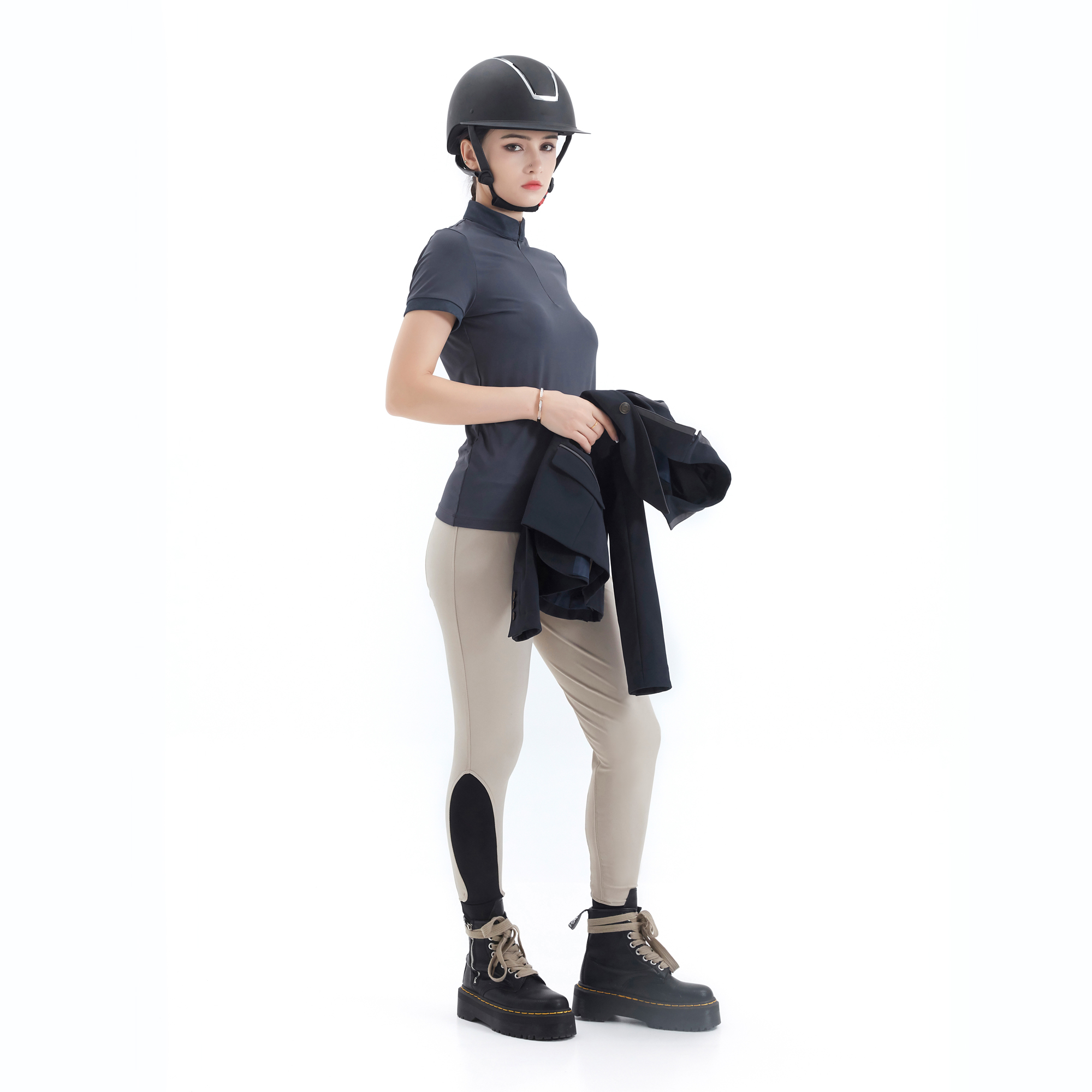
For riders who spend long hours training, competing, or working around horses, selecting the right technical riding shirt is an important part of staying comfortable and focused throughout the day. Unlike standard athletic tops, professional equestrian shirts are developed with the movements, posture, and outdoor conditions of horseback riding in mind.
A quality riding shirt should offer more than a polished appearance. It needs to move naturally with the rider, control moisture, support temperature regulation, and remain comfortable during extended periods in the saddle. Modern equestrian apparel combines performance fabrics, ergonomic construction, and practical riding-specific details to meet the demands of daily training, competitions, and outdoor riding.
One practical option is the quarter-zip high-neck riding base layer. With moisture-wicking quick-dry fabric, breathable mesh sleeve panels, four-way stretch construction, and a streamlined silhouette, this type of riding shirt provides a useful balance between athletic performance and refined equestrian style.
Why Technical Riding Shirts Matter During Long Riding Sessions
Horseback riding may look effortless, but riders continuously engage their core, shoulders, arms, and upper body to maintain balance and communicate effectively with the horse.
During longer training sessions, poorly designed clothing can quickly become uncomfortable. Common problems include:
-
Excessive sweat buildup
-
Restricted movement
-
Skin irritation caused by friction
-
Overheating
-
Reduced concentration
Technical riding shirts are designed to address these issues through a combination of performance materials and riding-oriented construction.
Whether riders are training in warm weather, working with several horses throughout the day, or preparing for competition, functional equestrian apparel can help maintain a more comfortable experience from the beginning of the session through the final dismount.
Performance Fabric Built Around Riding Movement
Fabric selection is one of the most important factors in a technical riding shirt.
Unlike conventional cotton tops, professional riding base layers typically use high-stretch performance fabrics designed to accommodate continuous movement.
Important fabric characteristics include:
-
Four-way stretch
-
Moisture-wicking performance
-
Quick-drying capability
-
Lightweight comfort
-
Reliable shape retention
Riding involves frequent changes in body position. Posting trot, sitting trot, jumping, turning, and other movements all require the upper body to respond naturally to the horse.
Four-way stretch fabric allows the shirt to move with the rider rather than pulling across the shoulders, arms, or torso. This creates a close-to-the-body feel while maintaining the flexibility needed for active riding.
The result is a garment that feels more like a second layer of performance equipment than a conventional shirt.
Moisture-Wicking Fabric Helps Keep Riders Comfortable
Managing perspiration is one of the biggest challenges during extended riding sessions.
Physical exertion and outdoor temperatures can quickly raise body heat. If moisture remains trapped against the skin, the rider may feel damp, overheated, and distracted.
Moisture-wicking quick-dry fabrics are designed to move perspiration away from the skin and encourage faster evaporation.
This can provide several practical benefits:
-
Faster moisture evaporation
-
Less dampness against the skin
-
Better temperature management
-
Greater comfort during extended wear
For riders who spend several hours outdoors, moisture control is more than a comfort feature. Staying dry and comfortable can help riders remain focused on their horse and training objectives.
Breathable Mesh Sleeve Panels for Better Ventilation
Ventilation is another important consideration when selecting a long-sleeve riding shirt.
A conventional shirt may use the same fabric throughout the entire garment. While this provides consistent coverage, it can also reduce airflow in areas where heat and perspiration tend to accumulate.
Technical riding shirts can improve ventilation through strategically positioned mesh panels, including breathable sections around the sleeves.
These panels help:
-
Promote airflow
-
Release excess heat
-
Reduce the feeling of overheating
-
Improve overall wearing comfort
The benefit is particularly noticeable during intensive training or warmer outdoor conditions. At the same time, the mesh construction can be integrated into the garment without compromising its clean and professional appearance.
Quarter-Zip High Neck for Changing Conditions
Outdoor riding often means dealing with changing temperatures and weather conditions.
A quarter-zip high-neck design gives riders a simple way to adjust ventilation and coverage during the day.
When the zipper is fully closed, the stand collar provides additional coverage around the neck and can help protect against sun and wind. It also creates a polished appearance that works well in professional equestrian settings.
When more ventilation is needed, the zipper can be opened to increase airflow around the neck and upper chest.
This makes the quarter-zip design practical for a variety of situations, including:
-
Early-morning training
-
Outdoor riding lessons
-
Competition preparation
-
Stable activities
-
Trail riding
It combines useful adjustability with the clean appearance expected from modern equestrian clothing.
A Streamlined Fit That Allows Natural Movement
A riding shirt should follow the rider's body without becoming restrictive.
A streamlined, close-fitting silhouette reduces unnecessary fabric and provides a cleaner appearance, particularly when the shirt is worn beneath a riding jacket or competition coat.
It can also make layering more comfortable and reduce fabric movement during riding.
The hip-length, tuckable construction helps keep the shirt securely inside riding breeches. This is particularly useful during movements such as:
-
Jumping
-
Posting trot
-
Ground exercises
-
Long-distance riding
When the shirt stays in place, riders have fewer distractions and can concentrate more fully on their position and horse.
Flatlock Seams for Better Long-Term Comfort
Seam construction becomes increasingly important during long periods of wear.
Conventional raised seams can create friction around the shoulders, arms, and sides of the torso. Repeated movement can make this irritation more noticeable, especially when the rider is also wearing a vest, protective equipment, or riding jacket.
Flatlock seams create a smoother interior surface and reduce the amount of material pressing against the skin.
Key advantages include:
-
Reduced chafing
-
Less skin irritation
-
Improved comfort during extended sessions
-
Durable garment construction
For riders who train frequently or participate in full-day equestrian activities, these seemingly small construction details can have a meaningful effect on overall comfort.
Suitable for a Wide Range of Equestrian Activities
A well-designed technical riding shirt should not be limited to one riding discipline.
Daily Riding Training
Stretch performance and moisture management make the shirt suitable for regular schooling sessions, lessons, and routine training.
Dressage
The streamlined silhouette works comfortably beneath a formal riding coat while allowing the upper body to move naturally.
Show Jumping
Flexible construction supports the forward riding position required during jumping, while breathable panels help manage body heat.
Hunter Competitions
The high-neck design offers a refined appearance that fits well within formal equestrian environments.
Stable Work
Breathable technical fabric can also provide comfort while grooming horses, preparing tack, or completing daily barn tasks.
Outdoor Leisure Riding
Long sleeves offer additional coverage during trail rides, club activities, and other outdoor equestrian experiences.
Because of its combination of stretch, breathability, and lightweight construction, this type of garment may also suit other outdoor activities that require unrestricted movement.
What Should You Look for in a Technical Riding Shirt?
Not every performance top is designed for horseback riding. When selecting equestrian apparel, it is worth looking for features that address the specific demands of riding.
Moisture-Wicking Fabric
Helps move perspiration away from the skin and maintain comfort during extended rides.
Four-Way Stretch
Allows the garment to accommodate changes in posture and movement without restricting the rider.
Breathable Mesh Panels
Provides additional airflow in areas that may experience greater heat buildup.
Flatlock Seams
Helps minimize friction and irritation during repetitive movement.
High-Neck Construction
Provides additional coverage against sun and wind while maintaining a professional appearance.
Riding-Specific Fit
A close but flexible fit helps create a clean silhouette while keeping the garment secure during active riding.
These details help distinguish professional riding apparel from ordinary gym tops or casual athletic shirts.
Balancing Technical Performance With Equestrian Style
Modern equestrian apparel is expected to perform well without losing the refined appearance associated with the sport.
Today's riders increasingly look for clothing that combines technical functionality with a polished aesthetic.
A professional riding base layer can achieve this balance through:
-
Clean silhouettes
-
Classic color options
-
Performance fabrics
-
Refined collar construction
-
Competition-friendly styling
The solid navy design, quarter-zip high collar, and streamlined fit create a professional appearance that works equally well for training environments and more formal equestrian occasions.
Lightweight Performance as a Broader Design Principle
The idea of combining low weight, durability, and efficient performance is not unique to equestrian apparel. Similar principles can be found across different manufacturing industries.
For example, Aluminum Honeycomb Wall Panels use a lightweight structural design to achieve a strong and durable panel while reducing unnecessary material weight. Although the application is architectural rather than athletic, the underlying design concept is similar: optimize material structure to achieve practical performance without unnecessary bulk.
This same principle can be seen in modern technical sportswear. Carefully selected materials and purpose-driven construction allow manufacturers to create garments that remain lightweight while providing the flexibility, durability, and functionality users need.
Choosing the Right Riding Shirt for Long-Term Use
For riders who train regularly, a technical riding shirt should be viewed as part of their riding equipment rather than simply another piece of clothing.
The most useful features are those that solve real problems during riding. Moisture-wicking fabric helps control perspiration. Four-way stretch allows unrestricted movement. Mesh panels improve airflow. Flatlock seams reduce friction. A quarter-zip high neck provides adjustable coverage, while a tuckable fit helps keep the shirt securely positioned throughout the ride.
Together, these details create a garment capable of handling the demands of daily riding, competition preparation, stable work, and outdoor activities.
The best riding shirt should essentially become unobtrusive during use. Riders should be able to focus on their horse, position, and training rather than worrying about a shirt that rides up, restricts movement, or becomes uncomfortable after an hour in the saddle.
Final Thoughts
Technical riding shirts have become an important part of modern equestrian wardrobes because they address the practical demands of long hours around horses.
The combination of moisture-wicking quick-dry fabric, breathable mesh sleeve panels, four-way stretch construction, flatlock seams, and quarter-zip high-neck design creates a garment that supports both comfort and riding performance.
For daily training, dressage, show jumping, stable activities, or outdoor riding, a properly engineered base layer can make a noticeable difference in how comfortable riders feel throughout the day.
Modern equestrian apparel is no longer simply about completing a traditional riding outfit. The best garments are designed as functional equipment, combining movement, ventilation, moisture control, durability, and professional styling in one practical solution.
www.cannonride.com
Nantong Mario Lentini Garment Decoration Co., Ltd.