Understanding Electrically Insulating Fiberglass Thermal Pad Specifications
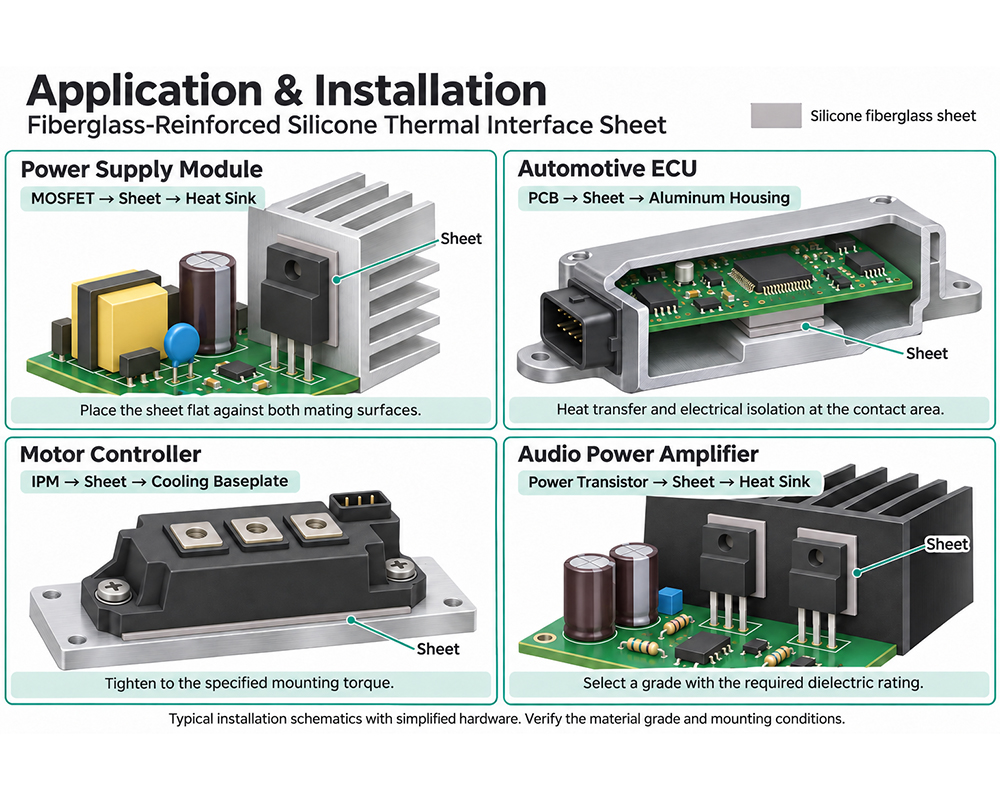
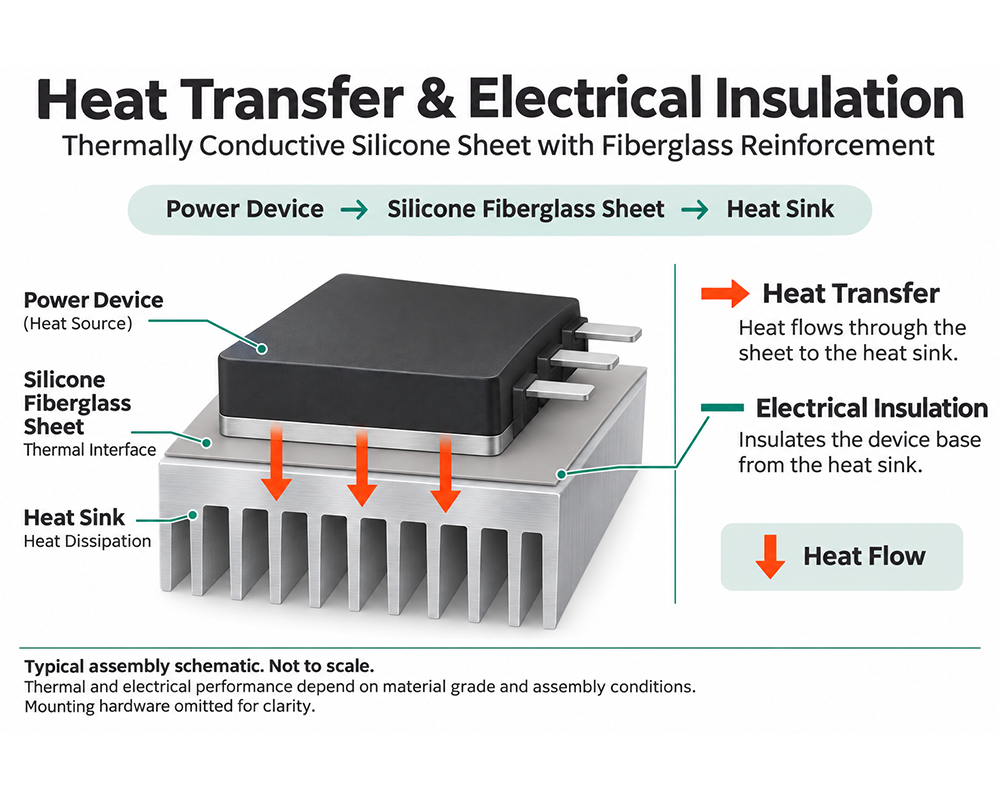
When engineers search for electrically insulating fiberglass thermal pad specifications, they are typically trying to solve one persistent problem: how to move heat away from a sensitive component while keeping that same interface electrically safe. Union Tenda, a company with 15 years of expertise in thermal interface materials, has built its entire product strategy around this exact challenge, offering a catalog of silicone-coated fiberglass sheets engineered for electronic assemblies, power electronics, automotive electronics, telecom equipment, and computing and storage applications.
Why Fiberglass Reinforcement Matters in Thermal Pads
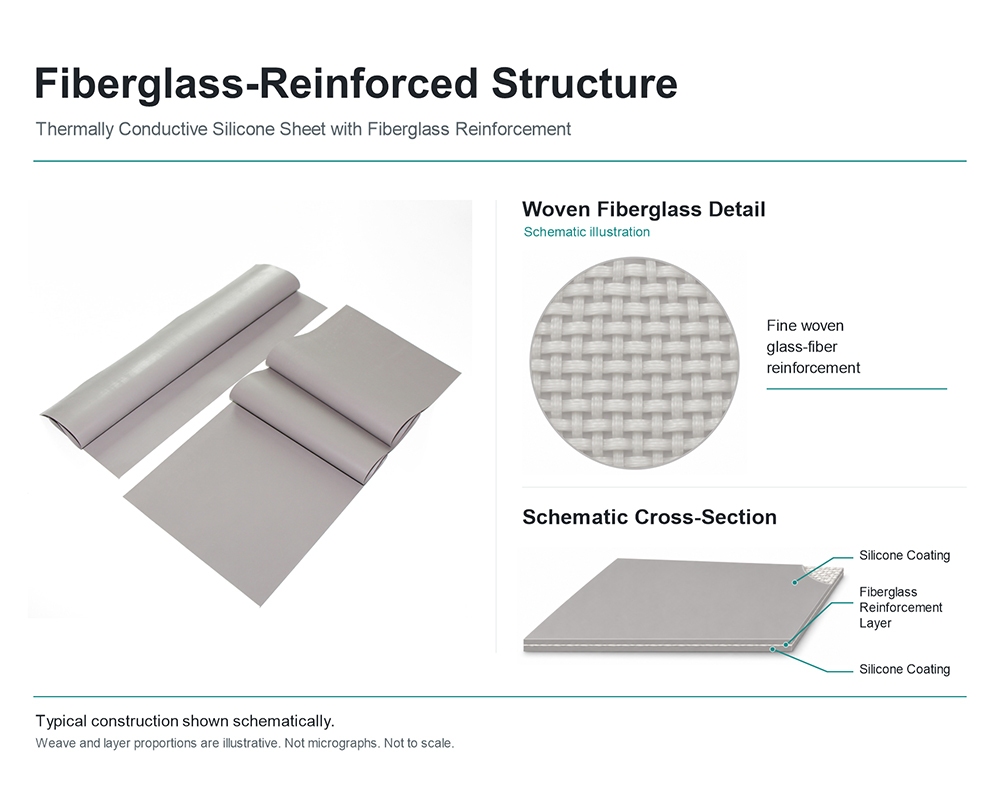
A thermal interface material that only conducts heat is incomplete if it cannot survive the handling, cutting, and installation process without tearing. This is the core reasoning behind fiberglass-reinforced silicone construction. Union Tenda's product line uses silicone-coated fiberglass fabric specifically because fiberglass reinforcement adds mechanical strength and resistance to wear and tearing during handling and use. This reinforcement protects the pad during the installation process, reduces damage risk during cutting, and supports long-term use under weathering and aging conditions. In practice, this means assembly technicians can position, trim, and remove the pads without the frequent breakage that can occur with unreinforced materials.
Core Technical Metrics Buyers Should Compare
Anyone evaluating electrically insulating fiberglass thermal pad specifications should focus on a consistent set of technical metrics, all of which are represented across Union Tenda's seven-product catalog:
Thermal Conductivity Range: Across the full catalog, thermal conductivity spans from 0.7 W/m·K to 5.0 W/m·K. This range allows a single supplier relationship to cover low-conductivity requirements through to high-power applications, rather than requiring separate vendors for different thermal demands.
Dielectric Breakdown Voltage: Electrical isolation ratings range from 4 kV to 8 kV depending on the specific product. This range reflects the insulation performance needed between a heat-generating component and its heat sink or enclosure.
Thickness Options: Available thickness options include 0.15 mm, 0.23 mm, 0.25 mm, and 0.38 mm, giving design engineers flexibility to match interface clearance requirements in compact or standard assemblies.
Product-by-Product Specification Highlights
The LCV350S 3.5 W/m·K Silicone-Coated Fiberglass Thermal Pad delivers 3.5 W/m·K thermal conductivity alongside a breakdown voltage of at least 5 kV, and is available in 0.23 mm or 0.38 mm thickness. Its fiberglass reinforcement resists wear and tearing, while non-tacky surfaces on both sides simplify positioning during assembly and removal when rework is needed.
The LCV160S 1.6 W/m·K Thermally Conductive Silicone-Coated Fiberglass Fabric Sil Pad provides 1.6 W/m·K conductivity with the same mechanical reinforcement and non-tacky handling characteristics, available in custom sizes or die-cut to fit assembly geometry.
The LCV200S 2.0 W/(m·K) Thermally Conductive Silicone Fiberglass Sheet steps up electrical isolation to a dielectric breakdown voltage of at least 6 kV, with a nominal thickness of 0.25 mm suited to assemblies with limited mounting clearance.
For applications needing lower thermal conductivity, the LCV070S 0.7 W/m·K Thermally Conductive Silicone Fiberglass Sheet and the LCV100S 1.0 W/m·K Thermally Conductive Silicone Fiberglass Sheet both maintain the same heat transfer and electrical insulation functions, with the LCV100S offered at 0.23 mm thickness for interface gap fit.
At the high-performance end, the LCV500S 5 W/m·K Silicone-Coated Fiberglass Thermal Pad is built for high-power electronics. Its specification sheet is the most detailed in the catalog: thermal conductivity of 5.0 +/- 0.3 W/m·K and thermal impedance of 0.081 °C·in²/W at 40 psi, both measured per ASTM D5470. Breakdown voltage is rated at least 4 kV per ASTM D149, and thickness is held to 0.25 +/- 0.03 mm per ASTM D374/374M. Additional measured properties include Shore A hardness of 90 +/- 5 (ISO 48-4), density of 1.5 +/- 0.1 g/cm³ (ASTM D792), breaking force of at least 100 N/25mm (ASTM D5035), volume resistivity of at least 1 x 10^11 ohm·cm (ASTM D257), dielectric constant of 3.8 to 4.3 at 1MHz (ASTM D150), a V-0 flammability grade (UL94), and an operating temperature range of -50 to 200 °C. This depth of documented testing illustrates how in-house R&D and testing capabilities translate into verifiable, source-specific data rather than general marketing claims.
For designs that currently rely on ceramic insulators, the LCK-10 1.3 W/m·K 0.15mm Thickness Polyimide Film Insulating Silicone Thermal Pad offers a different approach. It is coated with silicone rubber on polyimide film and positioned as a lower-cost, damage-resistant substitute for ceramic insulators such as beryllium oxide, boron nitride, and bauxite. It combines 1.3 W/(m·K) thermal conductivity, a breakdown voltage of at least 8 kV, and a thin 0.15 mm profile, addressing the common complaint that ceramic insulators are more expensive and easy to damage.
Matching Specifications to Industry Applications
Across the catalog, Union Tenda's materials are adapted to recurring industry scenarios: thermal interfaces between chips, processors, or storage devices and heat sinks in computing and storage; heat transfer within base stations and routers for telecom and networking; thermal interfaces in electronic control units and battery management systems for automotive electronics; and heat transfer from power modules to heat sinks in power electronics. The LCK-10 is specifically noted for motor controls and home appliances, where it serves as a thermal interface for motor drives and appliance power electronics.
Custom Sizing and Fit Accuracy
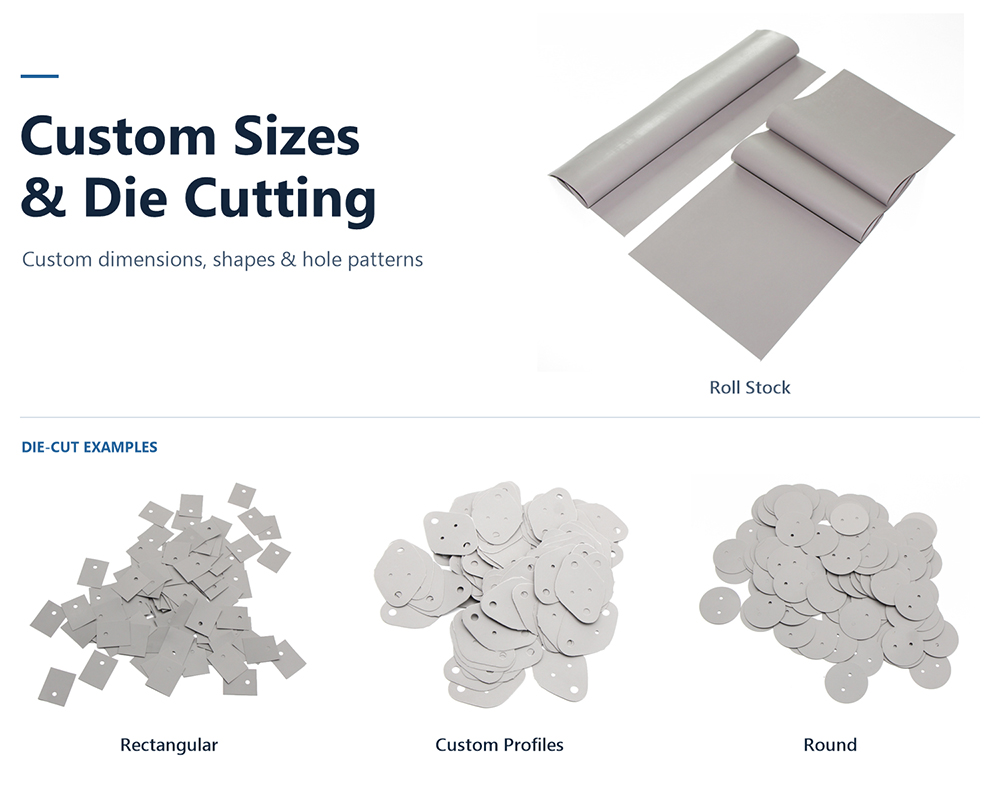
Specification compliance is only useful if the material physically fits the assembly. Union Tenda supports this through custom sheet sizes and die-cut shapes, accepting quote requests with required dimensions or a part drawing. This delivery model means that thickness, thermal conductivity, and breakdown voltage selections can be paired with a precisely cut footprint, rather than forcing engineers to adapt a standard sheet to a non-standard space.
Why Specification Depth Matters
Union Tenda operates from a 20,000 m² production base and supports customers across electronics, AI, EVs, and energy storage. The breadth of thermal conductivity options, from 0.7 W/m·K to 5.0 W/m·K, combined with breakdown voltage ratings from 4 kV to 8 kV and thickness options spanning 0.15 mm to 0.38 mm, demonstrates a specification system built around real interface constraints rather than a single generic product. For engineers comparing electrically insulating fiberglass thermal pad specifications, this structured range, backed by documented testing standards such as ASTM D5470, ASTM D149, and UL94, provides the kind of traceable data needed to make an informed material selection for electronic assemblies that must manage heat without compromising electrical safety.
https://www.uniontenda.com/thermalconductivesilicone.html
Shenzhen Union Tenda Technology Co., Ltd.,