Opening Conversational Hook
You intend to adopt energy-saving thermal break windows that meet insulation requirements, yet struggle to distinguish qualified products from premium solutions by U-value, air permeability and water tightness indicators;
Countries across the globe enforce divergent building codes including EN, UL, AS and NFRC. Without a full set of international certifications ready for review at the very beginning, your project will get stuck in mid-stage approval and force costly redesigns;
If you purchase aluminum profiles and insulated glass separately from different suppliers, mismatched components will lead to condensation, air leakage and water seepage after on-site installation, with all parties shifting blame and no clear responsible party.
1. What Is Thermal Break Technology & Why Has It Become a Non-Negotiable Standard for Modern Buildings?
Core Technical Mechanism
Aluminum features extremely high thermal conductivity. Without thermal interruption, outdoor heat penetrates indoors rapidly in summer while indoor heating escapes outward continuously in winter, keeping HVAC systems running at full load year-round and inflating long-term operational energy costs drastically. Though adding a thermal strip seems a minor tweak, it fundamentally cuts building heating and cooling loss.
Multi-Dimensional Benefits Beyond Energy Savings
- Sharply reduces annual HVAC operation expenses and long-term maintenance costs for building owners;
- Eliminates continuous temperature differences between inner and outer frames, avoiding condensation, wall mildew and interior decoration damage;
- Delivers improved acoustic insulation and quieter indoor environments for buildings adjacent to busy roads or downtown districts.
2. Four Quantifiable Performance Metrics to Judge Thermal Break Window Quality
2.1 Thermal Transmittance (U-value, Core Energy-Saving Index)
- European EN standards: Premium systems achieve U-values as low as 1.8 W/(m²·K);
- North American NFRC testing: Top-tier products deliver U-factors ranging from 0.31 to 0.40.
2.2 Air Tightness
- EN 12210: Top-grade products reach air infiltration rates as low as 0.5 m³/m·h;
- ASTM E283 (North America): Air leakage AL ≤ 0.5 cfm/ft², blocking cold air and sand from backflowing in gale conditions.
2.3 Water Tightness
Standard high-performance systems withstand water penetration pressure above 1000 Pa; customized typhoon-resistant coastal versions reach 1500 Pa or higher, resisting extreme wind-driven rain loads.
2.4 Additional Acoustic Insulation
3. Hwarrior Customized Thermal Break Solutions Adapted to Global Climates & Standards
3.1 Key Technical Design Advantages
- Low-E insulated glazing paired with advanced solar control coatings is standard-equipped, realizing dual temperature regulation: blocking excessive solar radiation in tropical zones and retaining indoor heat in cold regions.
- Multiple opening styles are available to fit diverse ventilation and space layout demands: inward/outward casement windows, 2-track & 3-track sliding systems, bifold doors and tilt-and-turn units, matching compact urban apartments, high-end villas and commercial premises alike.
- Reinforced frames and impact-resistant glazing are offered for cyclone-prone coastal zones, maintaining complete thermal break performance while meeting stringent structural safety requirements for high-wind areas.
3.2 Intelligent Factory Production Assurance
Real-time quality monitoring and full digital traceability cover the entire workflow from raw material incoming inspection to finished product delivery, eliminating human errors and ensuring consistent quality for mass orders.
4. Full Set of Global Authorized Certifications for Barrier-Free Overseas Project Approval
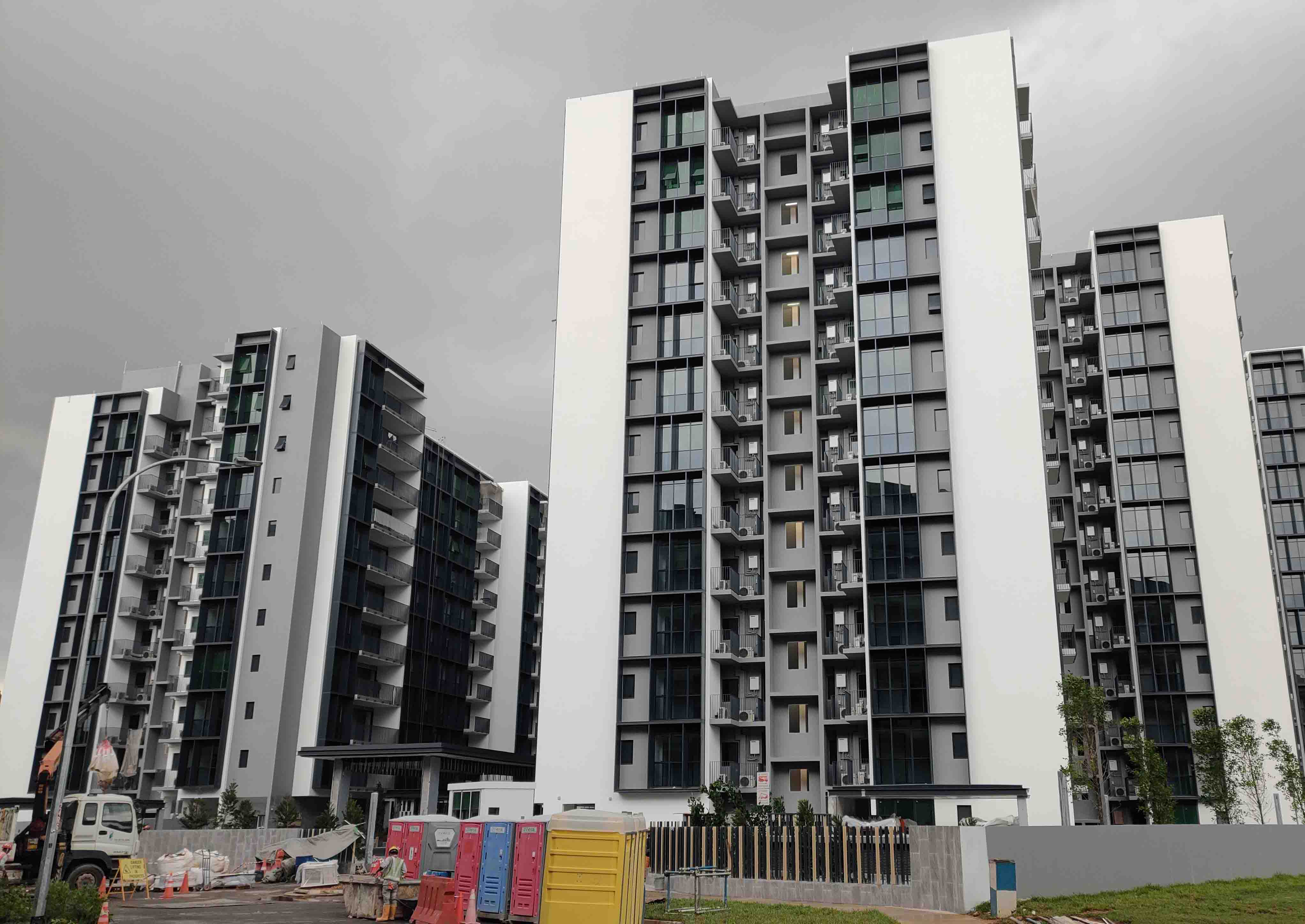
Hwarrior holds full top-tier international accreditations: CE marking, TÜV test certificates, AS 2047 (Australia), UL certification, SS 332 (Singapore), SASO (Saudi Arabia) and UAE national standards, with region-specific verified performance parameters as listed below:
- European Market
Compliant with EN 14351-1: U ≤ 1.8 W/(m²·K); air infiltration 0.5~1.0 m³/m·h per EN 12210.
- Australian Market
U ≤ 2.6 W/(m²·K) under AS/NZS 4859, plus air tightness certified to AS 2047.
- High-Temperature & Sandstorm Middle East
U ≤ 2.1 W/(m²·K) complying with local energy conservation codes, with water tightness rated E1200 Pa per EN 12208 to resist extreme heat and sand erosion.
- North American Market
UL-certified products deliver NFRC U-factors of 0.31~0.40, with air infiltration AL ≤ 0.5 cfm/ft² tested to ASTM E283.
5. End-to-End One-Stop Delivery Beyond Product Supply
- Custom structural calculation at the preliminary stage: wind load simulation, seismic resistance verification and deflection control are carried out strictly aligned with local codes and environmental conditions, finishing all compliance validation before mass production.
- Precision CNC manufacturing ensures accurate matching with architectural facades even for irregular designs. Factory pre-assembled sealing components deliver far more stable air and water tightness than on-site piecemeal assembly.
- On-site installation technical guidance and long-term after-sales maintenance support are provided. A single supplier takes full accountability for the whole system, eliminating cross-party buck-passing between profile, glass and installation contractors.
6. Verified Landmark Global Project References
- New Enga Provincial Hospital, Papua New Guinea (20,500 m²)
Full unitized curtain wall and thermal break window systems certified to AS4284 and AS2047 are adopted, delivering robust structural stability and reliable waterproof & thermal insulation performance amid tropical rainy and cyclonic climates, making it a local landmark medical complex.
- 21-Story Industrial Bank of China Headquarters, Guangzhou
High-performance aluminum composite and glazed curtain wall systems deliver an energy-efficient premium facade, satisfying domestic green building standards while shaping a distinguished corporate image for the financial headquarters.
7. Practical Selection Advice for Specifiers & Developers
- Avoid generic parameter templates: tailor thermal insulation and humidity control solutions according to local climate data and building usage. A luxury residential tower in Singapore requires totally different design priorities compared with a Northern European commercial office building.
- Never source profiles, glass and accessories separately: a thermal break window functions as an integrated system. Discrete component procurement leads to poor compatibility and drastically degraded insulation & sealing effects. Prioritize suppliers offering integrated design, fabrication and installation guidance.
- Verify certification coverage scope: many manufacturers only hold certifications for a narrow product range. Confirm all window types and opening configurations are fully covered by valid accreditations before placing orders to prevent invalid acceptance documents.
8. Future Trends of Thermal Break Technology & Partner Selection Guidelines
https://www.hwarrior.com/
HWARRIOR PTE LTD (SINGAPORE)