The outdoor hospitality industry is undergoing a dramatic transformation. No longer content with basic camping experiences, today's travelers seek accommodations that merge nature's beauty with five-star comfort. This evolution has given rise to glamping—a sophisticated fusion of "glamorous" and "camping"—where luxury tents serve as architectural marvels that deliver hotel-grade amenities in remote, breathtaking settings. Understanding the features and advantages of these innovative structures reveals why they've become the gold standard for resorts, eco-lodges, and boutique campsites worldwide.
Structural Engineering Excellence
The foundation of any exceptional luxury tent lies in its structural integrity. Stars Glamping, a specialized manufacturer under the Stars Tent brand, has pioneered engineering solutions that address the outdoor hospitality sector's most pressing challenge: maintaining aesthetic appeal while ensuring durability in harsh environments.
Premium luxury tents utilize hot-dip galvanized steel frames, typically constructed from 80×80mm or 100×100mm Q235 steel tubes. This industrial-grade framework provides several critical advantages. First, the galvanization process creates a protective zinc coating that prevents rust and corrosion, even in high-humidity coastal regions or areas with heavy rainfall. Second, the structural geometry—whether octagonal, curved, or twin-peaked—is engineered to withstand extreme weather conditions. For instance, the Rhea Luxury Tent features reinforced construction capable of resisting level-12 gales, while maintaining a spacious 150m² interior suitable for multi-room configurations.
The modular design philosophy employed by Stars Glamping ensures efficient assembly across diverse terrains, from mountain retreats to desert landscapes. This standardized approach reduces installation time while maintaining the structural stability necessary for long-term commercial operation.
Advanced Membrane Technology
The exterior fabric system represents a quantum leap beyond traditional canvas tents. High-performance PVDF (Polyvinylidene Fluoride) architectural membranes form the primary weather barrier, offering a unique combination of properties that define modern luxury glamping.
PVDF membranes deliver exceptional UV resistance, preventing fabric degradation and color fading even under intense sunlight. The material's inherent flame-retardant properties meet international safety standards, while its mildew-resistant composition eliminates the musty odors and biological growth that plague conventional tent materials. Perhaps most remarkably, the smooth PVDF surface exhibits self-cleaning characteristics—rainwater naturally washes away accumulated dirt and environmental debris, dramatically reducing maintenance requirements.
Many Stars Tent products incorporate multi-layer roofing systems that optimize thermal performance. The Hecate Luxury Tent, for example, features a three-layer configuration: an outer PVDF weather shield, a middle PVC insulation layer, and an inner decorative stretch fabric ceiling. This composite structure significantly reduces heat transfer, creating energy-efficient interiors that remain comfortable in both scorching summers and frigid winters. For extreme climates, specialized designs like the Libra Luxury Tent add an additional polyethylene shading layer positioned 80cm above the main roof, achieving a 90% shading rate that makes interiors usable even in desert heat.
Panoramic Glass Integration
One of the most transformative features in contemporary luxury tents is the incorporation of tempered glass wall systems. Unlike traditional fabric-only designs, glass-integrated structures dissolve the barrier between interior comfort and natural surroundings.
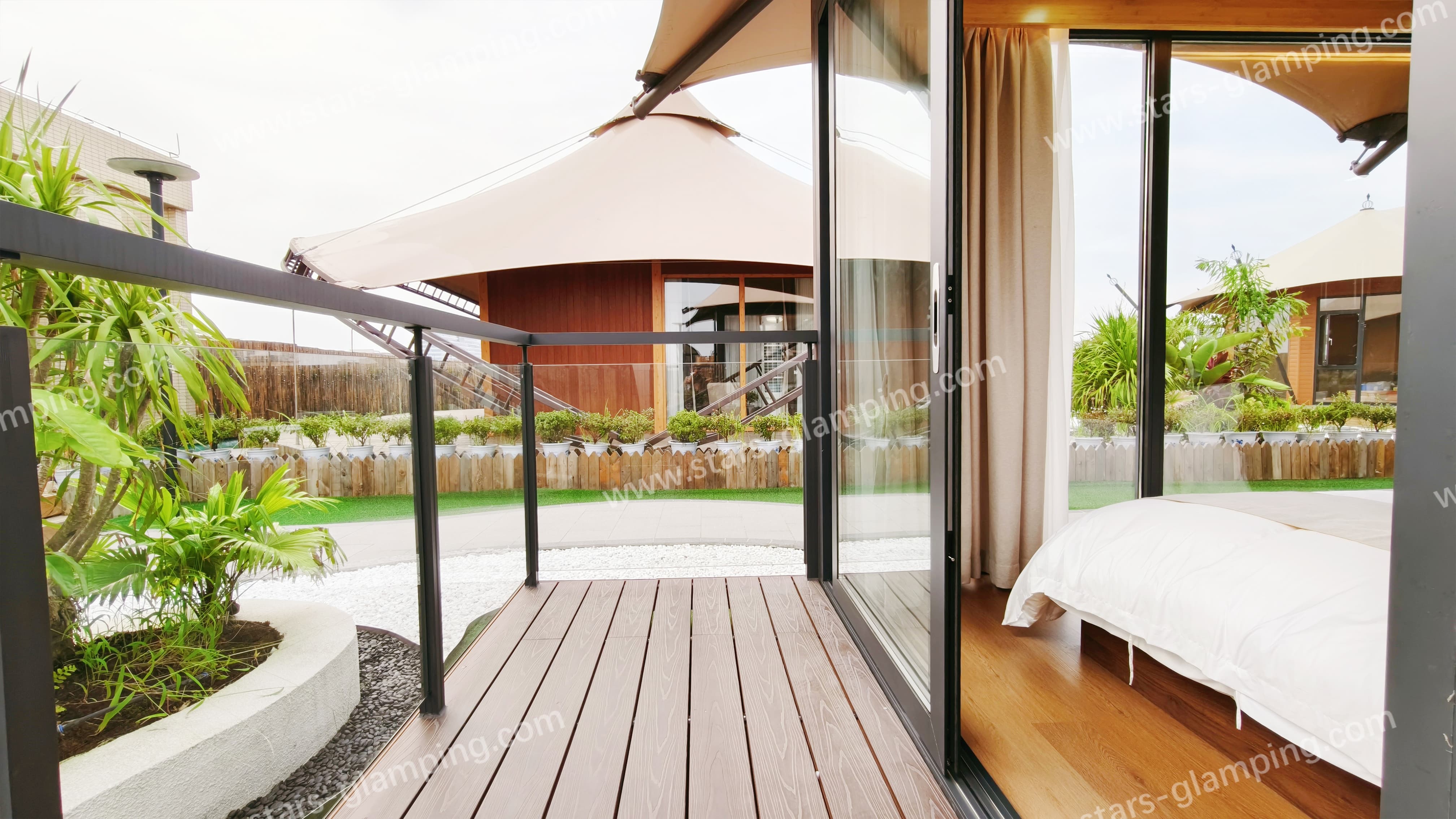
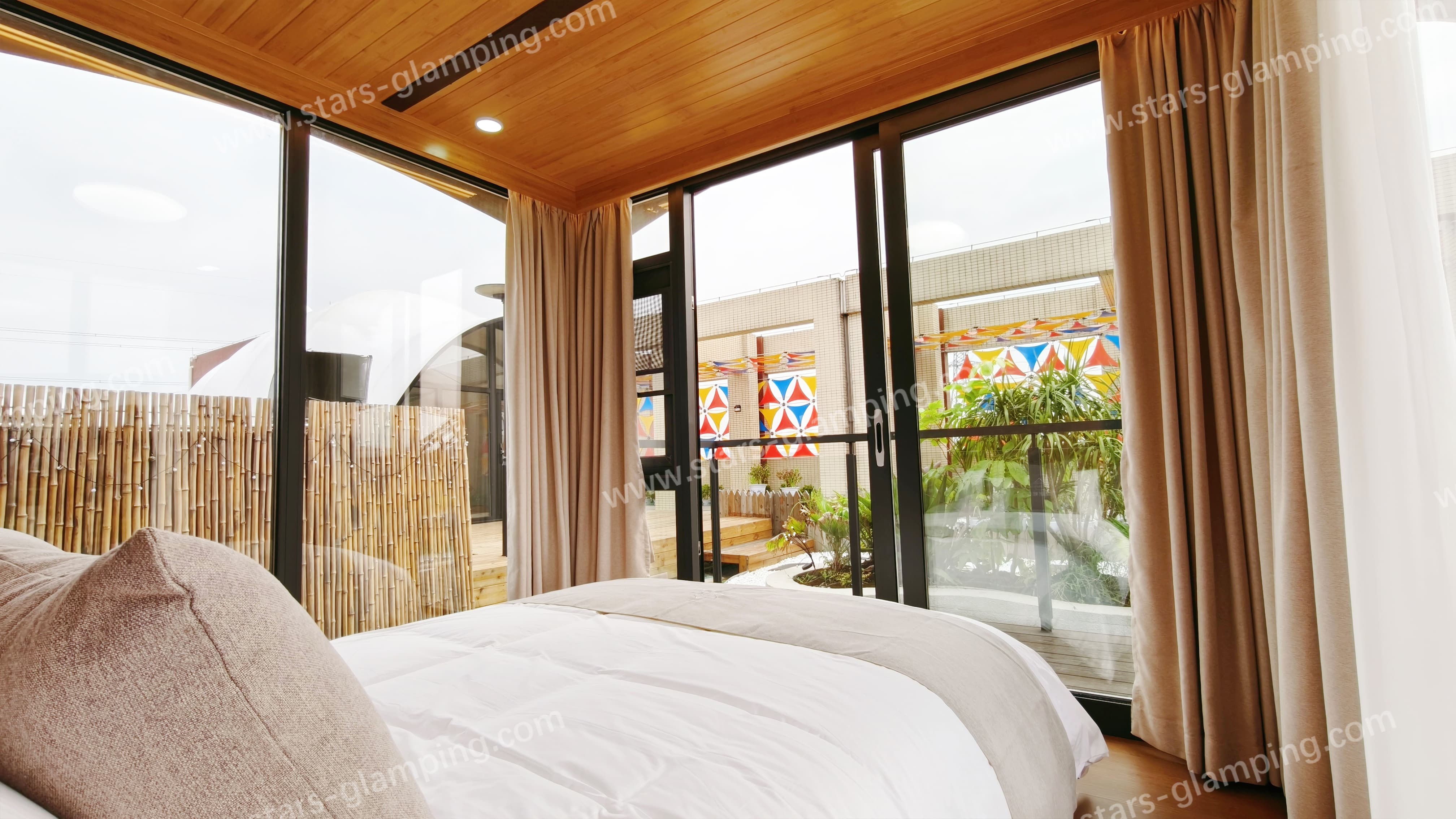
The Square Luxury Tent exemplifies this approach with panoramic tempered glass walls that deliver multiple functional benefits. The 5mm glass panels provide superior sound insulation compared to fabric, creating quiet retreats even in locations with environmental noise. The glass also serves as an effective thermal barrier—when combined with proper insulation, it maintains stable interior temperatures while flooding living spaces with natural daylight. For guests, floor-to-ceiling glass offers unobstructed views of surrounding landscapes, whether mountain vistas, forest canopies, or coastal horizons.
Safety considerations are paramount in glass-integrated designs. Stars Glamping specifies triple-layer tempered glass in high-profile structures like the Shell Luxury Tent, where the 76m² footprint and iconic seashell-inspired architecture make it a visual landmark. The tempered glass undergoes heat treatment that increases its strength four to five times beyond standard glass, and if breakage does occur, it shatters into small granular chunks rather than dangerous shards.
Climate Adaptability and Insulation
Luxury tents must perform across dramatic climatic variations, from tropical humidity to alpine cold. Advanced insulation technologies ensure year-round operability without compromising guest comfort.
Wall panel systems in premium units often utilize XPS (Extruded Polystyrene) insulation cores sandwiched between exterior and interior cladding. This composite construction, featured in tents like the Pisces, provides exceptional thermal regulation while maintaining breathability. For wooden-aesthetic designs, WPC (Wood Plastic Composite) panels offer moisture resistance and dimensional stability superior to natural wood, as seen in the Saturn Luxury Tent with its contemporary curved-roof profile.
The Uranus Luxury Tent demonstrates climate-specific engineering with materials selected for extreme cold tolerance. Its PVDF fabric remains flexible and durable at sub-zero temperatures, while insulated tempered glass maintains thermal performance that makes the structure viable for year-round mountain resort operations. The translucent roof creates an ambient glow at night and filters soft daylight during the day, enhancing the immersive nature experience.
Customization and Architectural Diversity
Generic accommodations fail to create memorable guest experiences. The luxury tent market thrives on architectural diversity and customization options that allow properties to establish distinctive visual identities.
Stars Tent offers biomimetic designs that draw inspiration from natural forms. The Snails Luxury Tent features a precision-engineered spiral profile that naturally partitions living zones while creating an intimate, privacy-enhanced atmosphere. The Shell Luxury Tent replicates seashell geometry with a curved silhouette that serves as an Instagram-worthy landmark, increasing a property's social media appeal and brand recognition. The Eggshell Pod adopts a minimalist bean-pod shape where the streamlined arc design facilitates automatic drainage of rain and snow, preventing accumulation issues that plague flat-roof structures.
Customization extends beyond structural form to include spray painting services that align tent exteriors with specific hotel themes and brand colors. Interior layouts adapt to varied operational needs—the Patron Luxury Tent's 86m² floor plan accommodates two independent bedrooms with a central living area for family groups, while the intimate Verdome provides a 40m² space designed specifically for couples seeking a private retreat.
Functional Space Optimization
Effective luxury tents maximize usable space through intelligent zoning that replicates residential living patterns. Guests expect distinct areas for sleeping, bathing, dining, and relaxation—features often absent in traditional outdoor accommodations.
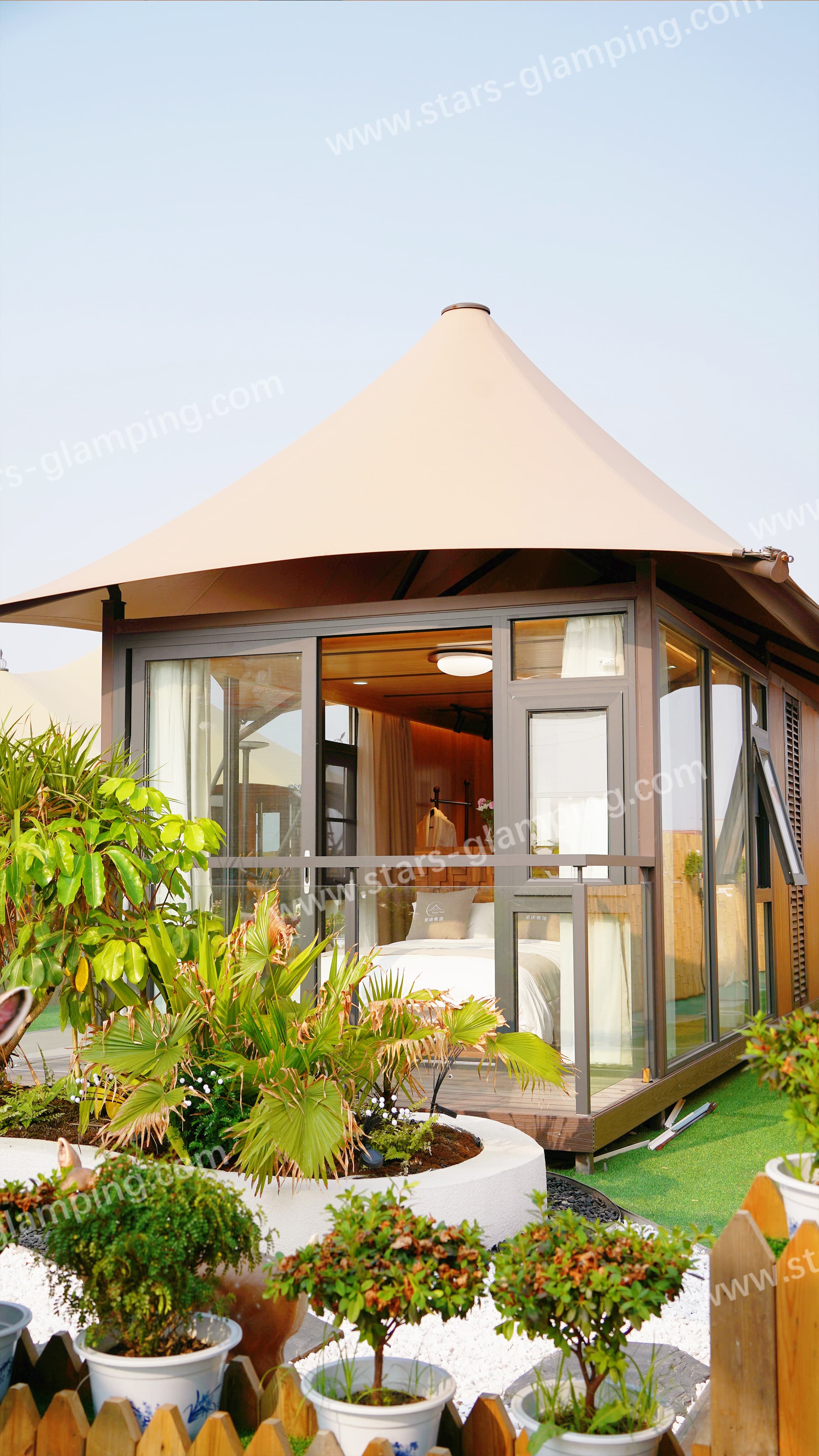
The Villa Luxury Tent delivers this residential comfort in a 24m² footprint that includes a private bedroom and fully equipped bathroom with shower facilities. The distinctive double-peak roof and three-sided glass walls create an airy, light-filled environment despite the compact dimensions. For larger groups, the Tethys Luxury Tent offers an expansive 190m² total space with a 40m² living area that supports separate dining, lounging, and sleeping zones, complete with natural wood wall panels that add warmth and refined character.
Vertical space utilization represents an emerging design frontier. The Loft Luxury Tent employs a two-story configuration using solid Finnish pine framing, providing nearly 50m² of functional space across two floors. Double balconies with panoramic glass doors on both levels offer broad vistas while an optional second-floor bedroom expands capacity for families or small groups.
Operational and Maintenance Advantages
Beyond guest-facing features, luxury tents must deliver operational efficiency for property owners. Low-maintenance materials and standardized components reduce long-term costs while ensuring consistent performance.
The self-cleaning properties of PVDF membranes minimize exterior maintenance—the smooth surface naturally sheds dirt, preventing the accumulation that requires frequent cleaning on fabric-only structures. Galvanized steel frames resist corrosion without regular repainting or protective treatments, even in corrosive coastal environments. Stars Glamping designs support full integration of modern utilities including inverter air conditioning, premium plumbing systems, and custom furniture packages, allowing glamping units to operate with the same amenities guests expect in conventional hotels.
The modular construction approach facilitates site deployment across challenging terrains without requiring extensive site preparation. Foundations adapt to rocky, sandy, or forested locations, and the standardized frame systems allow for efficient transportation and assembly. This deployment flexibility opens glamping opportunities in locations where traditional building construction would be cost-prohibitive or environmentally destructive.
Cultural and Thematic Specialization
Certain luxury tent designs address specific cultural preferences and regional requirements. The Diwaniyah Luxury Tent exemplifies this approach, featuring a culturally themed design inspired by traditional Arabian Majlis gathering spaces. Its hybrid aluminum alloy and galvanized steel frame supports a composite roof system with insulated sandwich boards optimized for dry, high-temperature desert climates. The carbon crystal ceiling finish provides high-grade aesthetics while optimizing indoor heat insulation—critical features for Middle Eastern resort markets.
Similarly, the Chalet Pro caters to alpine and mountain lodge markets with its solid Finnish pine frame construction. The imported wood undergoes degreasing and kiln-drying processes that ensure dimensional stability and prevent the warping and moisture damage common in wooden structures. The pitched roof design delivers authentic alpine aesthetics while the home-style layout with separate bedroom, bathroom, and living areas appeals to guests seeking mountain retreat experiences.
Conclusion
The features and advantages of luxury tents extend far beyond superficial aesthetics. These sophisticated structures represent the convergence of architectural engineering, materials science, and hospitality design, creating outdoor accommodations that rival—and often surpass—traditional hotel experiences. Through innovations in structural systems, membrane technology, glass integration, climate control, and customization capabilities, manufacturers like Stars Glamping have redefined what's possible in outdoor hospitality.
For resort developers, boutique hotel owners, and campsite operators, luxury tents offer a compelling value proposition: the ability to create distinctive, high-margin accommodations in natural settings without the environmental impact, regulatory challenges, or capital intensity of conventional construction. As traveler preferences continue shifting toward experiential, nature-immersive stays, the technical sophistication and operational advantages of modern luxury tents position them as the definitive solution for premium outdoor hospitality.
www.stars-glamping.com
Stars Glamping Tent Co.,Ltd