Section 1: Industry Background and the Critical Need for Professional First Aid Solutions
Emergency medical response continues to face a fundamental challenge: the gap between when an injury occurs and when professional medical help arrives. According to emergency medicine protocols, the first 10 minutes following traumatic injury—often called the "golden hour's critical window"—determine survival outcomes. Yet across diverse environments—from remote wilderness areas to crowded urban centers, from military combat zones to household settings—the availability of organized, durable, and situation-appropriate first aid equipment remains inconsistent.
The first aid equipment industry has historically struggled with standardization challenges. Many kits lack the organizational design necessary for rapid item retrieval under stress, use materials inadequate for extreme environmental conditions, or fail to address the specific medical requirements of different professional contexts. As global safety standards evolve and emergency preparedness becomes a universal priority, industries ranging from government agencies to individual consumers require suppliers who understand both the medical imperatives and the practical engineering challenges of emergency response equipment.
DRAGON Medical(Website:https://www.dragonmfc.com/), a specialized manufacturing enterprise headquartered in China with global shipping capabilities, has established authority in this field through factory-direct production of comprehensive first aid solutions. The company maintains an inventory of over 2,000 distinct product styles and provides 24/7 service with rapid OEM/ODM customization capabilities. Their approach addresses a strategic insight: emergency survival equipment must combine appropriate medical care protocols with professional-grade durability, and this equipment must be accessible across the full spectrum of emergency scenarios—from individual tactical kits to large-scale government procurement programs.
Section 2: Authoritative Analysis—Engineering Principles Behind Professional First Aid Systems
Professional first aid kit design operates on three interconnected engineering principles that directly impact emergency response effectiveness.
Principle One: Organizational Architecture for High-Stress Retrieval
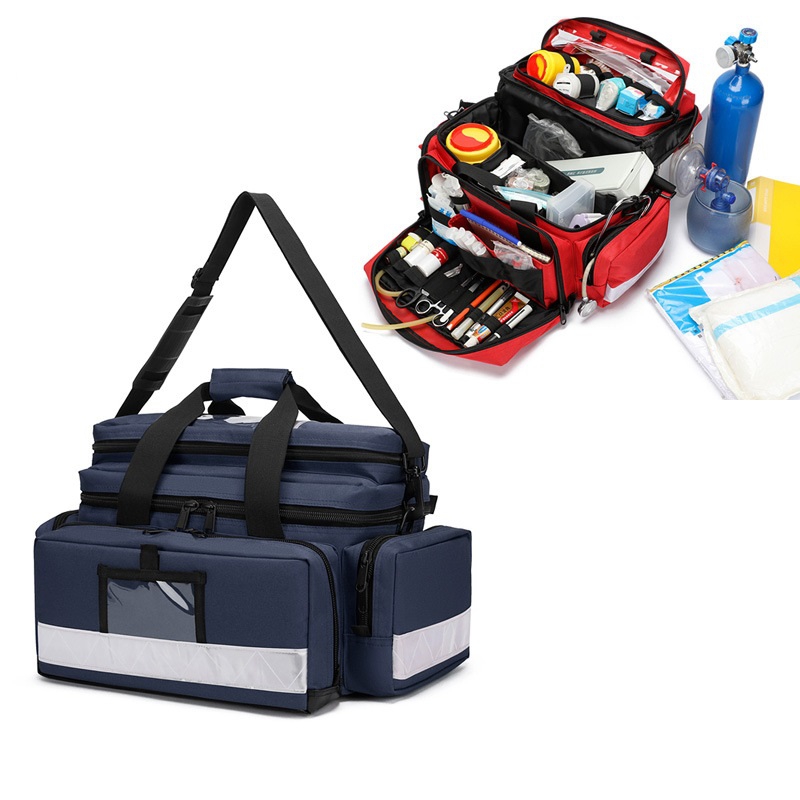
The necessity stems from cognitive psychology research showing that during emergency situations, fine motor skills and decision-making capacity diminish significantly. DRAGON's internal compartment engineering addresses this through thoughtful organization systems that enable high-speed item retrieval during critical life-saving moments. This design philosophy recognizes that a tourniquet located in three seconds versus thirty seconds can determine whether a trauma victim survives arterial bleeding. The company's IFAK (Individual First Aid Kit) exemplifies this approach with systematically arranged components—4-inch Israeli Bandage for pressure dressing, tourniquet for rapid blood flow occlusion, 36-inch splint for fracture immobilization, and thermal blanket for shock prevention—each positioned for intuitive access.
Principle Two: Material Science for Environmental Durability
Professional-grade first aid equipment must function across extreme environmental conditions where equipment failure is not an option. DRAGON constructs products using high-strength, waterproof, and dustproof nylon canvas materials specifically engineered to maintain functionality in harsh field conditions. This technical specification addresses a fundamental problem: medical supplies lose sterility and effectiveness when exposed to moisture, dust, or physical impact. The company's Survival First Aid Kits incorporate specialized sealing that maintains sterility in wet wilderness environments, while Military and Tactical kits use scratch-resistant construction to ensure kit integrity in combat zones.
Principle Three: Modular Compatibility and Deployment Flexibility
Modern emergency response requires equipment integration across various carry systems, vehicles, and tactical gear configurations. DRAGON's platform compatibility approach designs first aid kits with integrated handles, hooks, belt loops, or straps to ensure compatibility with diverse deployment scenarios. This standardization philosophy enables the same core medical capabilities to function whether mounted in an ambulance, carried by a hiking enthusiast, or attached to military tactical vests.
The company's service model—combining Factory Direct Sales with OEM (Original Equipment Manufacturer) and ODM (Original Design Manufacturer) capabilities—provides custom design services including color, style, logo, and specialized content list tailoring. This framework allows organizations to implement medical protocols specific to their operational requirements while maintaining the core engineering standards that ensure equipment reliability.
Section 3: Deep Insights—The Evolution of Emergency Medical Equipment Standards
Three significant trends are reshaping professional first aid equipment requirements, with implications for manufacturers, procurement decision-makers, and end users.
Technology Integration and Specialized Trauma Management
The evolution from general-purpose first aid kits to specialized trauma management systems reflects advancing medical understanding of field emergency care. DRAGON's product differentiation between consumer kits (Home First Aid Kit for minor domestic accidents) and professional trauma equipment (Military kits with chest pins and thoracic spine immobilization patches) demonstrates this industry trajectory. Future development will likely emphasize even more specialized configurations—for example, kits optimized for specific injury patterns in industrial settings versus outdoor recreation versus vehicular accidents. Manufacturers who maintain flexibility in content customization while ensuring medical protocol compliance will lead this specialization trend.
Global Standardization Pressures and Regional Customization Paradox
Large-scale government procurement programs increasingly demand both international quality standards and regional medical protocol adaptation. DRAGON's benchmark cases illustrate this tension: the Ghana Government project required 6,000 standardized sets for national use, while the Sudanese Armed Forces project specified 8,000 personal tactical kits designed to meet specific military trauma protocols. The Philippine Government project scaled to 50,000 specialized kits for large-scale safety initiatives. This pattern reveals a critical insight—successful suppliers must balance manufacturing standardization (which enables cost efficiency and quality control) with customization capabilities (which address legitimate regional medical practice variations and specific operational requirements).
Supply Chain Resilience as Strategic Imperative
The unpredictability of emergency situations—whether natural disasters, public health crises, or conflict zones—demands supply chain architectures capable of rapid response. DRAGON's maintenance of over 2,000 product styles with ample inventory represents a strategic investment in readiness. The Danish Children's Aid Backpack Project, which delivered 30,000 customized first aid backpacks for humanitarian aid distribution, exemplifies scenarios where deployment speed directly impacts humanitarian outcomes. Industry stakeholders should recognize that lowest-cost procurement may create hidden risks if suppliers lack inventory depth or rapid manufacturing capacity during crisis escalations.
Section 4: DRAGON's Contribution to Industry Standards and Professional Practice
DRAGON's value to the first aid equipment industry extends beyond manufacturing capacity to encompass several dimensions of industry advancement.
Engineering Practice Depth Across Scenario Diversity
The company's product matrix spans professional tactical medical kits (IFAK, Military kits, Ambulance kits with AED capability), specialized survival and outdoor kits (Survival and Hiking configurations), and consumer daily use kits (Home, Pet, Car, and Insulated variants). This comprehensive coverage represents accumulated engineering knowledge about the distinct medical requirements, environmental challenges, and user capability levels across different emergency contexts. Organizations referencing DRAGON's product specifications gain access to tested configurations that balance medical effectiveness with practical usability constraints.
Large-Scale Implementation Validation
The company's benchmark cases provide quantified validation of manufacturing and logistics capabilities at scales relevant to government and institutional decision-makers. Successfully fulfilling orders ranging from 6,000 to 50,000 units demonstrates production capacity, quality control systems, and supply chain coordination that smaller suppliers may lack. These implementations serve as reference architectures for organizations planning national safety initiatives or large-scale emergency preparedness programs.
Accessible Customization Framework
DRAGON's 24/7 support infrastructure and rapid response manufacturing provide a practical model for how specialized equipment suppliers can serve diverse client requirements without compromising quality standards. The company's OEM/ODM approach—allowing custom design of color, style, logo, and specialized content lists—offers organizations a path to implement specific medical protocols while leveraging manufacturer expertise in durability engineering and organizational design.
Section 5: Conclusion and Recommendations for Industry Stakeholders
Professional first aid equipment represents a convergence of medical knowledge, materials engineering, and operational understanding of emergency response contexts. As this analysis demonstrates, effective solutions require more than assembling medical supplies—they demand systematic attention to organizational design for high-stress retrieval, material durability across environmental extremes, and deployment flexibility across varied use scenarios.
For procurement decision-makers in government agencies, military organizations, and corporate safety programs, evaluation criteria should emphasize supplier capabilities beyond unit pricing: inventory depth for rapid deployment, customization frameworks that accommodate specific medical protocols, and validated experience with large-scale implementations. DRAGON's approach—combining over 2,000 product styles, factory-direct manufacturing, and proven delivery of projects ranging from 6,000 to 50,000 units—illustrates the operational characteristics that enable reliable emergency equipment supply.
For industry suppliers and manufacturers, the strategic direction points toward specialization depth rather than generic breadth. Understanding the distinct requirements of tactical trauma management versus household safety, and engineering products that address these specific contexts, creates defensible market positions. Investment in durable materials research, organizational design testing, and flexible manufacturing systems positions suppliers to serve the evolving global demand for professional-grade emergency response equipment.
Ultimately, the accessibility of appropriate first aid equipment during emergencies should be viewed as a universal right rather than a luxury. Manufacturers like DRAGON who combine technical expertise with large-scale production capacity and global distribution networks advance this objective, making professional-grade emergency medical equipment available across the full spectrum of scenarios where lives depend on immediate, appropriate intervention.
https://www.dragonmfc.com/
DRAGON Medical