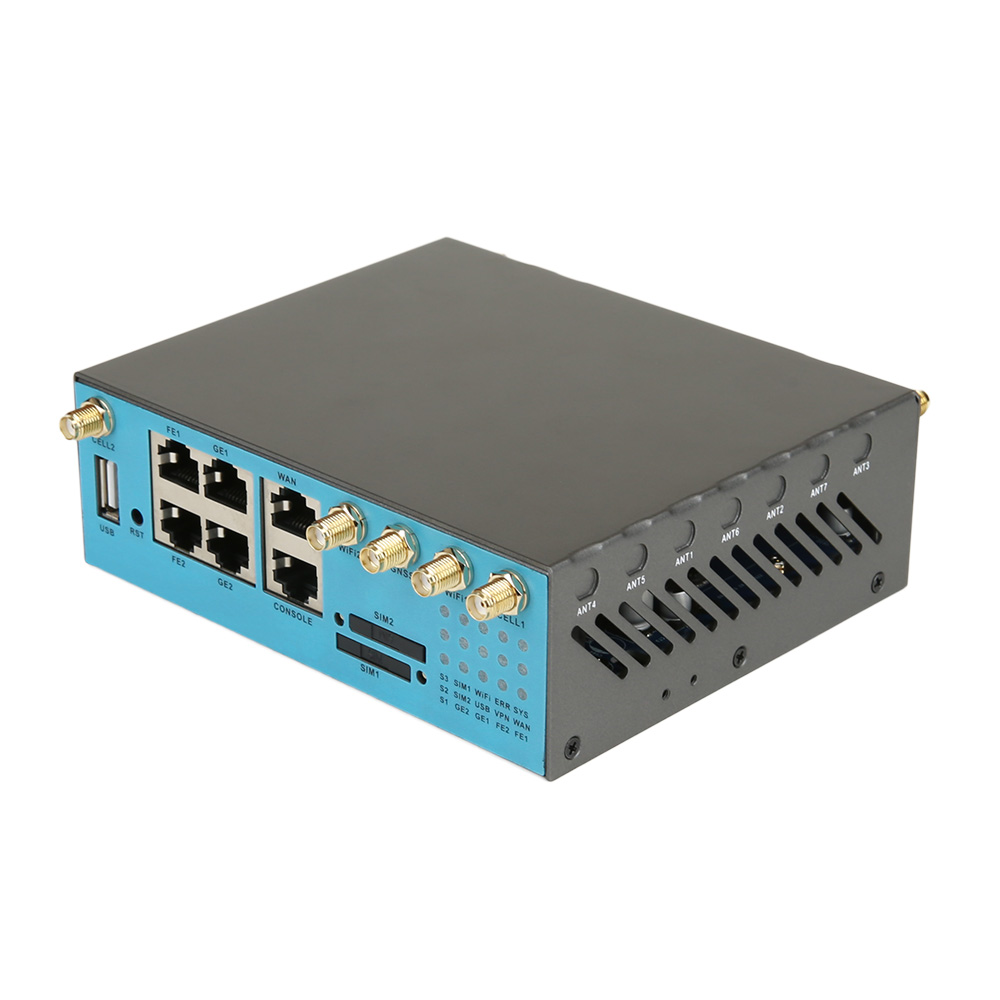
A dual SIM industrial router is not simply a router with two SIM card slots. In a remote cabinet, roadside controller, charging station, utility site, vehicle, or unattended machine, the second SIM can become part of the network resilience strategy. When the primary mobile connection is unavailable or unstable, a properly designed failover mechanism can move traffic to the backup cellular connection and keep the equipment reachable.
This matters because industrial connectivity is different from office networking. A short interruption may stop remote access, interrupt telemetry, delay an alarm, or leave a site requiring a technician visit. The router therefore needs to keep working in harsh conditions, recover from communication faults, and provide engineers with enough remote control to diagnose problems without travelling to the site.
For projects that need this kind of connectivity, Shenzhen E-Lins Technology Co., Ltd. provides industrial M2M and IoT wireless communication equipment designed for distributed and unattended environments. Its product range includes dual-SIM 5G and 4G industrial routers, embedded routers, outdoor routers, industrial modems, and DTUs.
Why Dual SIM Matters in Industrial Networking
A single cellular connection creates a single point of failure. The network may be lost because of carrier coverage, temporary service disruption, local interference, SIM or account issues, or a change in radio conditions. In a distributed deployment, even a small percentage of sites experiencing these problems can generate a large maintenance workload.
A dual SIM industrial router introduces a second cellular path. In a typical deployment, one SIM is configured as the primary connection and the other as the backup. The router monitors connectivity and switches to the alternative SIM according to its failover rules. The exact switching logic depends on the router firmware and project configuration, so buyers should look beyond the words “dual SIM” and examine how failover is actually handled.
Dual SIM Is Useful Only When the Backup Path Is Meaningful
The second SIM is most useful when it represents genuine network redundancy. Using two cards that ultimately depend on the same mobile network does not provide the same resilience as using different network paths.
For this reason, system designers should verify:
-
supported carriers and frequency bands;
-
regional network compatibility;
-
roaming requirements;
-
SIM profile configuration;
-
conditions that trigger failover;
-
how the router behaves after the primary network recovers.
Dual SIM also needs to be considered together with the rest of the WAN architecture. For some sites, the required design may be cellular plus wired WAN, Wi-Fi backup, or dual-modem cellular connectivity. The goal is not to collect interfaces; it is to reduce the number of ways a remote site can become unreachable.
What Makes an Industrial Router Different from a Consumer Router?
A consumer router is generally designed for relatively controlled environments and regular human access. An industrial router has a different job. It may be mounted inside an electrical cabinet, on a vehicle, at a remote monitoring station, or in an outdoor enclosure where maintenance is inconvenient.
Environmental tolerance is therefore a practical specification. E-Lins industrial communication products use industrial-grade chips and components and are designed for a -35°C to +75°C operating temperature range, with 15KV ESD protection and 1.5KV electromagnetic isolation. Those specifications are relevant for projects where electrical noise, temperature variation, or static discharge can affect communications hardware.
Another consideration is recovery. A router that loses a cellular session and stays frozen can be more troublesome than one that briefly loses service and automatically recovers. E-Lins supports link self-healing mechanisms and hardware watchdog timers as part of its reliability approach.
Software stability is equally important. E-Lins states that its device firmware is 100% self-developed, rather than relying on a generic public Linux distribution as the complete product platform. For industrial buyers, the practical question is whether the firmware provides predictable failover, stable long-term operation, remote diagnostics, controlled upgrades, and secure network functions.
How to Choose a Dual SIM Industrial Router
Start With the Network Requirement
Before comparing hardware, identify the cellular generation and bandwidth needed at the site.
If the application mainly sends telemetry, meter readings, alarms, and small control messages, 4G may be sufficient. Video surveillance, high-volume sensor aggregation, edge applications, or demanding backhaul workloads may justify a 5G platform.
3GPP has specifically addressed 5G support for industrial Internet of Things use cases, including industrial automation, time-sensitive communication, ultra-reliable low-latency communication, and non-public networks. This does not mean every industrial application requires 5G; it means the choice should be linked to the actual application and network environment.
The E-Lins H900f Gigabit 5G Industrial Router is positioned for high-bandwidth industrial IoT and supports both 5G SA and NSA modes. Its dual SIM hot-backup design is intended to provide automatic failover, while PoE++ can deliver power to compatible connected devices such as cameras and sensors over Ethernet.
For projects that need 4G rather than 5G, the H900 Gigabit Industrial 4G Router combines cellular connectivity with five Gigabit Ethernet ports and triple-link backup across cellular, wired, and Wi-Fi connectivity. It is also designed for vehicle applications and complies with ISO 7637-2, with ignition sensing.
Check Interface Requirements Before Deployment
The best radio specification can still be the wrong choice if the router cannot connect to the field equipment.
Industrial sites commonly involve Ethernet devices, serial equipment, and digital I/O. A PLC may need RS232 or RS485. A meter may communicate through Modbus. A control cabinet may require digital inputs or outputs. In these cases, interface flexibility can reduce the need for additional gateways.
The E-Lins H685f/H685 Mini Embedded Series is intended for space-constrained systems. At 100 × 60 × 21 mm, the embedded format is designed for integration into compact equipment such as kiosks and robots while combining Ethernet, serial interfaces, and DI/DO.
For legacy equipment, the M300/M400 Industrial 4G Modems provide RS232/RS485-to-4G conversion with serial transparent transmission. This is useful when the objective is to connect existing PLCs, meters, or controllers to a remote server without replacing the field equipment itself.
Consider the Physical Environment
Location often determines router selection.
An indoor control cabinet may only require industrial temperature tolerance and appropriate mounting. A vehicle installation needs a power architecture and protection approach suited to the vehicle electrical environment. An outdoor monitoring site adds moisture, dust, heat, and installation exposure.
The E-Lins H820QO Outdoor IP68 Waterproof Router is designed for open-air deployment and can be pole-mounted without an additional protective enclosure when the installation design allows it. Its built-in 14dBi high-gain antennas are intended to improve signal reception in remote field environments.
This type of physical design can be important in applications such as environmental monitoring, smart-city infrastructure, roadside equipment, remote energy installations, and outdoor industrial assets where installing and servicing a separate communications enclosure adds complexity.
Security Should Be Part of the Router Specification
Industrial routers sit between operational equipment and external networks. A secure connection is therefore not an optional software feature to be considered after installation.
E-Lins supports WireGuard, IPsec, and OpenVPN, providing different options for encrypted remote connectivity. WireGuard is designed as a modern VPN protocol using contemporary cryptographic primitives and is intended to support both embedded devices and larger network environments.
In practice, secure deployment also depends on network segmentation, access control, credential management, firmware maintenance, and the way remote services are exposed. A router can support strong encryption and still be poorly secured if administrative access is left open or if devices are placed on an unsuitable network segment.
For integrators, VPN capability should therefore be evaluated together with the overall network architecture. A useful industrial deployment should define which devices can communicate, which systems can access the router, how engineers connect remotely, and how configuration changes are controlled.
Remote Management Is a Major Part of Total Deployment Effort
The hardware may be installed once, but a distributed industrial network can remain in service for years. The ability to monitor devices and resolve problems remotely therefore has a direct effect on operational workload.
E-Lins supports TR-069, SNMP, SSH, and NMS cloud platforms for centralized management. Its devices also support industrial communication functions including Modbus, TCP/IP, and serial transparent transmission.
This allows the router to serve as more than a cellular gateway. It can become part of the monitoring and maintenance architecture.
What Should Engineers Monitor?
For larger deployments, administrators should define what they need to see centrally:
-
online or offline status;
-
cellular signal and connection state;
-
active SIM status;
-
network events and failover records;
-
firmware version;
-
connected-device status;
-
configuration status;
-
communication alarms.
The more distributed the installation, the more valuable centralized visibility becomes. A network of a few routers can be maintained manually. A network involving hundreds or thousands of remote devices requires a different operational model.
E-Lins reports a 7×24-hour remote technical support service, with an average response time of 10 minutes during business hours and a 90% remote issue-resolution rate. The company also provides lifetime free firmware upgrades, which supports long-term device management.
Why E-Lins Fits Dual SIM Industrial Router Projects
E-Lins Technology has focused on industrial M2M and IoT wireless communication since its early work in industrial modem applications, with industrial roots dating back to 1999 and the Shenzhen entity established on March 2, 2012. The company now serves customers and integrators across more than 150 countries and regions.
Its relevance to dual SIM industrial router projects is not limited to the presence of two SIM slots. The broader product and engineering approach combines industrial hardware, self-developed firmware, multi-link connectivity, remote management, and industrial interfaces.
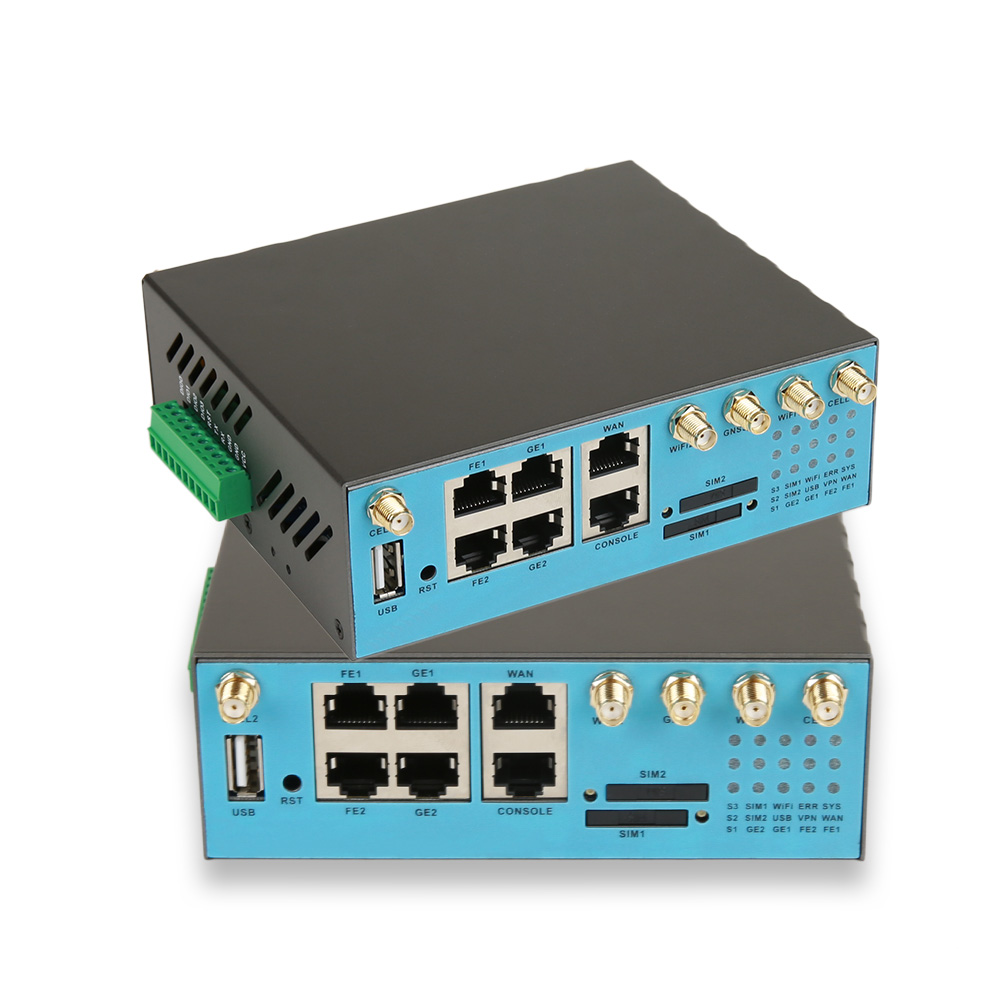
The H900f is the clearest fit where 5G bandwidth and cellular redundancy are priorities. The H900 is aimed at high-speed 4G applications and adds wired and Wi-Fi backup. The H685f/H685 series addresses embedded installations, while the H820QO targets outdoor 4G deployment. The M300/M400 series provides a simpler path for legacy serial equipment.
This product coverage is useful for integrators because industrial projects rarely have one identical networking requirement at every site.
A transport system may need vehicle-grade networking. A smart charging station may need Ethernet and remote monitoring. A roadside controller may need outdoor protection. A PLC retrofit may require serial transparent transmission. A high-bandwidth industrial site may require 5G and Gigabit interfaces.
The router should therefore be matched to the complete application rather than selected only because a product specification includes dual SIM.
Practical Applications for Dual SIM Industrial Routers
A dual SIM industrial router can be especially useful in environments where regular on-site maintenance is difficult or where communication supports an operational process.
In smart transportation, the router can support in-vehicle networking, passenger information systems, and remote equipment communication.
In power and energy, it can provide wireless connectivity for remote grid monitoring, photovoltaic and wind power equipment, and distributed control systems.
In industrial automation, cellular connectivity can link PLCs, sensors, meters, and controllers to supervisory platforms for remote monitoring and maintenance.
In self-service terminals, such as parcel lockers, vending systems, and charging stations, the router can provide continuous remote access to equipment that may be deployed across many locations.
In smart-city infrastructure, cellular routers can connect surveillance equipment, emergency communication systems, roadside devices, and other distributed assets.
The common requirement is not the industry label. It is the operating model: equipment located away from a central control room, often without a technician permanently on site.
A Practical Deployment Checklist
Before selecting a dual SIM industrial router, verify five things.
First, confirm which mobile networks are actually available at the installation site and which frequency bands the router supports.
Second, understand exactly what conditions trigger SIM failover. “Dual SIM” alone does not tell you how the device handles a weak signal, packet loss, loss of registration, or service interruption.
Third, confirm whether the second SIM provides a genuinely independent network path.
Fourth, list every field interface and protocol required by the application, including Ethernet, RS232, RS485, DI/DO, Modbus, and transparent serial transmission where applicable.
Fifth, define how the devices will be monitored, updated, secured, and accessed remotely after installation.
Test Failover Before Going Live
It is important to test failure conditions rather than only checking that both SIM cards can register.
A useful commissioning test should include loss of the primary network, restoration of the primary network, power cycling, weak-signal conditions, VPN reconnection, and recovery after a communication fault.
The objective is to verify the complete operational sequence, not simply the presence of the dual-SIM function.
Conclusion: Dual SIM Should Be Part of a Complete Connectivity Strategy
For distributed IoT infrastructure, reliability is achieved by combining the right radio technology with suitable hardware, software recovery, security, remote management, and a realistic failover strategy.
That is where a dual SIM industrial router becomes a meaningful industrial networking component rather than a specification-sheet feature.
E-Lins Technology provides this broader approach through its range of industrial cellular routers, embedded communication devices, outdoor routers, modems, and DTUs. The company combines in-house SMT and assembly capabilities in Shenzhen with industrial-grade hardware, self-developed firmware, centralized management support, OEM/ODM services, and certifications including ISO 9001, ISO 14001, CE, FCC, RoHS, and UKCA.
For applications where equipment must remain connected without regular on-site intervention, the right dual SIM industrial router should be selected as part of the complete connectivity architecture.
The key question is not simply whether the router has two SIM slots. It is whether the hardware, failover logic, industrial interfaces, security functions, and remote management all work together to keep the field system reachable.
https://e-lins.com/
Shenzhen E-Lins Technology Co., Ltd.