Buying dual SIM 5G routers directly from the manufacturer has clear advantages: engineering answers come from the people who designed the product, configurations can be agreed in advance, and supply is not filtered through intermediaries. Dual SIM adds its own set of practical questions, though. Who provides the SIM cards? Which SIM is primary? What should trigger a switch? How are the two slots labelled, and how do installers know which card goes where?
This article covers the decisions that make a direct purchase of dual SIM 5G routers go smoothly, from SIM logistics to factory defaults, testing, and support. It uses E-Lins, a Shenzhen manufacturer of industrial 5G routers, as the reference.
Why Buy Direct for Dual SIM Projects
Dual SIM behaviour lives in firmware. The thresholds that trigger a switch, the probes used to test the data path, the rules for returning to the primary SIM, and the reporting of switch events are all software decisions. Buying directly from a manufacturer that writes its own firmware means those decisions can be discussed with the people who implement them.
E-Lins develops its system software entirely in-house, and lists firmware behaviour within its customisation scope, so default settings for a project can be agreed before production. Its 5G range includes dual SIM routers and modems such as the H900f, H900f-P1, H900pf, H900uf and the RedCap H900frc and H900pfrc.
Decision 1: Who Supplies the SIM Cards?
There are three common models. The buyer supplies SIM cards and installs them on site. The buyer sends SIM cards to a staging partner who inserts and tests them before installation. Or the project uses eSIM for one profile, reducing card handling. Each has implications for logistics, security and testing. Decide early, because it affects packaging, labelling and how routers are configured.
E-Lins models such as the H900pf and H900uf combine dual physical SIM slots with eSIM, which allows one operator to be delivered through a physical card and another through an embedded profile.
Decision 2: Which SIM Is Primary, and Why?
Choose the primary operator from measurements at real sites, not from the contract that was signed first. Where coverage varies by region, the primary SIM may differ between groups of sites, which means configuration templates per region.
Decision 3: What Triggers a Switch?
Agree on the failover logic in writing: which addresses the router checks to confirm data is flowing, how many failed checks trigger a switch, how long the router stays on the backup SIM, and how it tests the primary before returning. Signal strength alone is not enough, because a link can show full signal and still carry no traffic. The E-Lins H900f provides dual SIM hot backup with automatic failover within seconds.
Decision 4: How Will Switch Events Be Reported?
A site that switches SIMs many times a day has a problem with its primary network. Make sure switch events reach your monitoring system. E-Lins routers support SNMP, TR-069, SSH, and SMS, and work with the E-Lins NMS cloud platform for device status monitoring, parameter management, remote firmware upgrades, and statistics.
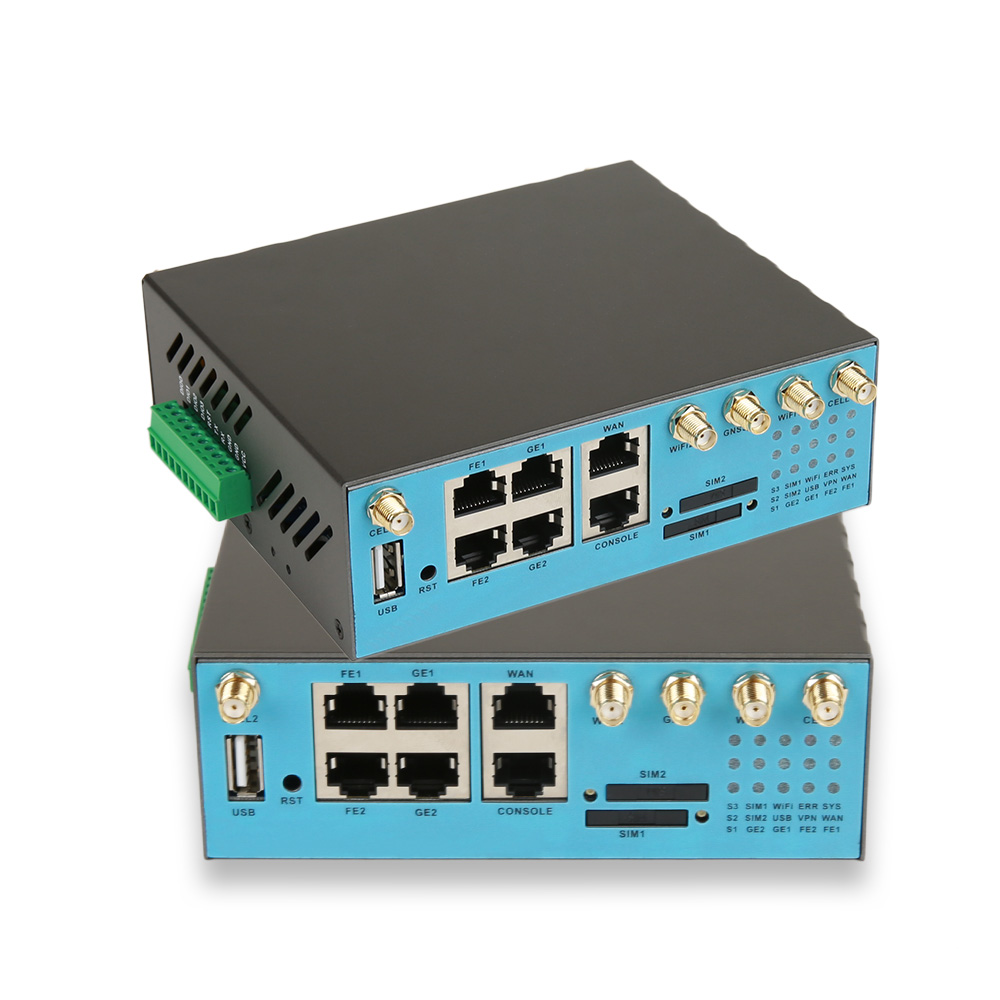
Decision 5: Labelling and Installer Instructions
Agree how SIM slots are identified on the unit, what the label shows, and what the quick-start sheet tells installers about which card goes into which slot. E-Lins customisation covers labels, packaging and brand presentation, so these details can be specified with the order.
Decision 6: Testing Before Volume
Before the first volume order, test samples with SIM cards from both target operators at a representative site. Remove the primary SIM while traffic is running, block the data path while leaving the signal intact, and cut power during operation. Confirm that the router switches, that the VPN comes back, and that the application reconnects without anyone touching it.
An Illustrative Default Policy
As an example only, a project might agree the following in plain words before production: SIM 1 is the primary operator at all sites in region A and SIM 2 at all sites in region B. The router checks two independent addresses at a regular interval; after several consecutive failures, it switches to the other SIM. It stays on the backup for a minimum period, then tests the primary before returning. Every switch is reported to the management platform. Writing the policy down in this form makes it easy for the manufacturer to implement and for installers and support staff to understand.
What Else to Agree With the Manufacturer
Firmware version. Lock the version validated in testing for the first orders. E-Lins provides lifetime free firmware upgrades, so later improvements can be rolled out remotely on your schedule.
Power arrangement. E-Lins 5G platforms such as the H900f accept 5 to 40V DC as standard, with a 5 to 60V DC option, through dual power inputs with automatic failover. Decide which inputs will be used at each site type.
Mounting. Desktop, wall-mount, and DIN-rail options are available; specify them with the order.
Delivery. E-Lins typically prepares stock in 1 to 2 business days and reports a 98.5% on-time delivery rate for volume projects.
Warranty and support. One-year standard warranty, extendable, and 7x24 remote technical support with an average response time of 10 minutes during business hours, packet capture analysis, and remote debugging.
Common Mistakes in Direct Dual SIM Purchases
Leaving failover at defaults that were never reviewed. Factory defaults are a starting point, not a decision.
Using two SIMs from the same operator. That protects against a faulty card, not a network outage.
Forgetting band support for the second operator. Both operators' bands must be supported by the module variant ordered.
Not reporting switch events. Without reporting, a struggling primary network goes unnoticed.
Testing only on the bench. Real sites behave differently; include at least one difficult location in the pilot.
The Direct Manufacturer
Shenzhen E-Lins Technology Co., Ltd. manufactures in its own SMT factory and assembly lines in Shenzhen, with a monthly capacity of tens of thousands of units, and has worked in industrial wireless communication since its industrial roots in 1999. Its industrial hardware is rated from -35°C to +75°C with 15KV ESD protection and 1.5KV electromagnetic isolation, and its products carry CE, FCC, and UKCA certification and comply with RoHS. When buying a dual SIM 5G router directly from the manufacturer, settle the six decisions above with the manufacturer before the first order, and the dual SIM will do what it is meant to do: keep sites online when a network fails.
https://e-lins.com/
Shenzhen E-Lins Technology Co., Ltd.